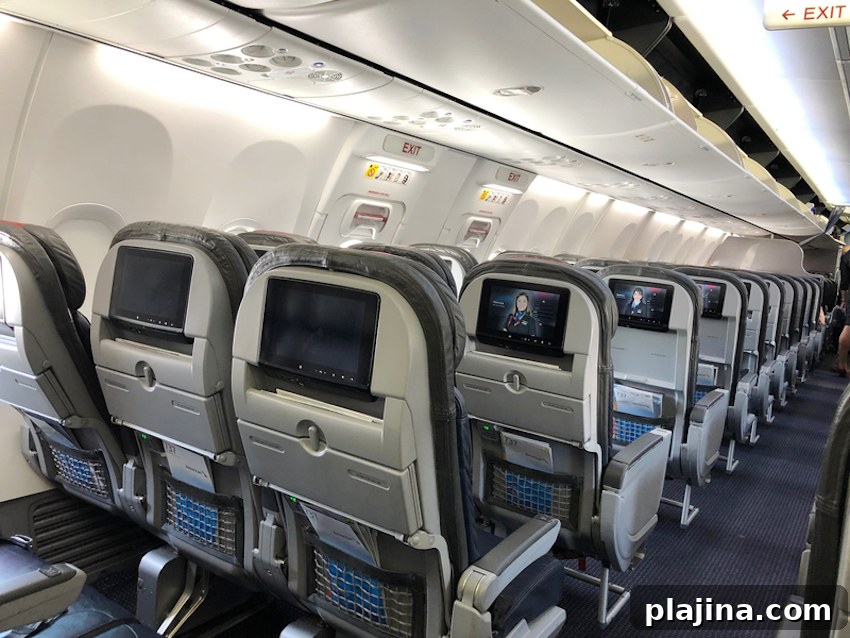
As one of the few U.S.-based carriers without seatback entertainment on many domestic routes, American Airlines is now reconsidering whether to bring this feature back.
The move follows customer feedback indicating passengers expect amenities comparable to those offered by competing airlines. Travelers frequently point out that built-in screens make flights more comfortable and convenient, particularly on longer domestic sectors.
Evidence from other carriers shows that onboard video screens continue to be used even when passengers carry their own devices, such as tablets or smartphones. While personal devices meet the needs of many travelers, seatback screens still provide valuable benefits for some groups—families with children, for example, may not have enough devices for every child, and the fixed screens offer a hassle-free entertainment option that keeps young passengers engaged.
In addition to the debate about seatback entertainment, American Airlines has implemented several notable changes under its new vice president of marketing. These updates, rolled out in mid-May, are aimed at improving the passenger experience across different cabins. Among the initiatives are switching to a new Wi-Fi provider on international aircraft, upgrading first-class seats on certain domestic routes, and repairing the dividers that separate international business class suites. Together, these enhancements suggest the airline is focusing on both comfort and connectivity for travelers.
Reintroducing seatback entertainment would require investments in hardware, content licensing and maintenance, but it could strengthen the airline’s competitive position and meet explicit customer demand. For many passengers—especially families, older travelers, and those who prefer not to rely on their own devices—the convenience and consistency of seatback screens remain compelling reasons for airlines to retain or restore the amenity.
As American Airlines evaluates these options, passengers and industry observers will be watching to see whether the carrier opts to balance modern personal-device usage with the traditional benefits of fixed in-seat entertainment. Any decision will likely weigh cost, passenger preferences, and the broader strategy to enhance the overall travel experience.