
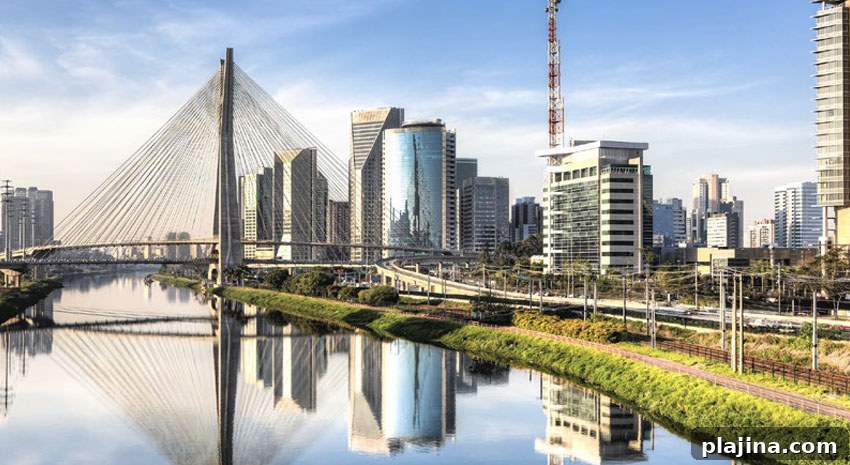
SÃO PAULO is a city of superlatives. From a metropolitan population approaching 20 million to over 100 museums, some 20,000 restaurants and more than 100 parks, its scale and nonstop energy make it one of the world’s most exciting—and at times overwhelming—urban centers.
As the capital of the state of São Paulo, the city is a political, financial, commercial, cultural and industrial powerhouse. Founded in 1554 by Jesuit missionaries and named for Saint Paul, it grew slowly at first but surged in importance in the 19th century when coffee overtook sugar as the region’s primary cash crop. That boom, followed by industrial expansion in the early 20th century, attracted waves of immigrants and shaped the city’s multicultural character.
São Paulo remains a true melting pot. It hosts the largest population of Japanese descent outside Japan and significant communities of Italian, Arab, German, Chinese, Armenian, Lithuanian, Greek, Korean, Polish, Hungarian, Peruvian, Bolivian, Haitian and African heritage, among others. This diversity informs the city’s food, festivals, arts and everyday life.
Locals call the city Sampa, and residents are known as Paulistas. A thriving economy, ongoing development and a creative population keep São Paulo evolving. Paulistas are often happy to recommend their favorite restaurants, bars and neighborhood hangouts, helping visitors discover the best of the city.
With such an abundance of museums, cultural venues, restaurants, parks and nightlife, first-time visitors can feel inundated—think New York City multiplied. A practical approach is to explore one neighborhood at a time, which also reduces time lost to São Paulo’s notorious traffic.
Although much of the architecture is modern, several historic landmarks stand out. The Neo-Gothic Catedral da Sé de São Paulo and the elegant Theatro Municipal de São Paulo are both located downtown and offer striking glimpses of the city’s past.
Avenida Paulista is one of São Paulo’s most iconic avenues—lined with shops, cafés and cultural institutions. The Museu de Arte de São Paulo (MASP) is essential for art lovers, with masterpieces by Van Gogh, Rembrandt, Picasso and Degas. Sports fans should visit the Museu do Futebol to explore Brazil’s football legacy. Shoppers seeking upscale boutiques will enjoy the Jardins neighborhood, especially Rua Oscar Freire.
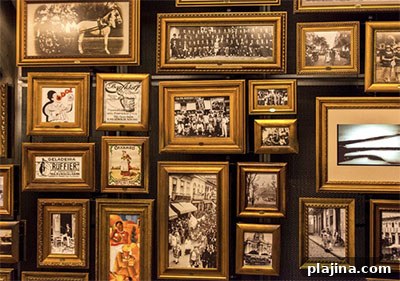
Museu do Futebol © HOANG BAO NGUYEN – DREAMSTIME.COM
Parque Ibirapuera is a cultural and green heart of the city and a smart place to visit several museums in one outing. The park contains the Museu Afro Brasil, Museu de Arte Contemporânea and Museu de Arte Moderna, alongside notable structures by architect Oscar Niemeyer. The rooftop of the Museu de Arte Contemporânea offers one of the better vantage points for city views and photography.
Liberdade is a distinct and charming neighborhood known for its large Japanese community. Streets are decorated with lanterns and lined with bakeries, shops and cafés offering Japanese goods and cuisine. The tranquil Oriental Garden and an array of excellent sushi and ramen restaurants make Liberdade a delightful area to explore.
São Paulo is a festival city. The São Paulo Art Biennial draws international attention, the Pride Parade is among the world’s largest, Fashion Week hosts top designers and models, and Carnival—while different from Rio’s—remains an energetic celebration. The city’s openness and cultural calendar ensure there’s almost always something happening.
No matter how long you stay, you’ll see only a portion of what São Paulo offers. The city’s scale and variety invite repeat visits and deeper exploration.
CHECKING IN WITH PABLO CHIOZZA
Senior Vice President USA, Asia, Canada and Caribbean; LATAM Airlines
What makes São Paulo different from other cities in Brazil?
São Paulo combines industry, finance, art and culture on a metropolitan scale. It is a major industrial center and South America’s financial hub, while also offering a vibrant culinary scene and diverse neighborhoods rooted in strong Italian and Japanese heritage.
What local attractions do you recommend?
Highlights include the historic Mercado Municipal for food and local specialties, Terraço Itália for a memorable city view, Parque Ibirapuera for green space and museums, and the Immigration Museum for insights into Brazil’s immigrant history and cultural roots.
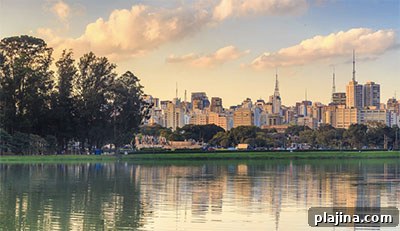
São Paulo skyline from Parque Ibirapuera © F11PHOTO – DREAMSTIME.COM
You mentioned some hidden gems.
Ilhabela is an archipelago off the São Paulo coast with hiking trails and waterfalls. Maresias on the northern coastline is popular with surfers for its big waves, and Ubatuba on the southeast coast offers a variety of beaches set against the Atlantic rainforest.
Are there any cultural differences visitors should be aware of when visiting Brazil?
Brazilians are generally social and tactile; personal space expectations may be different from what visitors are used to.
Things to Do in São Paulo
São Paulo caters to food lovers, architecture enthusiasts and art aficionados. The Mercado Municipal de São Paulo, open since 1933, is a must for its roughly 300 stalls selling fresh produce, meat and seafood. Sample mortadella sandwiches and pasteis at one of the market cafés.
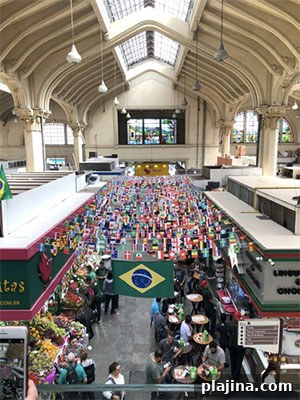
Mercado Municipal © KIM FOLEY MACKINNON
The Jardim Botânico offers a calm escape, with orchids, rainforest species and more than 340 native plants. Birdwatchers will appreciate spotting over 100 bird species on the grounds. For sunset and panoramic city views, Terraço Itália—located in the landmark Edifício Itália—features an observation deck, rooftop restaurant and piano bar.
São Paulo Info to Go
São Paulo-Guarulhos International Airport is about 15 miles from the city center. Taxi fares to downtown typically range from $70–80 and travel time can vary from 45 minutes to 1.5 hours depending on traffic. The Airport Bus serves major hotels and costs approximately $14. Congonhas Airport, closer to downtown, handles domestic flights and taxi fares from the center usually run $15–40.
São Paulo: Just the Facts
Time zone: GMT -3
Phone code: Country code: 55
Currency: Brazilian real
Key Industries: Banking, telecommunications, automotive, pharmaceutical
OFFICIAL LANGUAGE
Portuguese
COMING AND GOING
U.S. citizens must present a valid passport and a tourist visa to enter Brazil. Visas can be applied for online or through a Brazilian consulate.
Where to Stay in São Paulo
HOTEL FASANO SÃO PAULO Elegant and refined, this 60-room hotel sits in the fashionable Jardins neighborhood. Rua Vittório Fasano 88 $$$$$
INTERCONTINENTAL SÃO PAULO Convenient to Avenida Paulista, the InterContinental offers modern rooms, a business center, 24-hour gym and outdoor pool. Alameda Santos 1123 $$$$$
RENAISSANCE SÃO PAULO A large, contemporary hotel popular with business travelers; club-level rooms include lounge access and amenities. Alameda Santos 2233 $$$$
Restaurants in São Paulo
A CASA DO PORCO Celebrating pork in creative dishes, this acclaimed restaurant offers a distinctive alternative to Brazil’s typical beef-focused menus. Rua Araújo 124 $$$
MANÍ Chef Helena Rizzo’s inventive cuisine is as visually striking as it is flavorful. Don’t miss the signature basket of breads with local cheeses and spreads. Rua Joaquim Antunes 210 $$$$
RESTAURANT TUJU With two Michelin stars, Tuju offers an elegant reinterpretation of Brazilian flavors and is highly sought-after for reservations. Rua Fradique Coutinho 1248 $$$$$