
Along Spain’s roughly thousand-mile coastline, stretching from the French border to Portugal’s Algarve, beaches are never hard to find. Simply head to the sea and sand will appear. But focusing only on sunbathing would miss much of what makes Spain’s coasts compelling year-round: rich culture, renowned wines, striking architecture, UNESCO sites, world-class art and one of Spain’s most spectacular festivals. For active travelers there are abundant options too—golf, diving, sailing and windsurfing all thrive along the costas.
Many of Spain’s most vibrant cities sit on these coasts. Barcelona anchors the Costa Brava, where beaches reach right into the city and continue north to the French border. Valencia sits at the heart of the Costa del Azahar, while Alicante crowns the Costa Blanca. Málaga is the focal point of the Costa del Sol. Past Gibraltar, where the Atlantic begins, Cádiz marks the start of the Costa de la Luz. Up in the northwest, the Islas Atlánticas National Park near Vigo protects some of Spain’s pristine Atlantic shoreline.
There is no single “best” season to visit. Spain’s Mediterranean coast enjoys some 300 days of sunshine a year—more than anywhere else in Europe—so even shoulder months offer compelling experiences. March, for example, comes alive in Valencia with Las Fallas, a riotous festival of fireworks, giant figures and fire.
Barcelona and Costa Brava
Barcelona combines city life and beach with ease: golden sands lie within a stroll of the Gothic Quarter, backed by a promenade of cafés and restaurants and the shimmering metal fish by Frank Gehry. Architecture lovers will be drawn to Antoni Gaudí’s Modernista masterpieces—the undulating La Pedrera, the dragon-roofed Casa Batlló and the still-under-construction Sagrada Família, part of a UNESCO World Heritage ensemble.
North of the city, the Costa Brava inspired 20th-century artists such as Picasso, Dalí and Chagall. The region’s rugged coastline features hidden coves shaped by the sea, long beaches and medieval villages tucked behind ancient walls. A coastal ferry, the Lancha Litoral, links artist haunts and scenic spots. Sitges, once a magnet for Modernista artists, remains an active arts enclave.
Valencia and Costa del Azahar
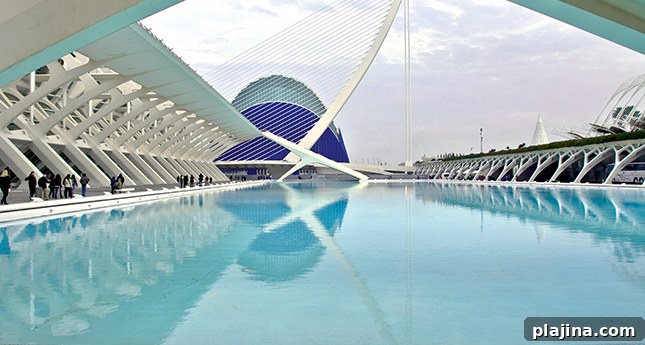
Valencia’s City of Arts and Sciences is a standout example of urban transformation. Architect Santiago Calatrava turned a former riverbed into a striking cultural complex and park. Beyond the modern ensemble, Valencia’s old quarter rewards walkers with ornate façades, including the palace of the Marqués de Dos Aguas, now the Ceramics Museum.
The Costa del Azahar features long white beaches backed by orange groves. Nearby, the fortified town of Peñíscola with its seaside castle is an attractive detour, as are the 13th-century Gothic monastery at El Puig and the San José grottoes accessible by boat. March is a special time to visit for Las Fallas, when locals burn huge papier-mâché figures, set off massive fireworks and offer a monumental floral tribute to the Virgin.
The coast is also known for lively regional traditions. In Denia each July, the Toros a la Mar features a bull run that ends with participants plunging into the sea—one of many local spectacles that reflect Spain’s colorful festive calendar.
Alicante and Costa Blanca
The Costa Blanca lives up to its name with long, pale beaches stretching south from the dramatic cliffs of Cabo de la Nao. Sea-carved caves and towering cliffs frame many stretches of coast. Alicante itself retains a thoroughly Spanish character: its Santa Cruz quarter, hilltop castle and palm-lined promenade paved in colored marble all create a charming urban beach destination.
Málaga and Costa del Sol
The Costa del Sol offers almost every coastal experience imaginable: bustling tourist hotspots, sophisticated nightlife, stylish resorts, world-class golf, extensive beaches and chic tapas bars alongside quieter coves and traditional Andalusian towns. Málaga’s recent revitalization has made it a lively cultural and shopping center, while Marbella’s narrow whitewashed streets echo Andalucía’s Moorish past.
Puerto Banús draws luxury yachts and high‑end boutiques, and Nerja offers small cliff-backed beaches beneath the sierra. East of Almería, the rugged Cabo de Gata coast features dramatic scenery, secluded beaches and a historic lighthouse. Inland, the white village of Mojácar evokes a picturesque culmination of Moorish and Mediterranean influences.
Cádiz and Costa de la Luz
Cádiz, one of Europe’s oldest cities, sits at the edge of wide stretches of fine white sand that extend toward Portugal. The region’s development is restrained, with no high-rise resorts in many areas and a national park that protects a large coastal delta—often compared to Europe’s Everglades. Nearby Jerez de la Frontera is famous for its sherry production and Andalusian horses.
Vigo and Islas Cíes
In Spain’s northwest, Vigo faces the Cíes Islands, part of the Islas Atlánticas National Park. The islands are prized for their dramatic 300-foot cliffs, white-sand beaches, dunes and pine forests, and they are home to tens of thousands of nesting sea birds. Romans once called them “the islands of the gods.”
The region is celebrated for shellfish: Vigo’s old fishermen’s quarter overflows with oysters, mussels and langostinos. Spring brings camellia-filled gardens around historic manor houses. Nearby Santiago de Compostela, with its medieval streets and cathedral that houses the shrine of St. James, remains an important pilgrimage destination and cultural highlight.
Diversions
Golfers will find top courses across the costas: PGA Golf Catalunya on the Costa Brava, the challenging El Saler near Valencia, and the many courses around Marbella, often called Golf Valley. Villa Padierna offers a scenic 18-hole course set amid Roman artifacts. Near Jerez, Montecastillo features a Jack Nicklaus design, and Ria de Vigo Golf Club provides a lakeside test of skill.
Diving is exceptional in several spots. The Islas Medes nature reserve off L’Estartit on the Costa Brava has dramatic underwater cliffs and vibrant marine life. Clear waters around Cabo de Gata and other southern coves are also excellent for diving. Tarifa, near Cape Trafalgar, combines dramatic coastal mountains with top-class windsurfing on wide beaches.
Food-and-wine experiences are abundant: vineyard resorts outside Barcelona offer cooking and wine-tasting programs, and paella cooking schools near Valencia teach regional specialties. Jerez’s bodegas provide authentic sherry tasting and cellar tours. Museums across the coast showcase major Spanish artists—Picasso’s works appear in Málaga and Barcelona, Dalí’s surreal collection dominates Figueres, and Cádiz’s churches and Vigo’s museums display historic and contemporary art.
Nightlife varies by city. Barcelona offers late-night jazz and club scenes; Valencia’s Canovas district provides a range of dining and bar options into the early morning. For authentic flamenco, Jerez is a prime destination, where intimate peña venues preserve the art form’s traditional spirit.
Lodging
Conde de Gondomar
Inside the walls of a medieval fortress with views over the Islas Cíes. Bayona, tel 34 986 355 000
Hotel Villa Padierna, Marbella
A palazzo-style hotel decorated with art and antiquities; spa includes a Turkish hammam. Carretera de Cádiz Km. 166, Marbella, tel 34 952 889 152
Meliá Valencia
Spacious rooms overlooking Calatrava’s cultural complex in Valencia’s business district. Menorca 22, Valencia, tel 34 963 350 380
Dining
Agua
Seafood-focused dining with beachfront views at Maritim de Barceloneta, Barcelona, tel 34 932 251 217
Arrop
Minimalist décor and inventive, locally driven cuisine in Valencia. Calle Almirante 14, Valencia, tel 34 963 925 566
Skina
Refined, unpretentious Andalusian dishes in Marbella’s old town. Calle Aduar 12, Marbella, tel 34 952 765 277