
You probably know the name Cognac as a premium type of brandy, but the spirit takes its name from the town of Cognac in southwestern France. With roughly 19,000 residents, this historic town is an attractive destination year-round, whether you come for tastings, to explore the surrounding countryside, or both.
The region is rich in heritage, from nearby Gallo-Roman Saintes to the town of Cognac itself, the birthplace of France’s Renaissance king Francis I, who was born in 1494 at the Royal Castle of Cognac. This corner of France has a distinct geography, history and culinary tradition that make it a compelling place to visit.
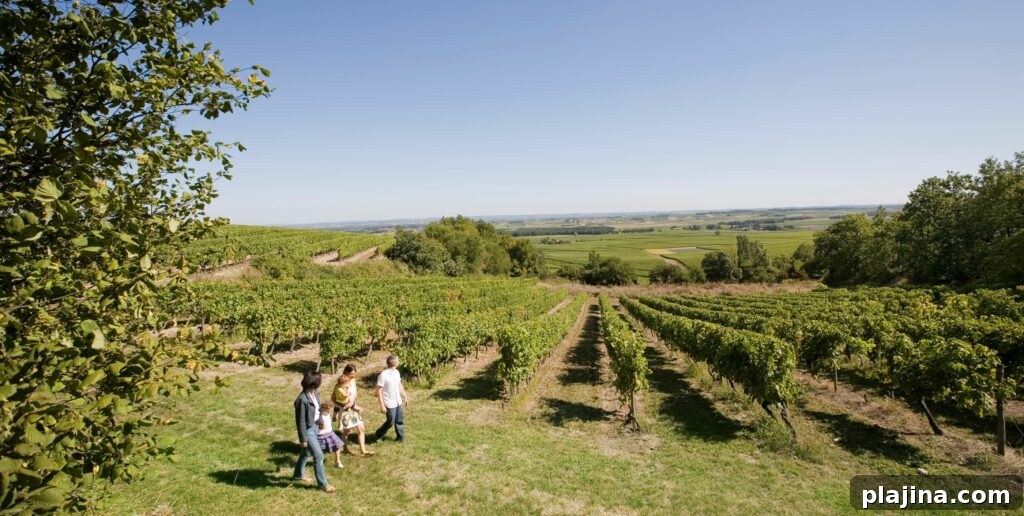
© Charentes Tourisme
There are more than 260 Cognac houses across the Charente and Charente-Maritime départements, and many welcome visitors for tours and tastings. You can explore on an e-bike, by rental car, or with an organized group. Both large and small producers showcase the Appellation d’Origine Contrôlée Charentais two-step distillation—known locally as chauffes—governed by strict AOC rules that define production standards for French wines and eaux-de-vie.
Visits often include guided tastings, mixology sessions, vineyard walks and meals paired with Cognac. The region’s best-known houses include Hennessy, Rémy Martin, D’Ussé, Courvoisier and Martell, but touring family-run producers gives insight into a more artisanal side of the industry.
Cognac is a specific style of brandy made from distilled white wine, usually produced from the Ugni Blanc grape. Distillation takes place in the traditional Charentais copper still, which consists of a pot, swan neck, condenser and cooling coil. After distillation, the eau-de-vie is aged in oak barrels for a minimum of two years. Visitors learn how the process begins with the mid-September to October harvest, when grapes are pressed quickly at low pressure to extract a high-quality must. Seeds and skins are removed promptly to avoid bitterness, and the resulting wine is then distilled and aged to develop the flavors associated with Cognac.

© Charentes Tourisme
Beyond Cognac, the region produces Pineau des Charentes, a fortified wine often crafted by small, family-run producers. Pineau is made by blending about three parts freshly pressed grape juice with one part cognac eau-de-vie from the previous year. The mixture is then aged in French oak barrels, producing white, rosé or red Pineau depending on the grapes and methods used. Many Pineau producers offer tours and tastings that explain the blending and aging process.
When visiting the town of Cognac, consider staying at La Nauve Hôtel et Jardin, a boutique property that opened in 2023 and is part of the family-owned Almae Collection. Located near the town center along the Charente River, the restored belle-époque estate features 12 spacious suites, 12 acres of gardens, and two on-site restaurants: the fine-dining Notes and the more casual Brasserie des Flâneurs. The hotel occupies the site of a former distillery and maintains a curated collection of Cognac bottles for guests to enjoy.
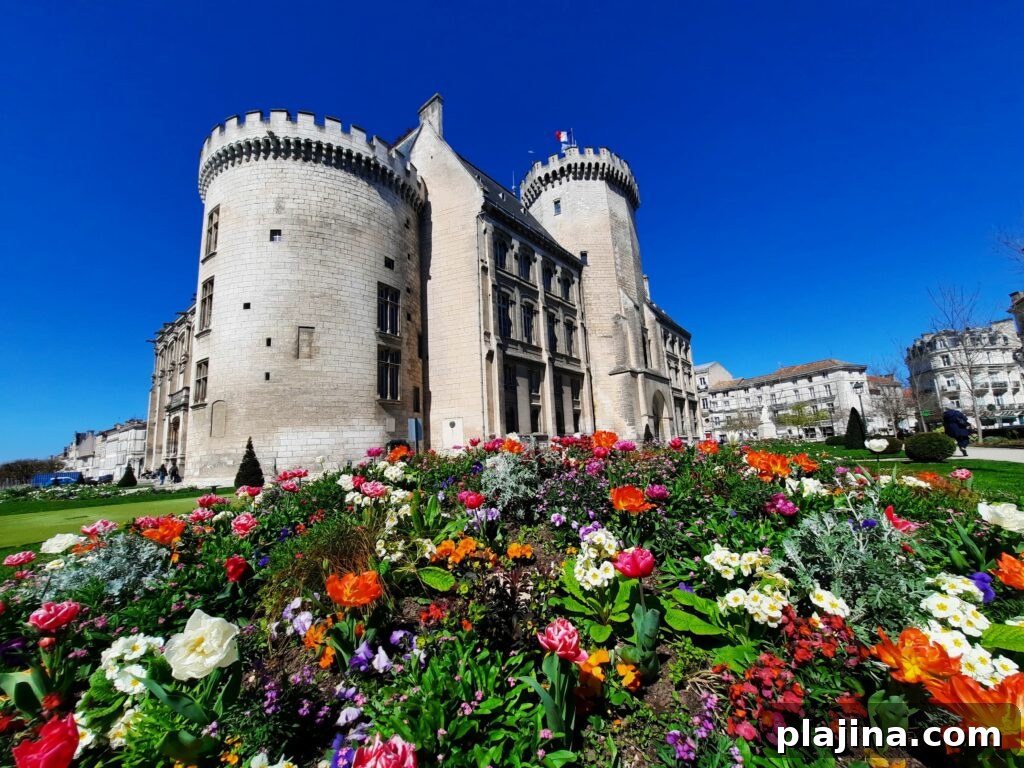
Angoulême © OPTA – dg
Not far from Cognac is the charming city of Angoulême, about 30 minutes away, which shares the scenic Charente River. Angoulême was named a UNESCO Creative City in 2019 and is known for vibrant street art, colorful murals and painted façades throughout its historic quarter—making it an easy and visually rewarding day trip from Cognac.