
There’s a place in Kyoto where time slows, the wind whispers through stalks of emerald, and the world’s chaos fades with every step. A short walk from Saga-Arashiyama Station, the breathtaking Arashiyama Bamboo Forest spans a tranquil grove and a 1,300-foot pedestrian path that feels like living art.
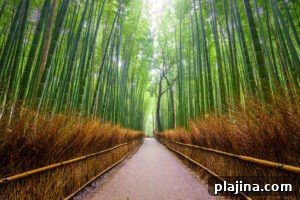
PHOTO: © NOPPAKUN | DREAMSTIME
Set in the quiet Sagano neighborhood on Kyoto’s western edge, the Arashiyama Bamboo Forest is one of Japan’s most photographed natural sites. Towering green stalks sway overhead as sunlight filters through the canopy, painting moving patterns on the path below. The soundscape is dominated by the soft creak and rustle of bamboo in the breeze, a calm that feels almost meditative.
For a more atmospheric arrival, enter via the side gate of Tenryu-ji Temple, a UNESCO World Heritage site. This approach transitions smoothly from a carefully raked Zen garden into the hush of the grove, shifting the mood from contemplation to quiet wonder.
Although the bamboo path is relatively short, walking it often feels transcendent. Many visitors move in near silence, absorbing the steady rhythm of stalks rising on either side. The experience captures Kyoto’s essence: refined, reflective and deeply connected to nature.
Ways to enjoy the grove include:
Sunrise or sunset walks. To avoid crowds and to enjoy the best light, visit early in the morning or late afternoon. At these times the sun filters through the bamboo canopy with a golden glow, creating an especially magical scene.
Visit Nonomiya Shrine. Just beyond the forest path sits the small, historic Nonomiya Shrine, once a place of purification for imperial princesses before they served at Ise Jingu. Though modest in size, the shrine adds historical depth to the scenic beauty.
Experience local culture. The paths around the shrine often attract young women in yukata seeking blessings for love or safe childbirth, and rickshaw drivers commonly offer lively local stories and guided rides that enrich the visit.
© ZEROBUG2000 | DREAMSTIME
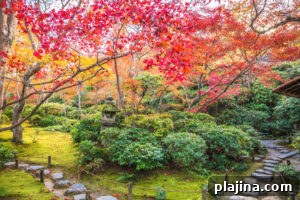
For a quieter experience, follow the path to the entrance of Ōkōchi Sansō Villa, the former retreat of actor Denjirō Ōkōchi. Open to the public and often less crowded than imperial villas, Ōkōchi Sansō charges a modest admission (typically around 1,000 yen), which usually includes a traditional sweet and a cup of matcha served in a teahouse overlooking Kyoto. The villa’s grounds offer extensive city views, carefully tended gardens, mossy groves and hidden teahouses that invite slow exploration.
On the walk back toward Randen Saga Station you’ll find shops selling bamboo crafts made locally—tea whisks, chopsticks and woven baskets—which make authentic keepsakes and connect visitors with the material that shapes the grove.
From sacred shrines to artisan workshops, Arashiyama wraps visitors in tradition and everyday practices that have long defined Kyoto life.
Before you leave, consider the Randen trolley, a vintage tram that runs back toward central Kyoto. The roughly 20-minute ride to Shijō-Ōmiya (with a short transfer to Kyoto Station) provides a nostalgic, fitting end to a dreamlike visit.
INFO TO GO
Arashiyama Bamboo Forest sits in the Sagano district of western Kyoto. Take the JR Sagano Line to Saga-Arashiyama Station; the grove is about a 14-minute walk from the station. The Keifuku Randen Tram Line connects Arashiyama to central Kyoto. The bamboo groves are beautiful year-round and offer a peaceful respite from the city’s bustle.