
Spectacular dreams of soaring through the sky, free and unbound, appear across cultures worldwide. The ability to fly remains one of the most coveted superpowers: who wouldn’t want to sweep down from above to rescue a frightened child or a stranded pet from a raging river?
Beyond capes and wings, becoming a licensed pilot is a practical way to make those dreams real. In the waking world, whether your aim is to pilot private jets, cargo planes, fighter aircraft or transcontinental passenger liners, an aviation career demands dedication, skill and rigorous training.
What does it take to sit in the pilot’s seat? Requirements vary by certification path, but age, physical condition and education level all matter. Most prospective pilots (excluding balloon and glider operators) must pass a medical exam conducted by an aviation medical examiner authorized by the Federal Aviation Administration. Medical certificates are issued as first-class (required for airline transport pilots), second-class and third-class; student pilots need at least a third-class certificate.
After meeting that initial requirement, training covers many components. Students learn to interpret instruments, execute takeoffs and landings, handle turns and climbs, and maintain specified altitudes. Aviation training also teaches how to read displays and manage automated systems, navigate varied weather conditions and approach different types of runways, mastering every angle of approach and contingency.
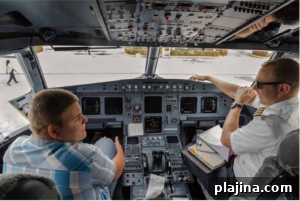
PHOTO: © VITALDRUM | DREAMSTIME.COM
Ray Phillips, a Boeing 787 captain based in Denver, holds an M.S. in aeronautics and serves as flight training manager and affiliate professor at Metropolitan State University Denver. He interviewed industry leaders to learn what they expect from aviation graduates.
Phillips and the professionals he consulted emphasize that great pilots require more than technical certification. Qualities that can be harder to measure—like honest communication, humility, service and leadership—are vital in a cockpit where safety depends on teamwork and clear decision-making.
The first practical decision for an aspiring pilot is the career path: cargo, flight instructor, regional or major airline pilot, military aviator, or another specialty. Each path has different training priorities. Commercial pilots typically need at least an undergraduate degree, and many airline captains hold advanced degrees.
The next step is finding an FAA-approved flight school. Programs are offered nationwide, from large academies with their own fleets to regional schools that lease aircraft or partner with airlines. These programs include private pilot training, instrument ratings, instructor courses and multi-engine certifications. In recent years, major carriers have also opened training academies to develop talent internally.
Begin with earning a Private Pilot License (PPL), which permits flight of single-engine aircraft under Visual Flight Rules in fair-weather conditions. At this stage, students learn basic navigation techniques, including using roads, bodies of water and landmarks as references.
Training for commercial operations requires learning to fly by reference to instruments rather than external visual cues. That leads to earning an Instrument Rating (IR) during ground school and simulator sessions, allowing pilots to operate safely in poor visibility. Afterward, students pursue a Commercial Pilot License, which generally requires a minimum of 250 flight hours and passing an FAA “checkride” — an oral exam and practical flight test administered by an authorized examiner. Many pilots also obtain a multi-engine rating as the final step.
Although pilots are not mechanics, they must identify abnormalities during pre-flight inspections. That includes checking tire wear and tread, gear struts and hydraulic lines, external lights, and the airframe components such as fuselage, wings, flaps and spoilers specific to the aircraft they’ll fly.
If you’ve experienced cancellations or delays driven by pilot shortages, you may wonder where those pilots went. The COVID-19 pandemic halted much travel, grounding aircraft and prompting some airlines to offer early retirement or other cost-saving measures. Many pilots accepted early exits, shrinking the workforce.
As travel rebounded, major carriers often recruited experienced regional pilots to staff larger aircraft. That migration created openings at the regional level and a cascade of staffing challenges, leaving some regional routes and connections vulnerable to disruption. Training new pilots and integrating them into an airline’s operational system takes time, creating a pipeline constraint for carriers rebuilding to pre-pandemic levels.
During the recovery, charter operators and travel aggregators stepped in to help fill gaps caused by commercial flight cancellations. Charter companies can offer flexible routing and access to destinations affected by regional service reductions, presenting a viable complement to traditional airline schedules.

PHOTO: © FLYJETS
Some travelers worry that reducing required flight hours or loosening standards would produce less-qualified pilots. Flight education remains essential as newer, sometimes less costly aircraft enter service. Transparent safety information about fleets and pilots, along with operator safety records, helps passengers evaluate options when booking charters or other non-scheduled services.
To attract new talent, the FAA and partner organizations have increased outreach and funding. The FAA awarded grants to support aviation classes at the high school level and collaborated with groups that promote aviation careers and STEM engagement. Recruitment, mentorship, scholarships and clearer guidance about career pathways are all part of efforts to build a stronger pipeline of future pilots and aerospace professionals.
Mentoring can be decisive. Phillips recalls introducing a student who aspired to fly for a major cargo carrier to an experienced pilot in that sector. The conversation helped the student refine her expectations and focus her training on the right career path.
For aviation to continue evolving and meeting demand, the industry needs a new generation of well-trained, motivated pilots and support personnel. Training, mentorship and thoughtful recruitment remain essential to ensuring a safe and reliable future in the skies — a future that makes those spectacular dreams of flight achievable for many more people.