
One of the greatest joys of traveling is tasting local specialties. Whether you’re on a street-food crawl in Seoul, snagging a coveted table at a Michelin-starred restaurant in Tokyo, or exploring modest neighborhood stalls, you’ll encounter ingredients, dishes and preparations that may be unfamiliar or challenging. Our advice: embrace the spirit of “when in Rome.” Some delicacies aren’t for the faint of heart, but travel is an opportunity to step outside your comfort zone. Bon appétit!
A national dish of Iceland, hákarl is made by curing the meat of certain shark species and hanging it to dry for months. During the curing process the meat develops a sharp ammonia aroma and a pronounced fishy flavor that many find an acquired taste. Hákarl is eaten year-round but is especially popular during the midwinter Þorrablót festival. Pro tip: it’s traditionally paired with a shot or two of Brennivín, Iceland’s signature spirit often nicknamed “Black Death,” which helps temper the flavor.
In China and Hong Kong, edible birds’ nests are prized for their rarity, texture and protein content. These nests are formed from the saliva of swiftlets and are typically dissolved into a light soup or congee, or occasionally used in desserts like egg tarts. When prepared properly, the nests give a silky, gelatinous texture without overpowering flavors, so chefs avoid strong seasonings that would mask their subtle profile. Some people claim birds’ nests benefit skin and collagen, but their high price—sometimes thousands of dollars per pound—makes them an extravagant culinary luxury.
© JURAJLONGAUER |
DREAMSTIME.COM
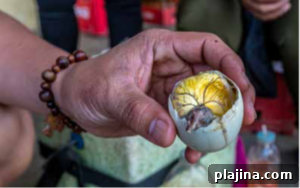
Balut is a popular and affordable street food across Southeast Asia—especially in the Philippines, Vietnam and Cambodia—valued as a protein- and calcium-rich snack. The dish consists of a fertilized duck egg incubated for 14 to 21 days, then steamed and eaten directly from the shell. Longer incubation yields a more developed embryo, with soft bones, feathers and a discernible beak or eyes. It’s an acquired experience; if that’s too adventurous, plain scrambled eggs are a perfectly acceptable alternative.
Durian, a large fruit native to Borneo and Sumatra, is beloved in Indonesia, Singapore, Malaysia, Thailand and Vietnam. It has a custard-like texture with flavors some describe as creamy vanilla, almond and caramel. Its defining characteristic is a powerful, lingering odor—variously likened to sewage, rotting onions or strong cheese—which can persist for days and has led to bans on bringing durian into some hotels and public transit.
© MARCOS CASTILLO | DREAMSTIME.COM
Despite the name, Rocky Mountain oysters contain no bivalves: they are bull testicles, skinned, coated in flour and seasoning, deep-fried and served with lemon or cocktail sauce. Known as prairie oysters in Canada—often accompanied by demi-glace—and criadillas in parts of Latin America and Spain, the dish is a regional specialty in parts of the United States. It’s commonly served at festivals and novelty events; some gatherings even celebrate the item with “testicle festivals” where the dish is consumed in large quantities.
Chinese century eggs are preserved through a process that can take up to around 100 days. Whole eggs—commonly duck, chicken or quail—are cured in a mixture historically made from ash, clay, salt, quicklime and rice hulls. During preservation, yolks turn dark green or gray and develop savory, pungent notes from ammonia and sulfur compounds, while the white becomes a dark brown, translucent jelly with a salty tang. Modern methods sometimes accelerate the process with salt solutions and controlled conditions.
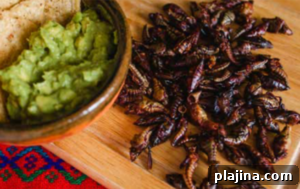
In Mexico and parts of Central America, the insect snack chapulines—grasshoppers or small crickets—are a widely enjoyed treat. Harvested from late spring into summer, they are toasted or fried and seasoned with garlic, lime, chilies and salt. Chapulines are especially associated with Oaxaca, where vendors sell them as a crunchy, flavorful street food and bar snack, often paired with mezcal or other local beverages.
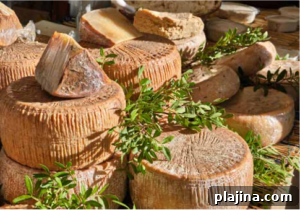
PHOTO: © ANTONIOMARIA IARIA | DREAMSTIME.COM
Casu martzu is a traditional Sardinian sheep’s-milk cheese whose production involves introducing fly larvae that consume the cheese, accelerating fermentation and breaking down fats. The result is an extremely soft, creamy cheese with a runny consistency; the larvae often remain present. Locals consider the cheese at its ideal ripeness when the maggots are still active, although refrigeration is sometimes used to stop their movement. Casu martzu is a vivid example of how cultural preferences shape what is considered a delicacy.
Huitlacoche—sometimes called “Mexican truffle”—is a culinary ingredient created when a fungal disease, corn smut, infects maize. The growths are harvested while young and prized for their earthy, savory, mushroom-like flavor. Far from being a defect in Mexican cuisine, huitlacoche is increasingly popular with contemporary chefs and is used in quesadillas, enchiladas, soups, salads and as a garnish, often commanding a higher price than the unaffected corn.
Fugu, the Japanese pufferfish, is a high-risk delicacy that requires expert preparation. Certain parts of the fish contain tetrodotoxin, a potent neurotoxin; if any contaminated tissue remains in the served portion, consumers risk severe poisoning. Japan tightly regulates fugu service, permitting only chefs who have undergone years of specialized training to prepare it. When served safely, fugu is often presented as thin sashimi slices, though it can also be cooked in soups, fried, or smoked.
San-nakji is a Korean and occasionally Japanese dish featuring very fresh octopus, typically prepared by cutting a small live or freshly killed octopus into pieces and serving it immediately with sesame oil and toasted sesame seeds. Because some nerve endings and suction cups may remain active, the pieces can twitch on the plate and, in rare cases, the suction cups can adhere during eating. Diners are advised to chew thoroughly and exercise caution, as larger pieces or whole consumption increase choking risk. San-nakji exemplifies a culinary tradition that prizes extreme freshness and unique texture.