
Netherlands-based studio Arch Mist won the Jamsu Bridge, Bridge of Culture design competition in Seoul, Korea. Arch Mist proposes repurposing the 2,608-foot Jamsu Bridge over the Han River into what they call “the longest art gallery in the world.” Scheduled for completion in 2026, the project will create new public spaces for cultural events and art exhibitions.
© Arch Mist
Located in central Seoul, Jamsu Bridge spans the Han River and connects two key districts, Yongsan and Seocho. The proposal calls for pedestrianizing the bridge as part of the Seoul Metropolitan Government’s Great Hangang Project, transforming it into a walking-friendly civic destination.
“We have put lots of effort into this project, since the beginning of the competition, and we are determined to see it through to the end in order to create a ‘bridge of culture’ that visitors and residents can enjoy,” said Chang-soo Lim, future space planning officer at the Seoul Metropolitan Government. “It will also be the first pedestrian bridge and the first waterfront cultural space over the Han River.”
© Arch Mist
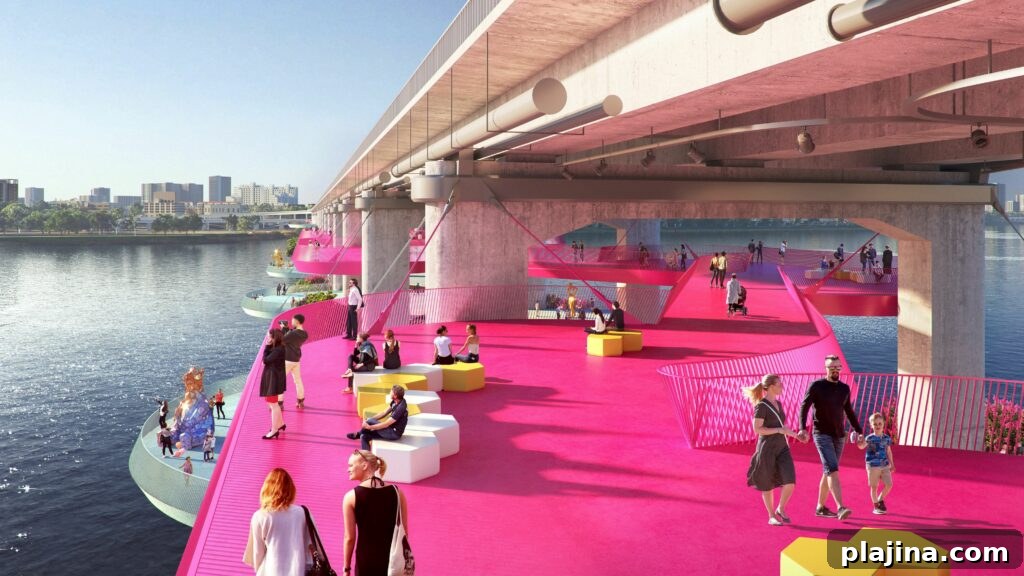
Arch Mist’s design introduces a series of balcony platforms and ramped connections to create striking views and visual landmarks along the river. To make the space more human in scale, an elevated deck will be inserted within the bridge’s 36-foot-high volume, dividing it vertically into multiple balcony levels and creating a sequence of panoramic viewpoints.
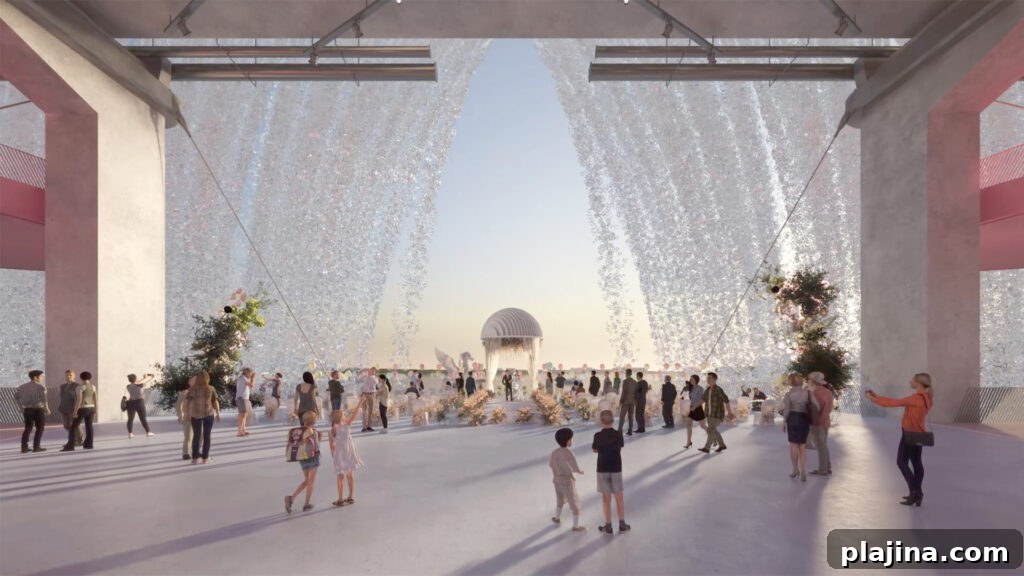
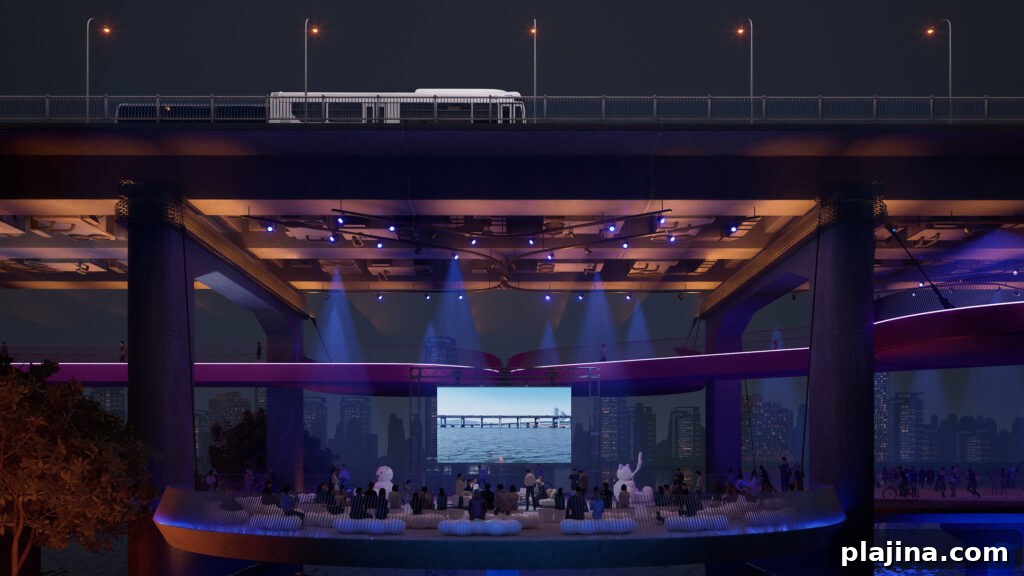
On most days the transformed bridge will function as a continuous gallery, hosting permanent and rotating exhibitions and serving as a weekly market for nearby neighborhoods. The design also accommodates special events: runway shows with theater seating, a nighttime open-air movie theater, weddings, and other community gatherings. The upper deck is planned to preserve pedestrian flow while offering unique interaction with the Banpo Bridge water fountain below.
© Arch Mist
Ecological features include floating planters that form a wetland corridor to boost biodiversity and moderate the microclimate around the bridge. A sinuous waterfront edge will increase the length of the water interface, while a redesigned bike path on the lower deck will follow that curve to create a more engaging ride for cyclists.
Jamsu Bridge was built in 1976 and is notable for sitting close to the Han River’s waterline. Its double-decker arrangement currently provides access from the riverbank, with Banpo Bridge located above. Originally designed to submerge during floods, the bridge today carries two lanes of two-way vehicle traffic, sidewalks on both sides, and a bicycle path. Construction for the pedestrianization and cultural conversion is slated to begin in 2025 and conclude in 2026.