
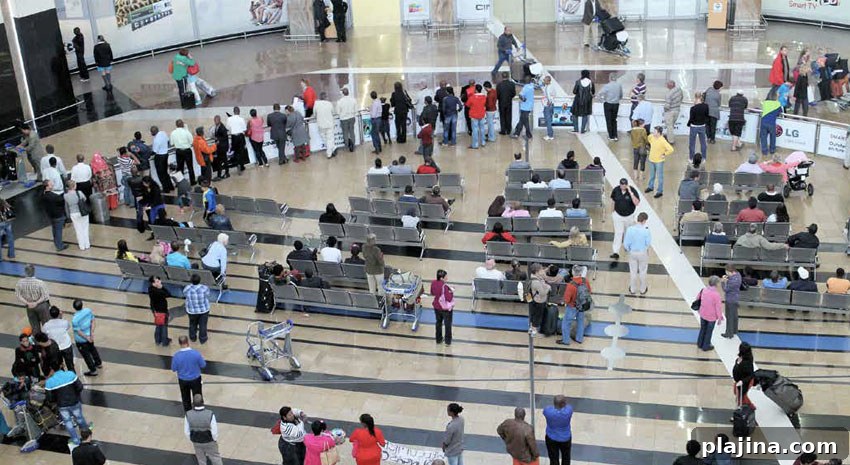
Located in the commercial and industrial heart of Gauteng province, Oliver Tambo International Airport is South Africa’s primary aviation gateway and the busiest airport on the African continent. Easily reached via Johannesburg’s national road network, the airport serves as a major entry and exit point for both regional and long-haul travel.
Formerly known as Jan Smuts Airport until its renaming in 2006, the facility honors Oliver Reginald Tambo, a prominent South African statesman. In 1993 ownership of this and other major South African airports moved from direct state control to the Airports Company South Africa. The airport handles millions of passengers annually: recent figures show more than 21 million travelers passed through, with infrastructure designed to accommodate up to 28 million passengers per year. Freight operations are substantial as well, with cargo capacity around 650,000 tonnes annually. Overall, more than half of South Africa’s air traffic funnels through O.R. Tambo International.
O.R. Tambo offers the services and amenities expected of a world-class airport. Travelers find extensive duty-free shopping, specialty stores, luggage shops and bookstores, along with on-site luxury hotels and a variety of airport lounges for both domestic and international passengers. Practical services such as a post office, medical clinic and dry-cleaning facilities further enhance convenience for business travelers, families and long-haul passengers.
As the main hub for South African Airways and a critical connection point to the rest of the world, the airport hosts flights from more than 40 airlines and links to every inhabited continent. This international reach makes it a central node for passenger and cargo networks across Africa and beyond.
The airport’s elevation—over a mile above sea level—affects flight operations in a few notable ways. Thinner air at high altitude reduces aerodynamic lift, which makes takeoffs more challenging and requires longer runway distances. To manage takeoff performance, some aircraft departing on long routes may not take full fuel loads and instead refuel en route; returning flights, with lighter payloads, can often complete their journeys without extra fuel stops. Reflecting this operational need, the airport features two exceptionally long runways.
Operational reliability is a further strength of O.R. Tambo. The airport maintains a strong on-time performance record, with around 86.7 percent of movements departing on schedule. Considering the scale of operations—nearly 221,000 aircraft movements each year—this level of punctuality underscores robust planning and efficient ground handling across the airport’s terminals and support services.
Between extensive passenger amenities, significant cargo capacity, global connectivity and infrastructure adapted to high-altitude operations, Oliver Tambo International remains a vital transport hub for South Africa and the broader African continent.