
Zipping from the airport into downtown Shanghai on the world’s fastest maglev train is an apt introduction to China’s largest and most dynamic megacity. Once a modest fishing village at the mouth of the Yangtze River, Shanghai rose to prominence in the 19th century and is now the nation’s financial hub and most open, cosmopolitan city. Home to offices for nearly 500 Fortune 500 companies, Shanghai is a showcase of China’s economic rise. As Deng Xiaoping famously observed, “If China is a dragon, then Shanghai is its head.”
The Shanghai Maglev Train © Michael DeFreitas
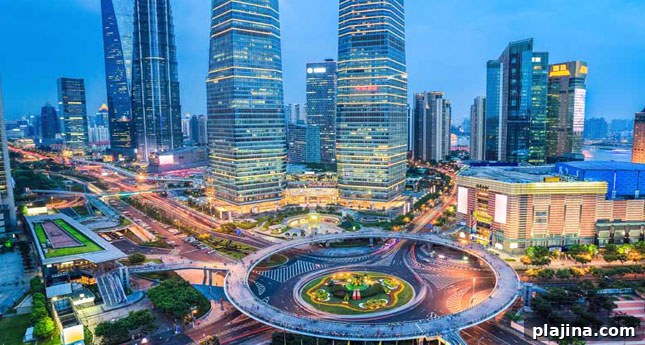
With a futuristic skyline, neon-lit nights, massive LCD screens and a bustling ethos of business and commerce, Shanghai often feels more like New York than a traditional Chinese city. Its population of around 24 million surpasses that of nearby Taiwan, and the city receives roughly 8.5 million visitors each year. To meet demand, planners are adding thousands of hotel rooms and expanding digital infrastructure: new 4G networks now blanket the city center, offering fast mobile connectivity to millions of residents and visitors.
Shanghai continues to push forward with ambitious economic and urban planning initiatives. The Waigaoqiao Free Trade Zone in northeastern Pudong, launched in September 2013, is designed as a testing ground for market-oriented reforms. The zone aims to liberalize trade, investment and monetary policies to encourage foreign participation and innovation. Since opening, the FTZ has registered well over a thousand enterprises, including major logistics firms seeking to leverage Shanghai’s growing air and sea cargo capacity.
Beyond trade zone initiatives, Shanghai’s long-term success rests on its ability to reinvent itself while improving urban livability. On the former World Expo site, the Green Valley development is being built as a mixed-use destination that blends offices, retail and public spaces. Designed with environmental features such as green terraces, expansive atria and abundant daylight, the project aims to attract workers and residents alike while respecting the iconic China Pavilion nearby.
Dixon Lu, chief commercial officer for the Asia region at Schmidt Hammer Lassen Architects, explains that the Green Valley emphasizes openness and human-scale design rather than a forest of towers. The goal is to create a welcoming urban space that draws people in and complements the surrounding landmarks.
Sculpture in The Bund financial district © Michael DeFreitas
In the west of the city, the Hongqiao Central Business District (HCBD) illustrates Shanghai’s push for sustainable infrastructure. Covering 11 square acres and supported by government initiatives, the HCBD incorporates shaded public spaces, natural ventilation, rainwater capture, permeable paving and improved public transport links. Several office towers will feature green roofs with native planting, and a flower-shaped building will include a sky garden and continuous jogging path. A major exhibition center in the district is planned to surpass the size of Hannover’s facility, strengthening Hongqiao’s role as a transportation and business hub for the Yangtze River Delta.
Shanghai is also expanding leisure and tourism offerings. The Shanghai Disney Resort, scheduled to open in late 2015, will include Shanghai Disneyland, two themed hotels, extensive retail and dining areas, recreational facilities and transport hubs. Among its attractions, Shanghai Disneyland will feature the largest Cinderella Castle in any Disney park.
Rapid growth brings challenges as well. Rising commercial property prices, shortages of affordable housing and air pollution are persistent issues. City planners are working to balance continued expansion with a higher quality of life as Shanghai’s population is projected to approach 30 million by 2030.
Things to Do in Shanghai
Shanghai’s gleaming towers are impressive, but to understand the city’s character it helps to explore street level where traditional culture and modern life intersect. The city is walkable in many neighborhoods, and some of the best experiences are found on foot.
People relaxing in Wisteria Lane, Fuxing Park © Pixattitude | Dreamstime.com
Fuxing Park, in the French Concession, offers a charming glimpse of local life: elders singing opera under sycamores, men tending caged birds and morning tai chi groups practicing beneath the trees. Nearby, Sun Yat-sen’s former residence on Xiangshan Road preserves period furnishings and offers insight into early 20th-century Shanghai.
The City God Temple (Chenghuang Miao) in the old walled quarter is a cultural oasis amid the modern city. Surrounded by historic shops and eateries, the temple area is a great place to sample classic Shanghai dishes—particularly xiao long bao, the steamed soup dumplings that are a beloved local specialty. Lu Bo Lang, a long-established restaurant near the temple’s koi pond, is a notable spot for traditional cuisine.
The Bund waterfront on the Huangpu River presents one of Shanghai’s most iconic contrasts: historic colonial-era buildings facing the ultramodern Pudong skyline, dominated by the Oriental Pearl TV Tower. The promenade is also a popular place for residents to practice tai chi, dance and other communal activities each morning.
For a deeper dive into Chinese art and antiquities, the Shanghai Museum in People’s Square houses an extensive collection spanning the Neolithic era to more recent periods. Highlights include exceptional galleries of ancient bronze and porcelain. The collection is large enough that visitors should plan to focus on specific periods of interest.
Outside the city, Zhouzhuang—often called the Venice of the East—is a well-preserved water town in the Yangtze River Delta. With canals, stone bridges and narrow lanes, Zhouzhuang evokes a glimpse of the region’s historical waterways and traditional way of life.
The water village Zhouzhuang in Jiangsu © Rodho | Dreamstime.com
CHECKING IN WITH AI BAOJUN
Vice Mayor, Shanghai, and Director, Free Trade Zone Management Committee
Many thought the Free Trade Zone’s 2013 negative (“not allowed”) list was too large and too rushed. What is the status of the list moving forward?
The negative list is an important institutional innovation for the FTZ, helping reform investment management and redefining government functions. For the 2014 version we are examining how much can be left to market participants. The goal is to provide more room for private initiatives by detailing categories more precisely. The national economy is divided into a hierarchy of categories—from broad sectors to small subcategories—and the 2013 list included many management measures at the smallest level. We are consulting market participants and industry associations to refine and likely streamline the list for future iterations.
Many financial investors are concerned by the list’s length as it relates to financial transactions. When will the FTZ publish details of new financial regulations?
We recognize concerns about the list’s scope and are working to shorten it as reforms progress. Financial reform in the FTZ touches on RMB convertibility under capital accounts, interest-rate liberalization, cross-border RMB settlement and foreign-exchange management reform. Because financial reform involves extensive data analysis and risk assessment, we are developing a comprehensive risk-control framework. Official decisions and detailed regulations will be announced once testing and analysis are complete.
Shanghai Info to Go
Pudong International Airport, about 27 miles from downtown, is the main international gateway. Many travelers take the maglev Airport Express to Longyang Road metro station (around eight minutes). From there the metro or taxis connect to hotels across greater Shanghai. Alternatives include the metro line 2, airport shuttle buses or taxis. Hongqiao Airport, closer to the city center, handles mainly domestic flights and offers convenient metro and taxi connections. Because road traffic can be heavy, the metro is often the fastest way to get around.
Shanghai: Just the Facts
Time Zone: GMT +8
Phone Code: Country code: 86, city code: 21
Entry/Exit Requirements: U.S. citizens need a passport valid for at least six months with blank pages and must obtain a visa before travel through the appropriate consulate or travel agency.
Currency: Chinese yuan renminbi
Official Language: Chinese (Mandarin). English is commonly used in business and tourist services and is taught widely in schools.
Key Industries: Retail and wholesale, financial services, real estate, information and communications technology, and automobile manufacturing
Where to Stay in Shanghai
Fairmont Peace Hotel Located on The Bund promenade, this restored Art Deco landmark offers elegantly furnished rooms and suites with views of the river and modern amenities. 20 Nanjing Road E., Huangpu $$$$
Grand Hyatt Shanghai Housed in Jin Mao Tower in Pudong’s Lujiazui district, this luxury hotel provides extensive facilities and views across the financial hub. Jin Mao Tower, 88 Century Ave., Pudong $$$$
The Westin Bund Center, Shanghai This prominently designed hotel sits on The Bund waterfront near shopping, dining and key business districts, offering comfortable rooms and a memorable location. 88 Henan Central Road, Huangpu $$$$
Restaurants in Shanghai
Gongdelin Vegetarian Restaurant One of Shanghai’s long-standing vegetarian establishments, Gongdelin is known for traditional Buddhist dishes and inventive plant-based “mock meat” specialties. 445 W. Nanjing Road $$$$
Mercato An Italian restaurant by chef Jean-Georges Vongerichten, Mercato pairs rustic-chic design with seasonal Italian dishes such as broccolini and ricotta pizza or lobster ravioli. 6F, Three on the Bund, 3 Zhongshan Dong Yi Lu, Huangpu $$$–$$$$
Vue Restaurant Located on the 30th floor of the Hyatt on the Bund, Vue serves classic European dishes with sweeping views of Pudong and the Huangpu River. Hyatt on the Bund, 199 Huangpu Road, Hongkou $$$–$$$$
Read more about Shanghai’s maglev train.