
First came the global music sensation “Gangnam Style” in 2012, which propelled PSY to international fame and helped open the door for other K-pop acts like BTS. In 2020, Parasite became the first non-English-language film to win the Academy Award for Best Picture. A year later, the Netflix series Squid Game became the streaming service’s most-watched show and topped viewing charts in 94 countries. Alongside these entertainment milestones, Korean fine dining, K-beauty products and high fashion—often drawing on traditional hanbok influences—have spread worldwide. These trends are collectively known as hallyu, or the Korean Wave. With Seoul at its center, South Korea’s popular culture has gained global recognition; Boston’s Museum of Fine Arts even mounted a hallyu exhibition, originally shown at London’s Victoria and Albert Museum.
Seoul has been the main beneficiary of this cultural momentum, drawing growing numbers of visitors eager to see the city in person. TripAdvisor ranked Seoul as the No. 2 trending global destination for 2024, just behind Tokyo. In 2023, Seoul welcomed just over 11 million foreign tourists—a 245 percent increase from the previous year—though that figure remains below the 17.5 million international arrivals recorded before the pandemic in 2019. Seoul’s mayor, Oh Se-hoon, has set an ambitious target of 30 million annual visitors by 2026 and laid out a plan he calls “3377.”
“We want to attract 30 million inbound tourists to Seoul annually, and for each to spend 3 million South Korean won [$2,167]. And we’d like them to stay in Seoul for seven days, with a revisit rate to be 70 percent. So that’s 3377,” Mayor Oh explained.
To support that goal, the city is investing in advanced information and communication technologies and prioritizing travel and events. Mayor Oh aims to position Seoul among the top five global cities for meetings, incentives, conventions and exhibitions (MICE). The city has already secured major conferences for 2025: the International Political Science Association World Congress and the Econometric Society World Congress, expected to draw roughly 3,000 and 4,000 delegates respectively.
Later this year Seoul will open the Seoul Robot & AI Museum in a distinctive spherical building. Visitors will be welcomed by a robot and can engage with various smart technologies, from interactive robots to augmented reality installations. The new museum will add a futuristic element to Seoul’s skyline as the city reinforces its image as a forward-looking metropolis of more than 10 million people.
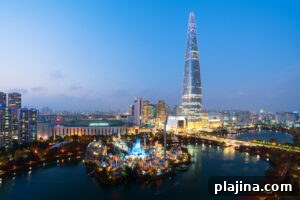
PHOTO: © PRASIT RODPHAN | DREAMSTIME
CHECKING IN WITH YOONJUNG CHO
International Media Communication, LOTTE HOTEL SEOUL
With 36 properties in seven countries, do you consider LOTTE HOTEL SEOUL your signature property in South Korea?
LOTTE HOTEL SEOUL has welcomed travelers and business guests since its grand opening in 1979. The hotel has 1,015 rooms and 14 banquet halls for international conferences and business meetings, and its central location makes it a favorite among domestic and international visitors and celebrities. SIGNIEL Seoul also stands out within the Lotte portfolio: occupying floors 76 to 101 of Lotte World Tower, it offers 235 rooms designed with Korean sensibility and panoramic views of the city.
Have premier lodging choices played an important role in attracting visitors to Seoul?
Premium accommodations are essential to attracting tourists to Seoul. The hotel group continually expands and refines its luxury offerings. For example, LOTTE HOTEL SEOUL opened La Cime, a luxury lounge on the 34th floor of the Executive Tower, in October 2023. La Cime complements Le Salon on the 16th floor and the Club Lounge on the 31st floor, creating three distinct lounges that serve different guest needs and concepts.
What is distinctive about the Lotte brand that attracts clientele?
Lotte Hotels & Resorts is Korea’s largest hotel group with more than 50 years of history and a diverse portfolio that differentiates it from other brands. Its range includes the premium landmark Signiel hotels, classic Lotte Hotels, lifestyle L7 Hotels, business-focused Lotte City Hotels, premium Lotte Resorts and the VL senior residences. L7 Hotels has also expanded internationally, opening properties in locations such as Hanoi and Chicago, offering stylish interiors, amenities and features that appeal to younger travelers while maintaining the brand’s identity.
With four Lotte properties in America including Lotte New York Palace and Lotte Hotel Seattle, do you see further expansion in North America?
L7 Chicago by Lotte opened on April 11, and Lotte Hotels & Resorts plans to continue global expansion, responding to strong interest from both domestic and international markets.
DIVERSIONS
While Seoul projects a modern, forward-facing image, it’s wise to begin any visit with a step into the past by touring one of the city’s historic palaces. Gyeongbokgung, the northern palace, and its sister site Changdeokgung are both UNESCO World Heritage locations. If time is limited, prioritize Changdeokgung for its beautifully landscaped grounds, known as the Secret Garden. Built in the early 1400s, rebuilt in the early 1600s after destruction, Changdeokgung invites visitors to explore grand gates, the King and Queen’s Chambers, expansive halls and the royal kitchen. Book an English-language tour in advance to walk the 78-acre garden, where ancient juniper trees and elegant pavilions overlook tranquil ponds.
© TEA | DREAMSTIME
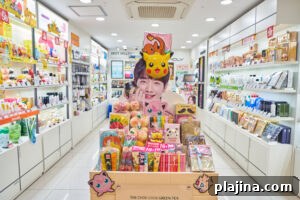
After a peaceful palace visit, head to Myeongdong to shop the twisting streets at the city’s lively core. Street stalls sell bags, K-pop memorabilia, colorful character socks and dried fruit treats, while larger K-beauty stores such as Innisfree, Skin Food and Tony Moly offer skincare and cosmetics at prices often lower than back home. For high-end shopping, visit the wide avenues of affluent Gangnam, where luxury boutiques and designer stores line the streets. After a day of shopping, treat yourself to an 11-course tasting at Jungsik, the Michelin-starred restaurant that helped elevate Korean fine dining when it opened in 2009. The menu blends modern technique with Korean ingredients, featuring items such as sweet shrimp gimbap, geum tae fish prepared in a tangy soy-based sauce, and Hanwoo, Korea’s prized beef, as a main course.
INFO TO GO
International flights arrive at Incheon International Airport, located about 35 miles from central Seoul. Travelers can reach the city in roughly 40 minutes by taxi, express train, airport bus, rideshare or rental car. Once in Seoul, public transportation is generally the most efficient way to get around, especially given frequent traffic congestion.
LODGING
Andaz Seoul Gangnam
Known for attentive service and contemporary design, Andaz collaborates with local artists on its interiors and sits within walking distance of top shops and restaurants.
854 Nonhyeon-ro, Gangnam-gu
$$$$
Hotel28 Myeongdong
A Small Luxury Hotels member, this 83-room boutique property in the heart of Myeongdong is noted for its cinematic atmosphere and spacious two-bedroom suites.
13 Myeongdong 7-gil, Jung-gu
$$$$
LOTTE HOTEL SEOUL
Centrally located across from Seoul City Hall, this 34-floor tower offers roomy accommodations and high-quality dining with city views.
30 Eulji-ro, Jung-gu
$$$$
DINING
Daol Charcoal Grill
As the name implies, Daol serves expertly grilled meats and seafood over charcoal—worth the wait for a table.
8-11 Myeongdong 8-gil, Jung-gu
$$$
Jungsik
Reserve well in advance to secure a seat at this Michelin-starred restaurant for a memorable multi-course tasting menu.
11 Seolleung-ro 158-gil, Gangnam-gu
$$$$$
Myeongdong Kyoja
Open since 1976 and recognized by Michelin, Myeongdong Kyoja is famed for its comforting kalguksu (knife-cut noodle soup).
29, Myeongdong 10-gil, Jung-gu
$$$
JUST THE FACTS
Time zone: GMT +9
Phone Code: Country code: 82, City code: 2
Currency: South Korean won
Key industries: Electronics, textiles, steel, automotive manufacturing, shipbuilding, tourism and hospitality
COMING AND GOING
U.S. citizens must travel with a valid passport to enter Korea. From April 1, 2023, through Dec. 31, 2024, the Korean Electronic Travel Authorization (K-ETA) was not required for U.S. citizens staying up to 90 days for tourism or business purposes. Travelers should confirm current entry requirements before travel.
OFFICIAL LANGUAGE
Korean