
KRAKOW
Krakow, the former medieval city on the Vistula River, feels like a storybook brought to life. With origins tracing back to the seventh century, the city has endured wars, fires, plagues and raids, yet has also experienced long periods of prosperity — notably under King Kazimierz the Great in the 14th century, who commissioned many of the landmarks still admired today. Poland’s second-largest city remains a vibrant center of academia, culture and the arts.
GETTING THERE
John Paul II International Airport (KRK) sits about 10 miles from Krakow’s center. Trains run approximately every 30 minutes; passengers reach the rail terminal via a shuttle bus outside the airport, and the journey to the city takes roughly 20 minutes. Two public bus lines, 208 and 292, also link the airport to the city. A single bus fare is economical. Airport taxis operate as the official taxi service and provide a direct, convenient option for travelers.
GETTING AROUND
Krakow’s compact Old Town is best explored on foot. For longer distances, the city offers an efficient public transport network of trams and buses, plus taxis and bike rentals. Trams provide frequent connections across the city, while buses supplement services into later hours. Taxis are readily available by phone or at ranks; fares are reasonable and typically rise at night. Bicycle rentals are common and a pleasant way to cover more ground while enjoying the city’s parks and riverside paths.
TOP ATTRACTIONS
Historic Centre of Krakow
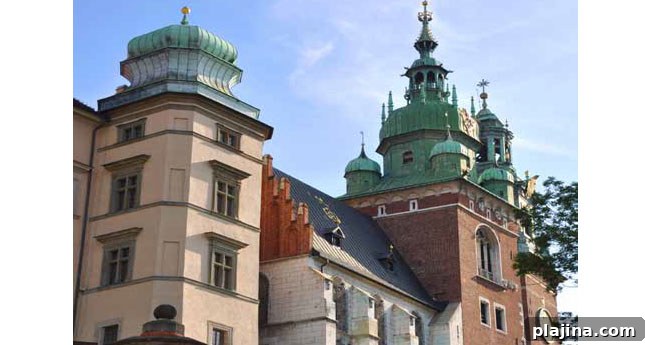
The UNESCO-listed Historic Centre begins around the Royal Wawel Castle and spreads through the medieval market square, one of the largest in Europe. Visitors encounter Gothic churches, Renaissance palaces, medieval fortifications and the historic district of Kazimierz. The area includes Jagiellonian University and the cathedral on Wawel Hill, where many Polish monarchs are interred.
Oskar Schindler’s Factory
Housed in the former administration building of the Emalia enamelware factory, the museum chronicles the story of Oskar Schindler and the Jewish workers he protected during World War II. The exhibit provides historical context about the wartime experience in Krakow, the people involved, and the real-life events that inspired the film Schindler’s List.
Wawel Royal Castle
Wawel Castle served as the royal residence from the early medieval period until the late 16th century and remains a national symbol. The castle complex contains richly decorated rooms, state apartments and a remarkable collection of 16th-century tapestries, among the finest in Europe.
EVENTS AND FESTIVALS
International Festival of Jewish Culture
Held in the historic Kazimierz district, this annual festival celebrates Jewish heritage with concerts, performances, exhibitions, book launches and guided tours hosted in synagogues, galleries and cafés. The program typically culminates in an open-air concert that attracts local and international visitors.
International Festival of Old Music
This multi-day festival showcases early music across several venues chosen for their acoustic and historical qualities. A diverse lineup of ensembles and soloists performs repertoire spanning medieval, Renaissance and Baroque traditions, highlighting Krakow’s longstanding musical heritage.
Pierogi Festival
A popular culinary event, the Pierogi Festival celebrates one of Poland’s most beloved dishes. Stallholders and chefs offer a wide range of pierogi styles and fillings, allowing attendees to sample traditional and creative variations in a lively, family-friendly atmosphere.
RESOURCES
For official visitor information and current details about events and services, consult Krakow’s city resources and tourism information. Local tourist offices in the city center can also provide maps, schedules and recommendations tailored to your interests.