
For a countryside escape within easy reach of Washington, D.C., drive roughly an hour west of the capital to the leafy enclave of Middleburg, Virginia, in scenic Loudoun County.
Framed by the Blue Ridge Mountains and fresh country air, a distinctive eco-minded experience awaits at one restorative boutique inn.
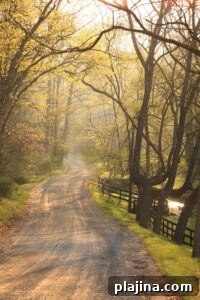
“Forest bathing is the practice of spending time in the forest or another natural setting to relax and connect with nature,” explained Greg McCarley, activities manager at Goodstone Inn & Restaurant, a collection of boutique cottages set across 265 acres of rolling terrain in Virginia’s horse and wine country. “It involves more than simply being there. You have to be mindful, breathe deeply, notice your surroundings, and really focus on what you’re experiencing.”
© Goodstone Inn
Originally coined in Japan in the 1980s as shinrin-yoku, forest bathing gives participants practical ways to restore balance between calm and tension, McCarley said. Its wellness benefits include reduced stress, improved mood, better sleep and a heightened sense of well-being.
Visitors to Goodstone Inn—whether staying overnight or arriving with a day pass—can join guided mindfulness hikes and kayaking adventures that introduce Japanese forest bathing principles focused on sensing the environment. These programs are designed to deepen awareness of sight, sound, smell and touch, encouraging a more intentional connection to the landscape.
There’s also an elemental tai chi class that brings forest bathing into motion. Guests practice tai chi in the shallow areas of a creek running through the property, moving mindfully with the water and matching the flow and rhythm as the creek runs around their feet.
“As guests move through the woods, we invite them to consider simple, introspective questions: Do I know what that plant, soil or water actually smells like? Feels like? Sounds like?” McCarley said. Participants are encouraged to pause, notice and express gratitude for those sensations—aware that they might never encounter that exact moment again. “Reflecting on these small, sensory moments makes the experience more meaningful and memorable,” he added. “It’s an immersive practice we hope remains with guests long after they leave.”