The pace in Tokyo is lightning-quick, yet the city offers quiet pockets that preserve the heart of Japan. Rising early, I followed several of the city’s most compelling threads, beginning at the vast Tsukiji Fish Market (Tsukiji Metro Station), which is busiest before 9 a.m. Boatloads of frozen tuna were being unloaded and auctioned while I enjoyed what might be the freshest sushi breakfast imaginable.
With a one-day unlimited Tokyo Metro pass and a map in hand, I headed north to Ueno Park and the Tokyo National Museum, the premier repository of Japanese art and history. After an hour among its highlights, I strolled next door to Sensoji, Tokyo’s oldest and most vibrant temple, home to a gilded statue of the Goddess of Mercy. At the temple gates I walked Nakamise Dori, the city’s most celebrated pedestrian lane, where stalls spill over with traditional crafts and scrolls.
Later I rode up to the observation deck of the Tokyo Metropolitan Government Office Building No. 1 in Shinjuku; on a clear day the view stretches to Mt. Fuji. From there I descended into the fashionable districts of Harajuku and Aoyama. I paused at a sidewalk café to sip coffee and watch the steady parade of people, then refreshed myself with a visit to Meiji Jingu Shrine and its tranquil Iris Garden. Moving on, I threaded through the elegant shopping avenues of Omotesando Dori to the Oriental Bazaar, a favorite for souvenirs with everything from kimonos to small curiosities at reasonable prices. After filling a bag with finds, I relaxed at the Hasegawa Saké Shop inside Omotesando Hills, sampling several cups of fine rice wine.
As evening fell, I explored the neon-lit entertainment quarters of Ginza and Roppongi before settling in at the Imperial Hotel for a superb teppanyaki dinner at the Kamon restaurant, where ingredients are carefully grilled before you on an open iron griddle.
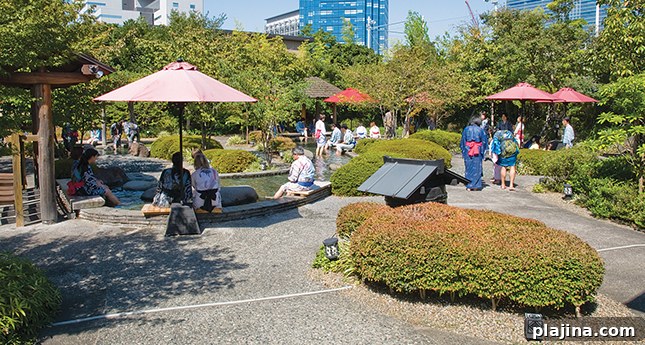
My day ended with a genuine immersion in Japanese culture—not in a staged performance but in a bath. Late at night I crossed the Rainbow Bridge to Odaiba and visited Ooedo-Onsen-Monogatari, a Neo-Edo–style bathhouse village within the Odaiba waterfront complex. The facility offers sand baths, footbaths, hot-spring tubs (onsen) and a variety of soaking pools designed to soothe the senses and restore calm after a high-energy day in Tokyo.