
When Lee Ehnqvist lets her three children taste her handcrafted cupcakes, she isn’t simply indulging them. As a baker at Mormor, a boutique cupcake shop in downtown Helsinki, Ehnqvist watches their expressions to judge both the flavor and the colorful decoration. The cup‑and‑icing details matter as much as the taste, reflecting a broader Finnish attention to design in everyday life.
Helsinki, designated World Design Capital 2012, showcases Finnish design on every scale. From Mormor’s playful storefront and intricately decorated cupcakes to the large redevelopment of Jätkäsaari — a former industrial area transformed into a designer-driven waterfront neighborhood — design informs the city’s identity. The Finns revere their designers, such as Alvar Aalto and Eliel Saarinen, with a cultural respect usually reserved for historic leaders. In Helsinki even utilitarian objects like trash cans, metro trains, streetlights and door handles reveal an understated elegance.
Exploring Helsinki is enjoyable year-round: warm summer days bring parks and marinas to life, while winter afternoons feel intimate, with glass‑enclosed cafés, heated trams and snowy streets lit by brief, pale sunlight. About one-third of the city is green space, crime rates are low, and English is widely spoken, making the city easy for visitors to navigate.
To experience Finnish design in a single day, begin at Klaus K, a family‑owned design hotel housed in a 1913 building. Its Ilmatar Restaurant is known for a generous buffet breakfast, and the hotel’s location in Helsinki’s Design District puts many signature shops within walking distance. Browse Iittala’s flagship store, explore Artek — the furniture and home accessories company founded by Alvar and Aino Aalto in 1935 — and visit the large Marimekko shop filled with bold, iconic textiles, clothing and home items.
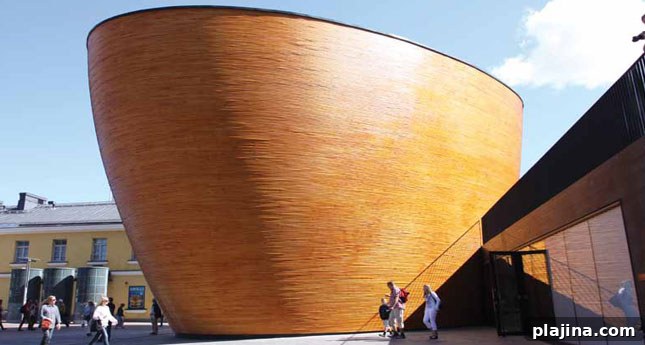
After shopping, make your way to the Design Museum, set in an 1894 building by Gustaf Nyström. The museum presents permanent and rotating exhibitions dedicated to Finnish design. From there, take a tram to the Chapel of Silence, a small, egg‑cup‑shaped structure clad in fir designed by Mikko Summanen as part of Helsinki’s Design Capital projects. The chapel is non‑religious and offers no services, but its quiet, softly lit interior — illuminated by a single opening in the ceiling — provides a moment of calm that many locals appreciate during the workday.
Not far away stands Helsinki Central Station, a granite and stone landmark completed in 1919 and designed by Eliel Saarinen. The station hums with commuter life at rush hour and connects the capital to other Finnish cities as well as to St. Petersburg via the high‑speed Allegro train.
Alvar Aalto, Finland’s most celebrated architect, built a residence in Helsinki in 1936. The Modernist home in Munkkiniemi — a short tram ride from the city center — offers a clear example of his design principles and is worth visiting if your schedule allows.
Later in the day, ride the metro to Kallio, a neighborhood ten minutes from downtown, to visit Kotiharjun Sauna. This is Helsinki’s last completely wood‑heated public sauna. Sauna culture is central to Finnish life — there are more than two million private saunas in a country of five million people — yet public saunas are increasingly rare. Kotiharjun Sauna operates Tuesday through Saturday and typically accepts visitors without reservations.
For an elegant early dinner, reserve a table at Savoy Restaurant, whose interior was designed by Alvar Aalto and has retained much of its original 1935 character. Conclude the evening at a performance by the Helsinki Philharmonic in the Helsinki Music Centre (note that the venue is closed during the summer). Opened recently, the concert hall — designed by Marko Kivistö — features a striking glass roof, a green copper façade and uniquely shaped birch panels that contribute to its acclaimed acoustics.