
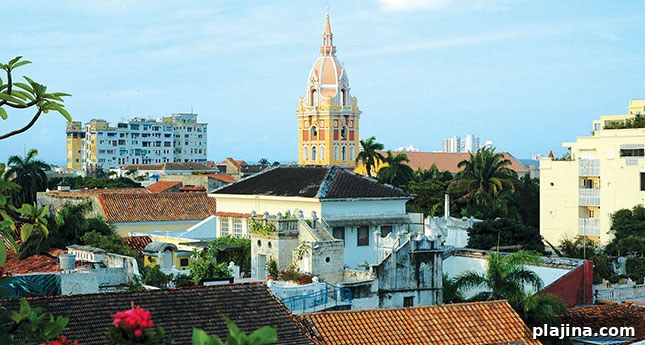
The rhythmic clamor of salsa fills the air in Cartagena, nearly drowning out the soft rustle of palm leaves in the trade winds. That breeze carries the warm, sweet-spicy scents of rum, sweat and cinnamon — the unmistakable aroma of the Caribbean — and you realize you are somewhere special.
History and literature thread through the colonial streets of the refined San Diego neighborhood, where an evening stroll evokes relaxation and a dreamy calm. Tall, spicy drinks are sipped under the Southern Cross as it hangs over the city. In many ways, Cartagena feels like the set of a film.
Although this image of a Caribbean idyll might not be the first thing people associate with Colombia, it exists in Cartagena. Untroubled by the conflicts of the distant countryside, Cartagena has become Colombia’s flagship tourist destination of the 21st century.
Founded in 1533 as Spain’s first city on the South American mainland and long a gateway to the continent, Cartagena now draws visitors in large numbers. Business travelers from Bogotá, sun-seekers flying in from Miami or Fort Lauderdale, and cruise passengers stopping at this UNESCO World Heritage site all add to the city’s steady stream of tourists.
On my first visit in the late 1990s, reclining on a hotel terrace with a cold drink, I wondered why Cartagena had not been on my radar earlier.
La Heroica — the city’s affectionate nickname earned after repelling repeated pirate assaults in the 17th century — captures the lure of the tropics. Built on wealth generated by slavery and Peruvian gold and silver, and scarred by cholera and the Inquisition, Cartagena carries the weight of colonial violence and imperial ambition. Those complex histories mix into a seductive blend that gives the city a decadent, passionate charm.
Is it the brightly painted colonial houses, the bougainvillea cascading from wooden balconies, or something more intangible that makes Cartagena an almost fairy-tale destination for couples? The salty air seems to act as an aphrodisiac. Today Cartagena is a favored wedding destination for affluent couples from Bogotá and an increasing number of foreigners seeking an exotic yet elegant setting.
Visitors can sense this atmosphere easily. Gabriel García Márquez, Colombia’s Nobel Prize–winning author, once called Cartagena home and drew inspiration from its streets. Walk from the handsome Plaza de Santo Domingo to Plaza de Bolívar, then pause at the Portal de los Dulces beneath the high archways — the very spot Gabo evokes in Love in the Time of Cholera where letter writers compose messages for the illiterate.
My tip: linger in that suspended literary mood and be cautious with the cloyingly sweet treats at the Portal de los Dulces. Instead, try a hearty carimañola — shredded yucca filled with cheese — and wash it down with a tropical juice like lulo or corozo, both typical of the Colombian Caribbean. Afterwards, head to one of the city’s celebrated restaurants.
A sunset walk along the city walls offers perspective on Cartagena’s past, while a dedicated walking tour that highlights García Márquez–related sites deepens the literary experience. For gentler adventures, take day trips to the Islas del Rosario to snorkel among coral reefs, relax on the white sands of Playa Blanca, or visit the Totumo Mud Volcano for a mineral-rich soak.
For the more adventurous, consider a longer excursion to Mompós, a colonial town about five hours from Cartagena with UNESCO recognition and historical ties to the city. To learn more about the region’s history of slavery, visit San Basilio de Palenque, founded by escaped slaves in the 17th century. If time is limited, stay local and explore La Boquilla, where new apartment blocks sit beside small remnants of old fishing communities that work the nearby mangrove swamps.
If you prefer exploring on foot, Cartagena is ideal. Venture beyond the polished San Diego neighborhood, pass the Torre del Reloj and the Cartagena Convention Center, and head to the more down-at-the-heels barrio of Getsemaní. Once home to artisans and slaves, Getsemaní still preserves much of its original character. Woodwork may be cracked and buildings in need of repair, but around the San Roque Church and beneath the watchful presence of San Felipe de Barajas Castle you will find a Cartagena closer to its historical self — the city before cruise ships and boutique hotels transformed parts of it. Exercise reasonable caution, but during daylight Getsemaní reveals authentic local life and a chance to rub shoulders with residents — an experience that can feel rarer inside the Ciudad Amurallada (Walled City).
Info to Go
Cartagena’s Rafael Núñez Airport (CTG) is well connected to major Colombian cities and offers direct flights from Fort Lauderdale (FLL) and Miami (MIA). Flights from Bogotá take about 75 minutes and typically cost around $70 one way, depending on season. The airport is roughly two miles from the city center; an official taxi from outside the terminal takes about 10 minutes and costs about $6.
Diversions
No visit to Cartagena is complete without sampling the city’s nightlife — a heady blend of rum and salsa.
For an all-night salsa experience, Café Havana (Calle Media Luna and Calle del Guerrero) is legendary; the music and atmosphere will leave a lasting impression. If you prefer a slightly more restrained venue, Quiebracanto offers an elegant alternative for discerning visitors. For a lower-key evening inside the city walls, relax with a cold beer in the small plaza in front of Donde Fidel (between Plaza de los Coches and Plaza de la Aduana) and watch how generations of locals celebrate rumba. For a scenic sundowner on the city wall, Café del Mar at Baluarte de Santo Domingo provides memorable views.
Lodging
Anandá Hotel Boutique
Anandá represents luxury in Cartagena with spacious rooms, a pool, a rooftop Jacuzzi and a Mediterranean restaurant. Calle del Cuartel 36-77.
Hotel Agua
This intimate six-room boutique hotel in a restored 17th-century mansion features refined architecture, a designer store and a rooftop pool. Calle de Ayos 4-29.
Sofitel Cartagena Santa Clara
Housed in a converted 1621 monastery, this hotel blends history with comfort. Internal gardens attract toucans and the bar serves excellent mojitos. Calle Del Torno 39-29.
Dining
Juan del Mar Mesa Peruana
Renowned for ceviche, Juan del Mar offers superb food in a pleasant indoor or outdoor setting. Plaza de San Diego 8-21.
El Santísimo
Enjoy Caribbean-Colombian specialties in a recently refurbished space; be sure to try the traditional santísima trinidad. Calle del Torno 39-62.
La Vitrola
Considered one of Cartagena’s finest, La Vitrola serves a Cuban-Colombian fusion with live music and well-regarded classics such as ropa vieja. Calle Baloco, Calle 33 2-01.