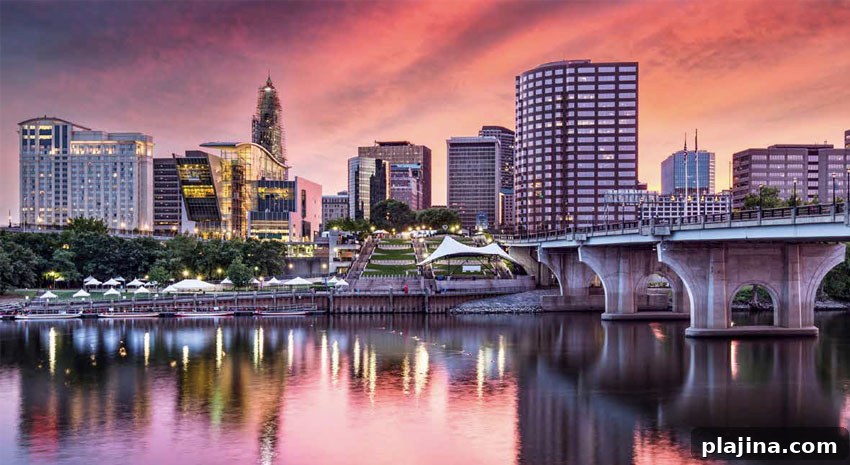
QUIET CONNECTICUT. The Land of Steady Habits. Those phrases might not be the first to come to mind when thinking of a growing technology hub nestled between New York and Boston, yet Hartford is quickly earning recognition as a center for digital innovation. According to the Brookings Institution, Hartford ranks among the top cities for tech jobs in the United States, a notable achievement for a mid-sized city embracing the digitized economy.
Connecticut and its capital have long been places of invention and culture. From the Colt revolver and a Revolutionary War submarine to the Frisbee, the state has a deep legacy of creativity. Hartford became home to the nation’s first insurance company in 1810, launching its reputation as the Insurance Capital of the World. Literary and cultural figures such as Mark Twain, Harriet Beecher Stowe, J.P. Morgan and Katharine Hepburn also have strong ties to the city.
With insurance, finance and health care playing central roles in the digital economy, Hartford and the surrounding region have become attractive to technology professionals seeking meaningful work and a livable urban environment. CVS’s decision to keep Aetna in Hartford after the acquisition preserved jobs and helped maintain the city’s insurance leadership. As technology reshapes insurance, Hartford is positioning itself as a center for InsurTech. Last year, the National League of Cities and Schmidt Futures recognized Hartford as a leading destination for insurance technology through the City Innovations Ecosystem initiative.
In December, Infosys—an India-based global technology and services leader—opened a $21 million Technology and Innovation Hub in Hartford’s renovated Goodwin Square, one of six new regional U.S. hubs. The center aims to hire 1,000 employees and will focus on solutions for insurance, health care and manufacturing clients. Complementing this presence, a new InsureTech Hub accelerator is set to drive industry innovation, improving customer experiences and streamlining policy management through modern technology.
Manufacturing in the region is also evolving. Stanley Black & Decker’s Advanced Manufacturing Center of Excellence, dubbed “Manufactory 4.0,” leads the company’s global automation and advanced manufacturing efforts, applying the Internet of Things, cloud computing, artificial intelligence, 3D printing, robotics and advanced materials. The initiative seeks to attract startups and foster collaboration in Hartford. Connecticut’s aerospace suppliers, including Collins Aerospace, are also pressing into new markets; Hartford will host the first International Space Trade Summit this May to connect local manufacturers with international partners and expand the state’s role in the space sector.
Talent development is a top priority as employers adapt to rapid technological change. The state allocated $2.5 million to establish two technology training schools—one in Hartford—to train hundreds of job seekers in data analytics and coding. Infosys has partnered with Trinity College to develop programs that ready liberal arts students and workers for the digital workplace, blending technical skills with broader critical thinking.
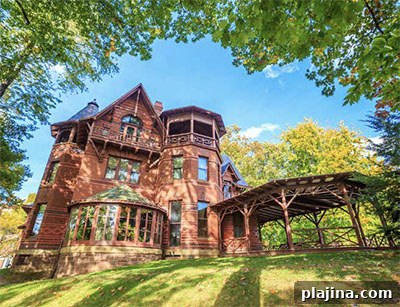
Mark Twain House, where the author and his family lived from 1874 to 1891 © F11PHOTO – DREAMSTIME.COM
To attract and retain young professionals and creatives, Metro Hartford has invested in amenities that support an urban lifestyle. Programs such as Lime bike-sharing and a Complete Streets initiative improve mobility and livability. The return of commuter rail via the Hartford Line reconnects the city to New Haven and Springfield, enhancing regional access. Professional sports help energize the city—the Hartford Yard Goats Double-A baseball team and Hartford Athletic soccer club increase entertainment options—while a growing arts scene, craft breweries, diverse restaurants and new neighborhood parks have strengthened Hartford’s walkable, community-focused appeal.
After a period of fiscal difficulty and a controversial state bailout, Hartford has been working to expand activity beyond the traditional 9-to-5 workday. Efforts to bring residents downtown and encourage commuters to stay for evening and weekend activities include new food and retail destinations. Parkville Market, scheduled to open in June, promises a lively food hall with dozens of owner-operated shops in the emerging Parkville arts district, drawing comparisons to Manhattan’s Chelsea Market.
Entrepreneurship has gained momentum recently, with incubators and accelerators creating space and support for innovators. Organizations such as Innovation Destination, Techstars and Upward Hartford have launched initiatives to empower startups, and Makerspace CT is preparing to open, offering makers and entrepreneurs a collaborative environment.
Rather than seeking dramatic new skylines, developers have focused on adaptive reuse—transforming historic factories and office buildings into apartments while preserving architectural character. Since 2015, the downtown added nearly 900 rental units with funding from the Capital Region Development Authority, maintaining high occupancy rates. Hundreds more units are under construction or in planning, contributing to downtown vitality and housing options.
Hartford’s compact downtown and regional access make it a convenient option for business visitors. Bradley International Airport, about 16 miles from downtown, offers accessible parking, charging stations, free Wi-Fi, dining options and direct Aer Lingus flights to Dublin, making it an appealing alternative to larger airports in New York and Boston.
The 540,000-square-foot Connecticut Convention Center—the largest between New York and Boston—hosts trade shows, conventions and business events in a scenic riverside setting, supporting Hartford’s role as a regional business destination.
The hotel scene has also seen revitalization. The landmark Goodwin Hotel has reopened, blending historic architectural detail with modern luxury in guestrooms, duplexes and suites. The hotel continues a storied tradition—J.P. Morgan once stayed there—and its Restaurant Porrón features Spanish-inspired cuisine from Chef Tyler Anderson.
With a history rooted in industry and invention, Hartford is embracing a new wave of technology companies, startups and cultural investments. The city’s blend of historic character, strategic industry focus and growing quality-of-life amenities captures the spirit of Connecticut’s tourism motto: “Connecticut: Still Revolutionary.”
SCENIC DRIVES
The name Connecticut comes from the Algonquian Quinnehtukqut, meaning “beside the long tidal river.” The 410-mile Connecticut River flows from the Canadian border through Hartford to Long Island Sound, offering scenic routes and historic sites. One pleasant excursion crosses the river aboard the Hadlyme-Chester Ferry—operating since 1769—to reach Gillette Castle State Park. Built by Hartford native William Gillette in 1914, the 24-room castle sits on a 184-acre estate with woodland trails. From I-91, take Exit 22S to merge onto CT-9S toward Middletown/Old Saybrook, then follow local routes to the ferry. The service runs April 1–Nov. 30.
Another popular day trip is Mystic, about an hour’s drive, where visitors can explore shops, restaurants and some of New England’s finest seafood. Mystic Aquarium features rescued seals, beluga whales and endangered African penguins, while Mystic Seaport Museum recreates a 19th-century seafaring village with historic vessels and period exhibits. From Hartford, take I-91S to Exit 22S, merge onto CT-9S, then pick up I-95N in Old Saybrook; use Exit 90 to reach the aquarium, or follow Route 27 south to the seaport.