
On the surface this is not a spectator sport. From a vantage point beside a public swimming pool in Slovenia, I try to make sense of what I am watching.
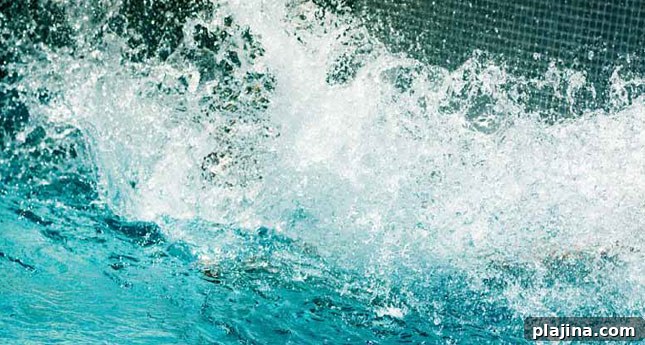
Ostensibly it is a game of hockey. In practice it is a confusion of bobbing bottoms and flapping flippers. The energy expended by the two teams converts into waves that lap against the sides of the pool. There is much splashing and commotion, but the game itself is mostly hidden from view.
Watching underwater hockey from poolside is like watching a play from backstage. I only see the players when they temporarily leave the action. They surface to recover, lying face down and breathing through snorkels. Then, with a bob of a bottom and a flap of a fin, they slip back into the fray.
The real contest takes place on the pool floor. Down there, two teams of six players vie to push a plastic-covered lead puck toward goals at each end. Their task is made harder by human physiology: we are not naturally aquatic. As the game progresses more players spend longer at the surface, gasping for breath.
Substitute players sit on a bench like understudies. Clad in Lycra swimwear, the rest of their gear lies at their feet: fins, masks with mouthpieces, ear guards, padded gloves and short wooden sticks used to push the puck. They wait for the call with a mixture of impatience and apprehension.
Underwater hockey was invented almost 50 years ago. Originally played by teams of eight and nicknamed “octopush,” the name still survives in some places even though team sizes have since been reduced.
What began as a recreational diversion for scuba and freediving enthusiasts soon spread internationally. As with many sports that start as fun pastimes, a governing body emerged, rules were formalized and passions ran high.
The drama beneath the waves has been matched by administrative wrangling. Disputes around the 2006 World Championship briefly produced rival governing bodies, each claiming authority. That schism has largely been resolved under the World Underwater Federation (CMAS), and the 2013 World Championship is being held in Hungary this month.
The popularity of underwater hockey encouraged pioneers to adapt other land sports to a sub-aquatic environment. Both football and rugby have received similar elemental makeovers.
Underwater rugby, also governed by CMAS, is rougher and takes full advantage of the pool’s three-dimensional space. Teams battle to sink a saltwater-filled ball into baskets placed on the floor at either end of the pool. Defenders often drape themselves over the baskets while attackers try to tug them away. Many contests come down to which players can hold their breath the longest.
The same breath-control challenge faces the underwater hockey players in Slovenia. The game ebbs and flows; each score is revealed after the fact when surfaced players raise an arm in triumph.
Exhausted players are substituted. The reserves shuffle in their fins to the poolside. I do not envy them as they stand there, lungs filling, mentally preparing to take the plunge back into an invisible, noisy contest beneath the water.