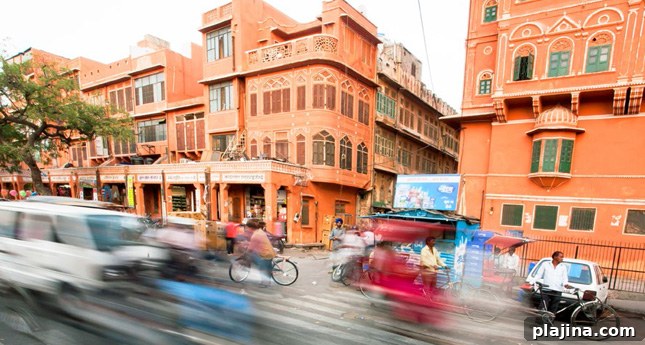
In Jaipur, the capital of Rajasthan—one of India’s most dazzling states—I step into a busy boulevard and try to cross the street. Although Jaipur was carefully planned in 1727, today its broad avenues are packed with traffic. Facing the salmon-hued walls that earned the city the nickname “Pink City,” I step off the curb toward the ornate City Palace and find myself immersed in a vibrant stream of cars, tuk-tuks, trucks, motorcycles, buses, bicycles, pedestrians, carts and even camels. Brightly painted elephants and a few wandering cows add to the scene. The sounds of the street blend laughter, horns, revving engines, hawkers’ calls and birdsong. Around me is a kaleidoscope of color: gem-bright saris, luminous turbans and golden sunlight on the pavement. A humid breeze carries the scent of coriander, cumin and rose petals from a nearby spice market, mixed with the less pleasant aroma of waste. Jaipur captures extremes—the exhilarating and the challenging—and feels at once an exotic trove of surprise and a city full of life’s contradictions.
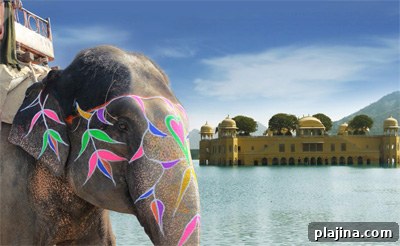
A colorful elephant with Jal Mahal Water Palace in the background © MICHELLELIAW | DREAMSTIME.COM
Fortunately, I am accompanied by Hem Singh, an exceptional guide from Micato Safaris, a Jaipur resident and descendant of a local royal family. He expertly navigates the traffic and leads me safely through the mayhem to discover pockets of calm and grandeur that recall Jaipur’s royal past. The City Palace remains a residence for the royal family and showcases a splendid blend of Mughal and Hindu architecture. Nearby, the city’s polo field evokes glamour: matches frequently draw elegant crowds dressed in silk, chiffon and glittering jewelry, a tradition popularized by Jaipur’s former maharaja. To feel fully part of Jaipur’s social fabric, I indulge in shopping—an essential Jaipur experience. The city has been a commercial hub since its Silk Road days and remains known for textiles, gems and jewelry. Today business travelers and leisure shoppers alike come for Jaipur’s renowned markets and skilled artisans.
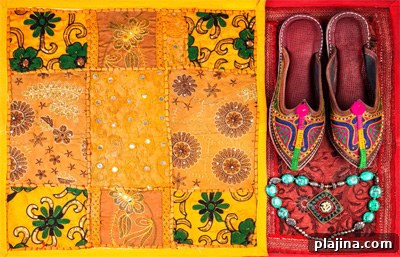
Brilliant textiles and jewelry are popular items sold at Jaipur markets. © MARINA PISSAROVA | DREAMSTIME.COM
Smaller than Delhi or Mumbai but richer in historical character, Jaipur has thrived for centuries thanks to its merchant and royal classes. The city’s modern outputs include ready-made garments, gemstones and jewelry, handicrafts, wooden furniture, leather goods and stone quarried from the nearby Aravali Hills. Local officials report rising real estate values and growing economic activity, particularly in arts and tourism. Multiple airlines serve Jaipur, making travel increasingly accessible. While traditional crafts—enamel work and brass ateliers, for example—preserve age-old techniques, contemporary startups and boutiques are redefining luxury craft in Jaipur’s evolving market. Established names like The Gem Palace carry historical prestige, while newer shops showcase bespoke leather trunks and modern design. Jaipur also draws cultural crowds: the annual Jaipur Literature Festival in January brings authors and book lovers from around the world, while the Pushkar Camel Fair each November attracts thousands to its lively livestock markets, races and craft stalls.
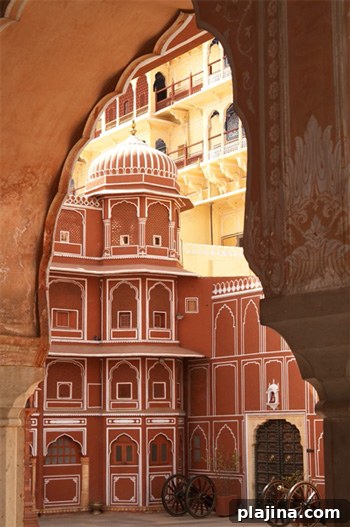
Pink and white buildings of the City Palace © JEREMY RICHARDS | DREAMSTIME.COM
Jaipur stimulates the senses with a distinct, lively character. Like a bright flower in a khaki desert, the city offers grace amid a harsh landscape. Its residents mirror that vibrancy with bold turbans and colorful clothing; men wear jodhpurs, boots and pronounced mustaches that add theatrical flair. I visit a seamstress, select emerald silk and have a sari tailored—an outfit I later wear to dinner at the City Palace with Hem Singh and his friend, the current maharaja. The evening feels dreamlike, emblematic of Jaipur’s romantic, storied charm.
Things to Do in Jaipur
Explore Amber Fort, perched on a rocky hill above Lake Maota just outside the city. Built from white and red sandstone, the fort combines fortress-like exteriors with richly decorated interiors influenced by Hindu and Muslim styles, featuring murals and frescoes that depict scenes from daily life. For a unique vantage point, take a hot-air balloon ride to admire the fort and the city from above. To experience spiritual life, visit Birla Temple, known for its ongoing fire rituals and prayer ceremonies.
CHECKING IN WITH HEM SINGH
Jaipur seems both ancient and modern. How does it reflect India today? The old city preserves a rich heritage and feels like a living museum, while the newer areas show modern development. Both together capture contemporary India’s essence.
What insider places do you show people on bespoke tours of Jaipur? I take visitors into the old city, where each street specializes in different crafts—textiles, jewelry and handicrafts. I also introduce travelers to a traditional haveli (merchant mansion) with distinctive architecture and mirror work, and to local families to share Rajput culture and heritage.
Haggling in the market is common. What tips do you have for getting the best deal? When a shopkeeper says that’s the best price, smile and bargain further—you’ll often reach the true best price and make a friend in the process. Jaipur quilts, jewelry and textiles make memorable, practical souvenirs.
Describe your perfect day in Jaipur. A relaxed breakfast, a walk through the old city, a visit to Amber Fort—whose terraces offer spectacular views—and ending the day with a round of golf and a drink at the 19th hole.
What are Jaipur’s most iconic shops? Notable names include Gem Palace, Silver & Art Palace, Amrapali, Anokhi, Royal Gems & Art, Handicraft Haveli and Indigo and Jewels Emporium.
Where else in India should a business traveler to Jaipur visit? I recommend Udaipur, Jodhpur and Jaisalmer.
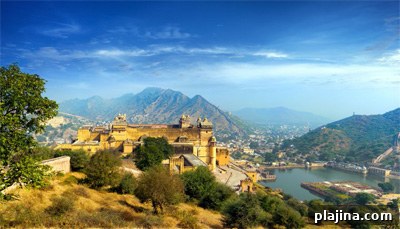
Jaipur’s Amber Fort © SERGEYCHERNOV | DREAMSTIME.COM
Jaipur: Just the Facts
Time zone: GMT +5.5
Phone code: Country code 91, City code 141
Currency: Indian rupee
Official language: Hindi
Entry/Exit Requirements: Foreign nationals must hold a valid passport and visa. An online visa process simplifies applications. Depending on season and region, malaria prophylaxis may be advised.
Key industries: Textiles, gemstones, tourism
Jaipur Info to Go
Jaipur International Airport is about 10 miles from the city. Travelers booked with reputable outfitters may be met and escorted to their hotels; otherwise a taxi to town costs roughly $20. Regular flights connect Jaipur to Delhi, Mumbai and Udaipur.
Where to Stay in Jaipur
The Oberoi Rajvilas Situated five miles from the city on 32 acres of gardens, this property feels like a country residence of royalty, offering tennis, a pool, croquet and a spa. Babaji Ka Modh, Goner Road $$$$
Rambagh Palace A Taj Group property centrally located with grand architecture and elegant gardens, reflecting Jaipur’s maharaja heritage. Bhawani Singh Road, Rambagh Circle $$$$
Suján Rajmahal Palace Once a pleasure palace and later a royal residence, the property features ornate gilded interiors. Sardar Patel Marg, C Scheme $$$$
Restaurants in Jaipur
1135 AD Dine in a private, maharaja-style setting within Amber Fort for classic Indian dishes from paneer to tandoor specialties with panoramic views. Amber Palace, Amber Road $$$
Anokhi Cafe Located inside a well-known textile shop, this cafe offers salads, soups and sandwiches—ideal for a break from traditional Indian fare. KK Square, Prithviraj Road $
Raj Mahal Set in The Oberoi Rajvilas and open seasonally, this restaurant serves regional specialties beneath Mughal arches. The Oberoi Rajvilas, Babaji Ka Modh, Goner Road $$$