
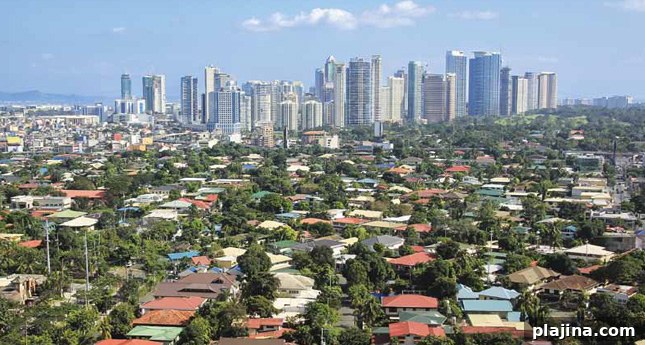
Manila is a vibrant, fast-growing metropolis at the heart of the Philippines’ economic upswing. With a large English-speaking population, a strengthening stock market and growing international investment, the capital city is attracting attention as a regional business hub.
Historically, Manila has been a strategic prize for many empires—Spanish, American, Chinese and Japanese—creating a culturally diverse and adaptable population. Today those qualities help the city navigate a favorable economic climate.
In 2014 the Philippine economy expanded by 6.1 percent. Although slightly below the government’s 6.5 percent target, this rate still ranked among the fastest-growing in Asia that year, second only to China. In late 2014, Moody’s upgraded the country’s credit rating to a level above speculative grade, reflecting renewed confidence among international investors.
Demographics are a major asset: more than 60 percent of the population is between 15 and 64 years old, providing one of the largest working-age pools in the region. Greater Manila alone is home to nearly 22 million people, a figure expected to approach 30 million by 2025. A significant portion of this workforce supports the business process outsourcing (BPO) sector, particularly voice-based customer service. With English an official language alongside Filipino, the Philippines overtook India in 2011 as the world’s largest location for outsourced call centers. From 2008 to 2014, revenue from the BPO industry more than doubled, reaching roughly $18 billion nationwide.
Serendra Park in Bonifacio Global City © Junpinzon | Dreamstime.com
Remittances from overseas Filipino workers provide another important economic boost. About 10 million Filipinos live and work abroad, and in 2014 they sent home a record sum exceeding $24 billion. This steady stream of income supports household consumption and helps expand a rising middle class. Research by AC Nielsen projected that by 2020 the Philippine middle class would grow to 72 percent of the population, outpacing several neighbors and increasing demand for premium goods and services.
Construction and real estate development are prominent across Metro Manila, with demand for high-end residences and commercial space driving activity. Major developers like Megaworld Corp. and Ayala Land Inc. plan thousands of new housing units, and more than 50,000 new units were expected to enter the market in 2015. Additional large-scale projects were also slated to begin, contributing to a sustained construction boom.
Tourism is another growth area. While the Philippines has long been celebrated for beaches and rice terraces outside the capital, authorities launched the Visit the Philippines Year campaign in 2015 aiming to attract 10 million international visitors. Though Manila lacks the island scenery found elsewhere, demand for accommodations and urban tourism amenities has been rising. Global hotel brands such as Starwood, Hilton, Accor and Wyndham have shown interest in Manila’s expanding market, joining established luxury names like Peninsula, Fairmont, Raffles and Shangri-La.
City of Dreams Manila exterior © City of Dreams Manila
Gaming and integrated resorts are also reshaping the local leisure landscape. After Resorts World opened near Ninoy Aquino International Airport in 2009, Entertainment City in Parañaque has emerged as a major entertainment and casino district. The arrival of City of Dreams Manila brought hundreds of gaming tables and thousands of machines to the area, accompanied by luxury hotel brands such as Nobu. Discussion continues about expanding similar developments to other regions, including Cebu.
Once labeled the “Sick Man of Asia” because of persistent political and economic challenges, the Philippines has made significant strides in recent years. Improved governance, stronger economic fundamentals and growing investor interest have led analysts to speculate whether the country could be the next Asian success story. Much of that momentum is concentrated in Manila, where opportunities across finance, real estate, tourism and services are most visible.
Things to Do in Manila
Visitors often hear that the most prized natural attractions lie outside the capital, but Manila offers an invaluable perspective on contemporary Filipino life. The city’s modern urban culture, shopping centers and dining scene reveal how locals live and socialize.
Malls are central to daily life in Manila. Many complexes are more than shopping destinations—they include restaurants, cinemas, bowling alleys, medical clinics and spas, serving a broad cross-section of residents. In a tropical climate where heat and rain are common, air-conditioned malls provide welcome comfort. The upscale Greenbelt complex in Makati houses high-end restaurants and international fashion boutiques.
An assortment of fruit juices and refreshments in Market! Market! in Bonifacio Global City © Junpinzon | Dreamstime.com
Bonifacio Global City (commonly called The Fort) in Taguig is one of Manila’s trendiest neighborhoods, filled with cafés, bars, boutiques and new residential developments that attract the growing middle class.
For historical and family-friendly attractions, Rizal Park and the walled district of Intramuros offer a glimpse into Manila’s Spanish colonial past. Intramuros retains 16th-century architecture and remains one of the few parts of the capital where historic structures and streetscapes are preserved.
CHECKING IN WITH MONIQUE TODA
Director of Communications, Raffles and Fairmont Makati
What makes Manila the perfect fit for brands like Raffles and Fairmont?
Raffles and Fairmont Makati opened in 2014 during a resurgence in luxury hospitality across the metropolis. Their arrival reflected improving economic conditions and renewed tourist interest. Manila’s mix of East and West, widespread English proficiency and warm hospitality make it an appealing destination for international travelers.
How do Raffles and Fairmont give guests an authentic local experience?
Both hotels showcase Philippine culture through local art, cuisine and curated experiences. Raffles Makati displays more than 1,600 commissioned Filipino artworks and offers an Art Concierge program for guests. The hotels emphasize local flavors in their culinary offerings, using native ingredients and traditional tastes in pastries and welcome amenities.
What most surprises visitors about Manila?
Many visitors are surprised at how safe and welcoming Manila can feel. Like any major city, there are neighborhoods to avoid, but most travelers experience friendly, hospitable people and a lively culture that embraces fun and celebration.
How does Manila differ from other cities in the region?
The Philippines blends Asian traditions with strong Western influences from Spanish and American periods of rule, creating a multicultural environment. While infrastructure varies compared with neighboring cities, Filipino warmth and cultural variety leave a lasting impression on visitors.
Why has Manila become such a “hot” city?
A stable economy, improved reputation, new luxury hotels and gaming facilities, increased foreign investment, and the international success of Filipino professionals and cuisine have all contributed to Manila’s rise in prominence.
Manila: Just the Facts
Time Zone: GMT +8
Phone Code: Country code: 63 City code: 2
Currency: Philippine peso
Entry/Exit Requirement: U.S. citizens must have a passport valid for six months to enter the Philippines. No visa is required for stays of 30 days or less. Departing passengers from Ninoy Aquino International Airport pay an airport terminal fee of about $17.
Official Languages: Filipino, English
Key Industries: Business process outsourcing, construction, tourism, communications, real estate, manufacturing
Manila Info to Go
Ninoy Aquino International Airport (MNL) is located between Pasay and Parañaque, about seven miles southwest of Manila and just south of Makati’s central business district. Taxis are the most practical option for reaching the city. Official taxis at hotel terminals typically charge around $12 to hotels in Makati.
Where to Stay in Manila
Makati Shangri-La, Manila The classic luxury hotel remains a glamorous and popular choice in Makati. Corner of Ayala and Makati avenues, Makati City $$$–$$$$
The Peninsula Manila An iconic landmark known for elegant rooms and a dramatic fountain at the entrance. Corner of Ayala and Makati avenues, Makati City $$$–$$$$
Raffles Makati / Fairmont Makati Two luxury brands sharing one landmark building, offering distinct personalities and exceptional service. 1 Raffles Drive, Makati Avenue, Makati City $$$–$$$$
Restaurants in Manila
Gallery Vask Chef J. Luis Gonzales brings Basque-inspired pintxos and refined flavors to Bonifacio Global City. 5F Clipp Center, Corner of 11th Avenue and 39th Street, Bonifacio Global City, Taguig $$$
Lusso Margarita Forés’ elegant kitchen elevates comfort dishes into refined fare, making it a popular destination for business dining. Greenbelt 5, Makati City $$$
Romulo Café With two stylish locations in metro Manila, Romulo Café serves bold Filipino flavors in an inviting setting. 32 Scout Tuason St., Quezon City; and 148 Jupiter St., Makati City $$