
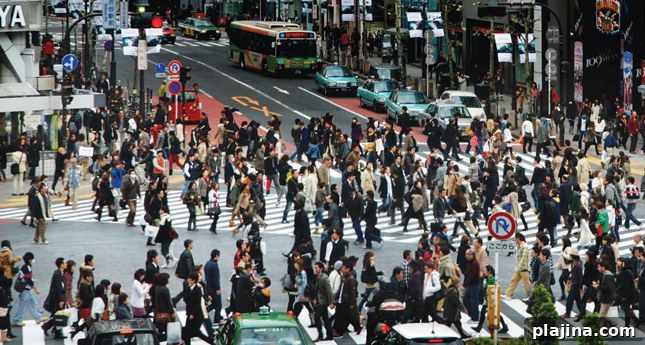
You’re late and lost. You boarded the Shinjuku line instead of the Marunouchi line and now find yourself in Akihabara (or is it Asakusa?), staring at Tokyo’s famously complex subway map — 274 stations, 13 lines, nearly 8.7 million daily riders — and wondering how you’ll reach Takadanobaba by 9.
It doesn’t have to be that stressful.
Tokyo is vast — with a metropolitan population approaching 35 million, it is the largest in the world — and the city moves at a rapid pace. Yet despite its size and intensity, Tokyo is surprisingly navigable. The public transit network is extensive and convenient, with metro lines near most major sights and affordable one-day passes available at Narita International Airport. Taxis are expensive compared with many countries, but they are widely available and accept credit cards.
Many streets lack names and building numbers aren’t always sequential, but fluency in Japanese isn’t required to get around. Learn a few basic phrases, carry a map or download one from the tourist information center, and plan your itinerary carefully.
Timing is crucial in Tokyo. Avoiding the morning rush — when commuters cram into subway cars — will make travel far easier and more predictable. And if your commitments are within easy reach of your hotel, your chances of making meetings on time improve significantly. Choosing a well-located hotel can make a real difference.
One famous option is the Park Hyatt Tokyo. Known to many from the film Lost in Translation, this five-star hotel offers spacious, luxurious rooms with sweeping city views — on clear days Mount Fuji can be seen — and a widely praised breakfast at the Girandole restaurant, which serves both Western and Japanese dishes. Located in Kenzo Tange’s Shinjuku Park Tower (floors 39 to 52), the hotel sits just outside the Central Business District but remains convenient for business travelers.
After the 2011 earthquake and tsunami, inbound tourism to Japan dropped sharply amid concerns about radiation from the Fukushima Daiichi nuclear plant. Those fears have largely subsided: health and safety authorities have clarified that risks beyond an immediate radius of the plant are low, and visitor numbers began to recover.
Symbolizing that recovery, the Tokyo Skytree opened to the public after four years of construction. As the tallest free-standing broadcast tower in the world and Japan’s tallest structure, it added a striking new landmark and a major draw for visitors. The tower includes two observatories, an aquarium, a dome theater and a large shopping complex, offering panoramic views and dining experiences high above the city.
Tourism has rebounded strongly; visitor figures returned to pre-disaster levels and then continued to grow. With major attractions, world-class dining and a resilient infrastructure, Tokyo remains a leading destination in Asia and beyond.
Dining in Tokyo is an exceptional experience. The city boasts an extraordinary number of Michelin-starred restaurants — more than Paris and New York combined — so business travelers and food lovers have countless superb options, from traditional Japanese cuisine to international fare.
Sushi aficionados with a generous budget may aim for Sukiyabashi Jiro, a three-Michelin-star establishment famed for its pristine sushi and the mastery of chef Jiro Ono. The restaurant is tiny and understated — ten seats in the basement of an office building — and reservations are hard to secure, but the quality and portions are memorable for those who manage to dine there.
Ginza, Tokyo’s upscale district, offers many alternatives if a reservation at Jiro proves elusive. Sushi Kanesaka, a compact and refined two-Michelin-star restaurant, serves carefully prepared sushi in an intimate setting. For a larger and more eclectic dining experience, Kihachi combines French and Japanese influences in an elegant room decorated with Art Nouveau touches.
For an especially impressive and intimate meal, Yakumo Saryo in Meguro occupies a traditional Japanese villa on a quiet, tree-lined street. The residence-turned-restaurant includes small private rooms overlooking a peaceful garden and offers a kaiseki-style multi-course menu paired with sake in a subdued, minimalist setting — a dining experience that feels like a treasured secret.
Weblinks
Japan National Tourism Organization
Park Hyatt Tokyo
Sukiyabashi Jiro
Tokyo Skytree
Tokyo Tourist Information Center