
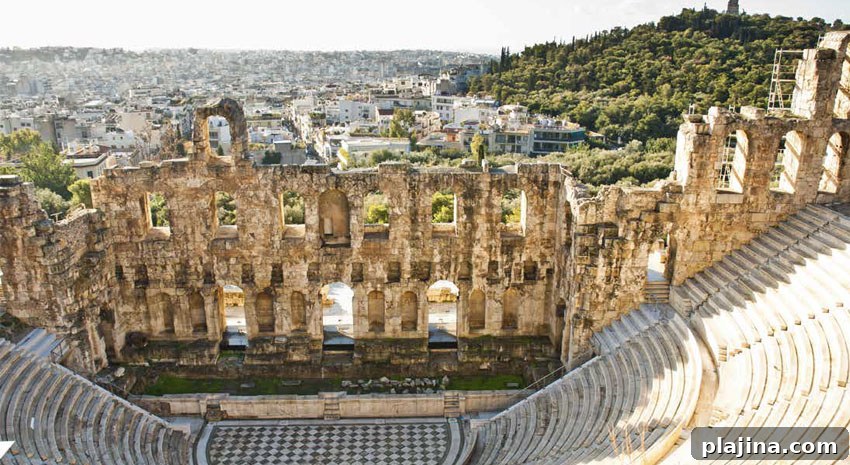
Wandering the twisting streets and narrow lanes of Athens, it’s easy for a modern visitor—while dodging buses—to understand why Lord Byron and other Romantic poets found this city so inspiring. The Acropolis rising above the urban sprawl in sun and moonlight, and long hours spent among ancient columns and temples, inspired poems about love and beauty that still resonate today.
Unlike some cities where the essence hides beneath clutter, Athens directs your gaze upward. The Acropolis crowns the city, offering a concentrated complex of monuments that includes the Theatre of Dionysus, numerous sanctuaries and temples such as the Temple of Athena Nike. From many viewpoints the Acropolis appears like a timeless crown above the modern metropolis.
Many ancient monuments bear the scars of history. The Temple of Zeus, for example, was built in episodic stages over more than six centuries and today only 16 columns remain, one toppled and resting on the ground—an eloquent reminder of time’s passage and the city’s layered past.
Until 2003, many city sidewalks were paved in marble; most have since been replaced with less slippery surfaces for rainy days. Restoration work continues across the city, including targeted conservation of the Parthenon and the Temple of Athena Nike.
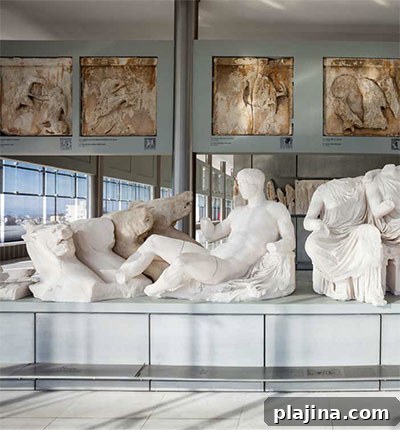
Acropolis Museum © SALKO3P -DREAMSTIME.COM
The Acropolis Museum is an excellent starting point for understanding the site. Built above an active excavation, the museum includes transparent sections of floor that reveal the archaeological layers beneath. Exhibits cover the Archaic Acropolis Gallery with striking marble sculptures of figures and horses, and the third-floor Parthenon Gallery, which explains the politics and finances behind the Parthenon and the colossal statue of Athena Parthenos.
Other galleries explore the Propylaia—the monumental entrance to the Acropolis—the Temple of Athena Nike and the Erechtheion. The Erechtheion, famous for its caryatids (female figures that function as columns), is steeped in myth: tradition holds it marks the spot of a contest between Poseidon and Athena over the city’s patronage.
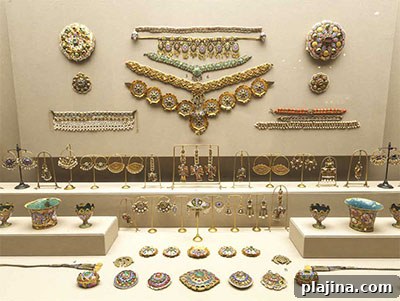
Jewelry on display at the Benaki Museum © MILAN GONDA – DREAMSTIME.COM
Beyond the Acropolis, several museums deserve attention. The Benaki Museum often gets overlooked but contains an impressive range of art, from Byzantine and Islamic works to Chinese and pre-Columbian objects, alongside collections of prehistoric, ancient Greek and Roman artifacts, including statuary, jewelry and decorative friezes.
The National Museum of Contemporary Art, now housed in the renovated FIX Brewery on Syngrou Avenue, offers significant contemporary works by Greek and international artists. Its rotating exhibitions are complemented by performances, lectures and a busy events calendar.
The Museum of Cycladic Art, founded on a private collection, showcases Aegean and Cypriot artifacts and makes for a concise, rewarding visit before lunch near Syntagma Square. Syntagma’s fountains, cafés and historic surroundings create an inviting urban gathering place—ideal for sitting with a glass of ouzo or tsipouro and watching life in the city unfold.
From Syntagma you can easily walk to the Plaka, the Arch of Hadrian, the Theatre of Dionysus and the Temple of Olympian Zeus. Remains of Hadrian’s Library are also nearby. Lord Byron famously wrote that the “air of Greece has made me” a poet and that “Athens holds my heart and soul.” It’s easy to picture him wandering these ruins, drawing inspiration from the stones and light that shaped so much of his work.
Athens Info to Go
Driving in Athens can be frustrating: heavy traffic and alternating parking rules based on license plates complicate getting around. For most visitors it’s better to skip a rental car and rely on a driver or the city’s public transport network of metro lines, trams, buses and a suburban rail. The system can be crowded and occasionally affected by strikes, but it reaches nearly every part of the city.
Athens International Airport Eleftherios Venizelos is about 12 miles east of the city. Metro Line 3 provides direct access between the airport and central Athens, and regional rail links connect to Larissis Station and the suburban rail network. Express buses depart the arrivals level for central points, and official yellow taxis queue outside exits—fixed fares apply for trips to the city.
Where to Stay in Athens
KING GEORGE — Part of Marriott’s Luxury Collection, this historic city-center hotel dates back to 1930. Dine at the Tudor Hall Restaurant or enjoy Acropolis views from suites that include private terraces. 3 Vasileos Georgiou A, Syntagma Square.
THE MARGI — A Small Luxury Hotels of the World property set between beach and pine forest, offering marina views and a lagoon pool with sun beds and cabanas. 11 Litous, Vouliagmeni.
PALLAS ATHENA GRECOTEL BOUTIQUE HOTEL — A blend of art, design and comfort with loft suites and family rooms featuring original wall art. 65 Athinas and Likourgou.
Restaurants in Athens
ACROPOLIS MUSEUM RESTAURANT — Exceptional regional dishes served with views of the Acropolis. 15 Dionysiou Areopagitou.
ORIZONTES LYCABETTUS RESTAURANT — Mediterranean cuisine on Lycabettus Hill, offering romantic vistas and locally sourced ingredients such as Aegean fish and regional lamb. 1 Aristippou, Lycabettus Hill.
SPONDI — Athens’ two-Michelin-star restaurant offers French-inspired tasting menus in an elegant stone and brick setting, within easy reach of the Acropolis and the Panathenaic Stadium. 5 Pyrronos.