
In February, Kansas City International Airport unveiled a new $1.5 billion terminal, the airport’s first major modernization since opening in 1972. The single, streamlined building opens with 40 domestic and international gates and room to expand to 50 gates in the future, replacing the previous three-terminal complex.
The terminal is designed for passenger convenience and comfort. Two moving walkways connect the concourses, and 16 security lanes help manage peak flows. A new adjacent garage provides 6,200 parking spaces. The facility includes a sensory room, both all-gender and gender-specific restrooms with changing tables, 10 dedicated nursing rooms, more than 40 local dining options, indoor and outdoor pet-relief areas, a children’s play area, an outdoor courtyard and stages for live music.
Sustainability and innovation are central to the design. The building achieved LEED Gold certification and is estimated to use about 20 percent less energy than the airport’s former terminals. Solar panels cover the south side of the parking garage, and the terminal’s all-electric shuttle buses use in-place induction charging pads while loading and unloading—the first system of its kind in the country.
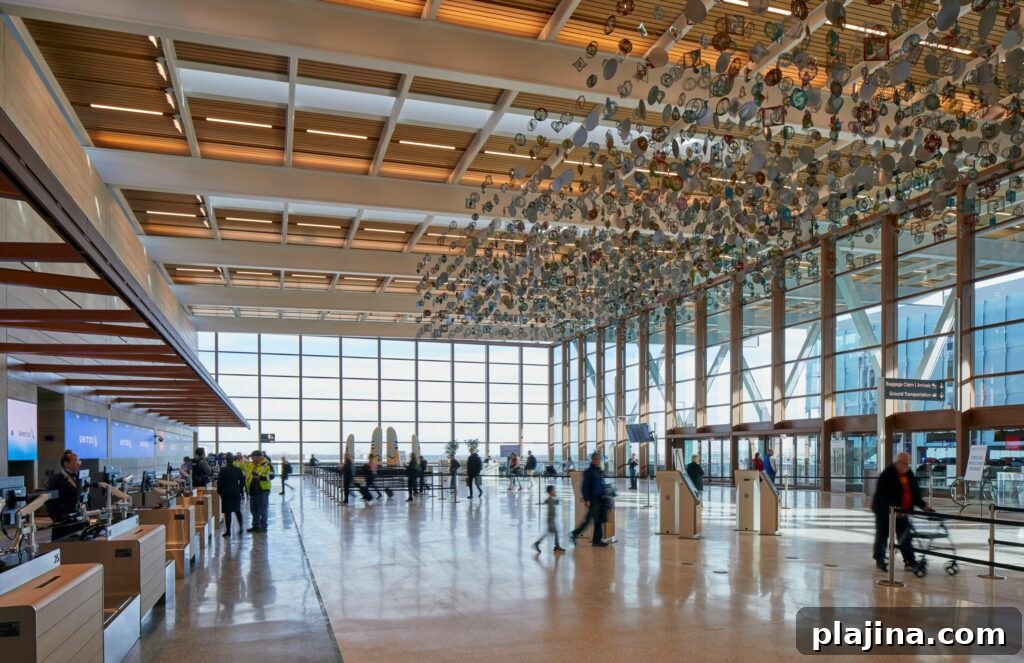
© Lucas Blair Simpson – SOM
Accessibility received special attention during planning and construction. Sloped floors replace traditional ramps to make movement easier for passengers with mobility challenges, and visual paging has been added to major information displays to assist travelers who are deaf. Every gate desk, check-in position and information counter is set to wheelchair-accessible heights. The airport also features the Kansas City Air Travel Experience simulator to help anxious or unfamiliar travelers rehearse a journey, plus a quiet room for anyone needing a calming space.
Skidmore, Owings & Merrill (SOM) led the terminal’s design. The 1.1 million-square-foot building boosts annual passenger capacity from about 3.8 million to more than 11 million and emphasizes the region’s culture through architecture and curated public art.
“The new terminal, designed, planned, and engineered by SOM with CWC and a team of consultants largely led by women, is a testament to the strength of the Kansas City region’s demand for travel,” said Pat Klein, director of aviation for Kansas City. The project involved 54 women-owned businesses and a construction team with a share of women that tripled the industry average, reflecting a deliberate effort to broaden participation across the project.
Art and heritage features link the new building to the airport’s past. Colorful mosaics, cut and preserved from the previous terminal, are embedded throughout the concourse floors. A dramatic, 732-foot-long Missouri limestone wall anchors the check-in hall and provides a backdrop for The Air Up There, a kinetic sculpture by Missouri-born artist Nick Cave made from thousands of colorful wind spinners that celebrate the spirit of travel. That piece is the first of 27 artworks placed throughout the terminal, funded by a program that set aside 1 percent of the project budget for public art.
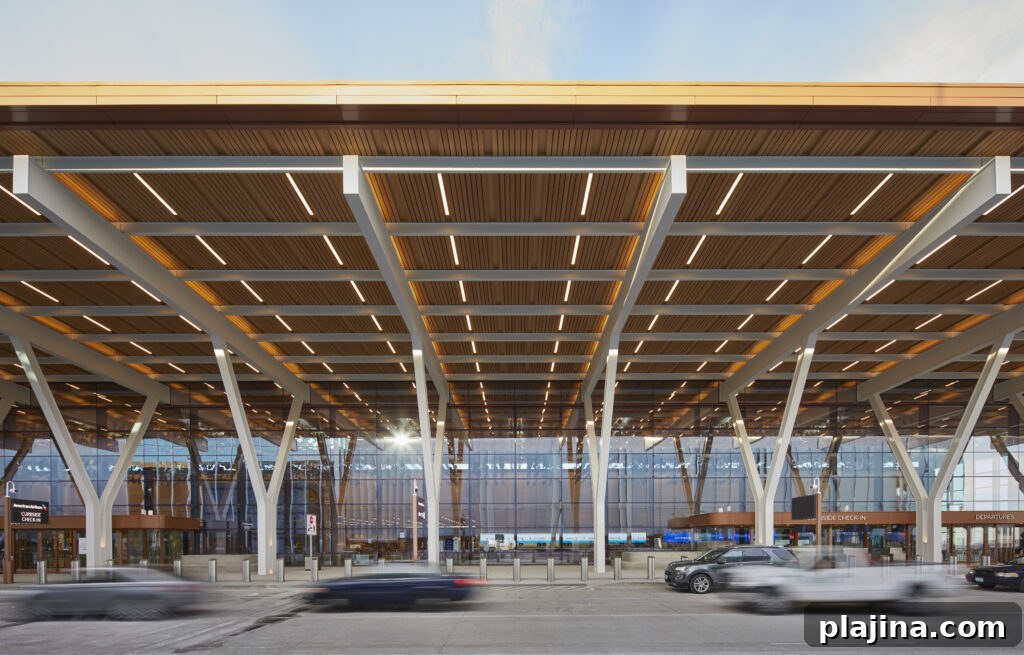
© Lucas Blair Simpson – SOM
The terminal currently operates entirely on electricity, with plans to further transition to renewable power as a solar farm is completed in coming years. Many finish materials were sourced locally and the wood elements are FSC-certified. The master plan includes conservation measures to preserve native trees and grasses that date back to the airport’s original construction.
Airline service at the new terminal reflects the airport’s major carriers. Southwest Airlines operates the most flights from KCI. Delta Air Lines currently houses the only lounge in the terminal: the 11,200-square-foot Delta Sky Club, which accommodates nearly 200 guests and includes two Sky Decks overlooking the airfield, a premium bar, a full buffet and an art program showcasing regional artists. Other carriers serving the airport include JetBlue, United, Spirit, Alaska, Air Canada, American and Frontier.
“All the ideas we put forward in the design—the emphasis on inclusion, accessibility, and sustainability, combined with preservation, art, and natural materials—come together to express the civic purpose of this terminal,” said Peter Lefkovits, design principal at SOM. “It’s a striking new gateway that prepares Kansas City for the long run.”