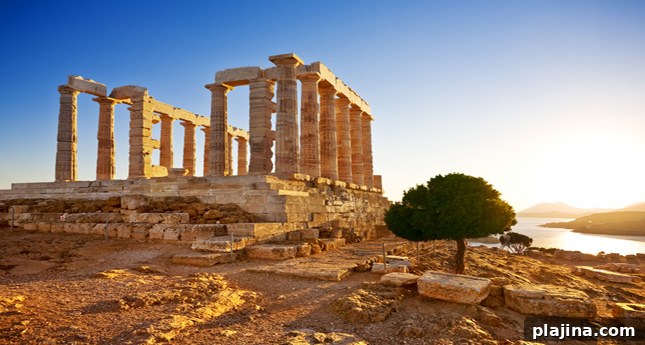
One of the loveliest and most accessible day trips from Athens is a visit to Cape Sounion, located roughly 40 miles (about 65 kilometers) southeast of the city. Perched on a dramatic promontory overlooking the Aegean Sea, the site is dominated by the ruins of the Temple of Poseidon. While smaller than the Acropolis in scale, the temple’s Ionic columns and the setting’s raw coastal beauty make it an exceptionally rewarding visit, especially when you want to escape the daytime crowds that flock to central Athens.
The archaeological remains at Cape Sounion are well preserved and sit in a landscape that combines sea, sky and rugged rock. The temple stands on a cliff edge, which gives it a commanding view out to the horizon and creates striking photographic opportunities throughout the day. During daylight hours the site is generally tranquil, offering visitors a chance to explore the columns, read the interpretive signs and imagine the blend of ancient worship and maritime navigation that once defined this place.
Sunset at Sounion, however, is the highlight for many travelers. As the sun lowers toward the western horizon, the sky and the sea invent a constantly changing palette of colors—pale golds, warm oranges, and deepening indigos—that frame the temple’s silhouette. The interplay of light and shadow on the classical columns produces an effect that feels almost cinematic. It is common for visitors to arrive well before dusk to secure a good view, and for photographers and painters the site has long been a favorite subject.
Beyond its natural and architectural appeal, Cape Sounion carries a touch of myth. Local tradition holds that King Aegeus leapt to his death from these cliffs, believing his son had been killed while fighting the Minotaur in Crete. When the king saw dark sails approaching the shore instead of the white sails he had expected, he presumed the worst and threw himself into the sea. According to the story, the sea that received him was named the Aegean in his memory. Whether or not the tale reflects historical events, the myth adds an emotional resonance to the place and helps explain why the promontory has long held a special place in Greek storytelling.
Practical considerations make Sounion an easy addition to an Athens itinerary. The drive along the coastal road offers pleasant views and several spots to stop for a coffee or a swim before reaching the temple. Organized tours and public buses serve the site as well, and many travelers combine Sounion with nearby beaches or seaside villages for a fuller day along the Attic coast. For those who prefer independence, renting a car or arranging a private transfer allows for flexible timing and the freedom to linger at sunset.
If you plan a visit, allow time to walk the perimeter of the archaeological area and to take in different vantage points. Early morning and late afternoon are the most comfortable times in summer, while spring and autumn offer milder temperatures and fewer visitors. Wear sturdy shoes for the uneven terrain, bring water and sun protection, and consider a light jacket for the sea breeze as evening falls.
Whether you come for history, photography, mythology or simply to witness a memorable sunset, Cape Sounion combines all these elements in a compact and accessible setting. The temple’s ruins, the coastal vistas and the enduring story of King Aegeus make it one of the most rewarding short excursions from Athens.