
One hundred years of wave riding in the English coastal county of Cornwall are being celebrated at the National Maritime Museum Cornwall in Falmouth, with the exhibition running until January 2027. The display traces surfing’s local history and its cultural impact on this scenic stretch of England’s southern shore.
© National Maritime Museum Cornwall
The exhibition celebrates the culture, craft and creativity of Cornwall’s surf scene. It begins with the wooden bellyboards of the 1920s, many crafted by local coffin makers, and moves through the stand-up pioneers of the 1930s and 1940s. Photographs chart the emergence of a local surf industry in the 1960s, while later galleries showcase the longboard art of the 2000s and the para-surfing world champions of today.
Over the decades, Cornwall has earned a reputation as the United Kingdom’s surfing heartland, sometimes dubbed “the California of the UK.” The county has produced world-class surfers and a thriving creative economy that includes board-building, wetsuit manufacture, publishing, filmmaking and surf fashion.
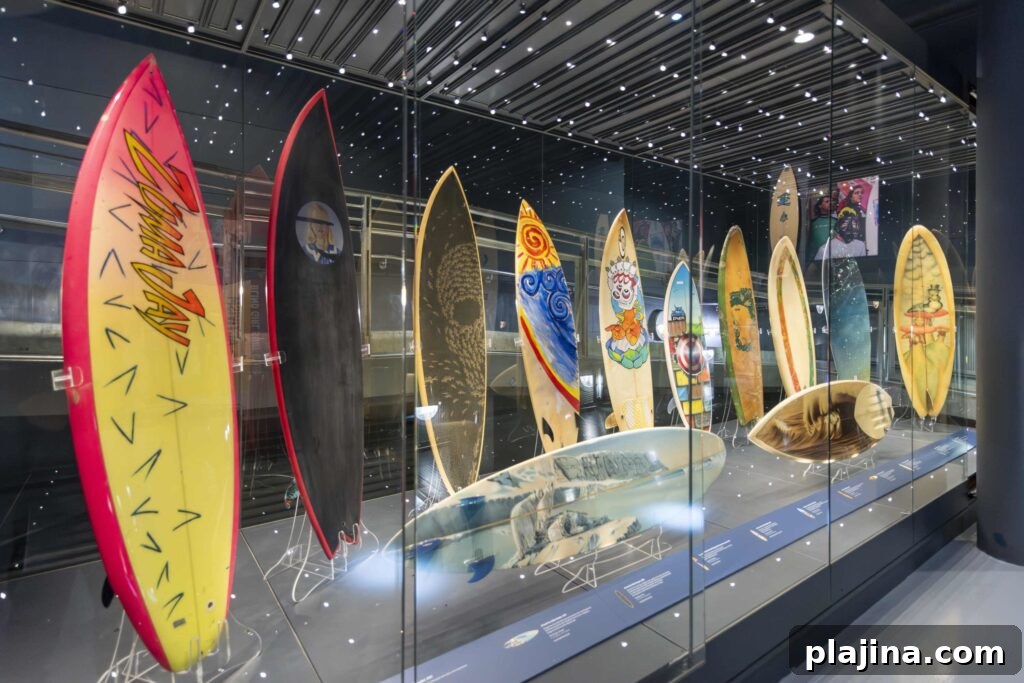
Highlights include a collection of around 100 surfboards, from early four-foot wooden bellyboards to contemporary eco-friendly and adaptive designs. The display features boards ridden by notable surfers such as Robyn Davies, Pegleg Bennett, Charlotte Banfield and Ben Skinner, demonstrating both the evolution of surf technology and the breadth of talent the region has produced.
© National Maritime Museum Cornwall
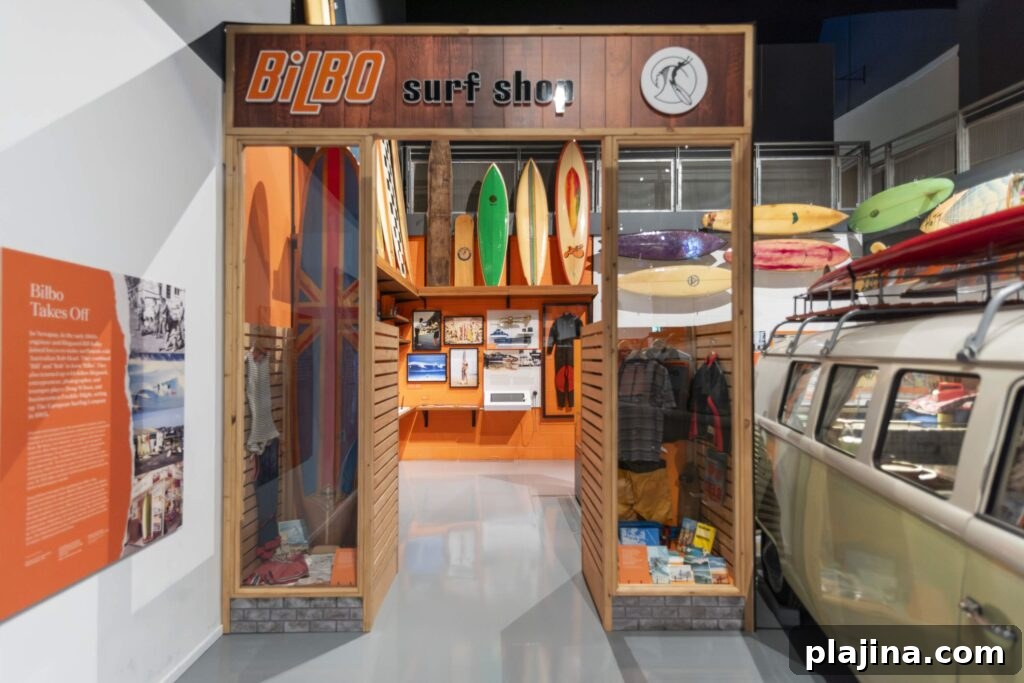
An eye-catching centerpiece is the original record-setting surfboard, measuring 37 feet and capable of carrying up to 15 surfers at once. The exhibition also includes artboards, featuring the first public showing of Damian Hirst’s butterfly board from the Maia Norman collection. Visitors can step into a recreation of Newquay’s original Bilbo Surf Shop and see an authentic 1965 VW Transporter campervan, both evocative of surf culture’s golden years.
Additional displays present surf posters spanning a century, a curated selection of vintage swimwear and wetsuits from the 1930s to the 1960s, and a range of historic surf magazines. The National Maritime Museum Cornwall spans 15 galleries across more than five floors, all dedicated to exploring the sea’s influence on local history and culture.
© National Maritime Museum Cornwall
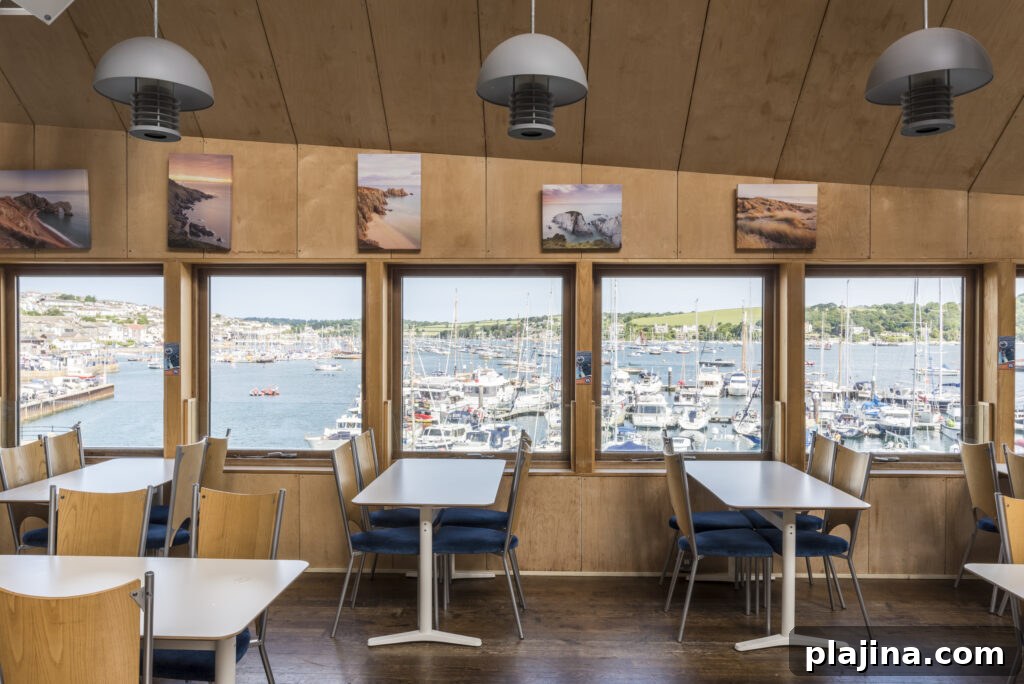
Visitors should allow time to relax at the museum’s Waterside Café, which serves drinks, cakes, pasties, sausage rolls and light snacks while offering views across Falmouth harbor. The surrounding area is rich in accommodation options, restaurants and natural attractions, making the museum a good focal point for a longer visit to Cornwall’s historic coastal towns.