Opened just a few months ago, the new terminal at Techo International Airport in Phnom Penh, Cambodia, is receiving widespread praise from both business and leisure travelers. The terminal’s striking interior and exterior design fits within the airport’s broader master plan while drawing inspiration from Cambodia’s rich history and responding to the region’s tropical climate.
Designed by London-based Foster + Partners, the terminal expresses Cambodia’s long-term vision for growth while reflecting elements of one of the world’s oldest civilizations. Located about 12 miles south of Phnom Penh, the terminal comprises a central main concourse with two aerofoil-shaped piers. The first phase—consisting of the central area and the northern pier—is now open to the public, while the southern pier is scheduled to open in 2030. The layout emphasizes short walking distances, clear sightlines, and intuitive orientation so passengers can move through the building with ease.
© Nigel Young / Foster + Partners
“Techo International Airport is a celebration of Cambodian culture and light, forming a new gateway to the country,” said Stefan Behling, head of studio at Foster + Partners. “It is also one of the most sustainable airports in the region. Filled with natural daylight and local greenery, the terminal maintains strong visual connections to the outside and transforms the travel experience for Cambodians and the millions of visitors who will pass through each year.”
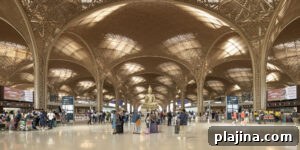
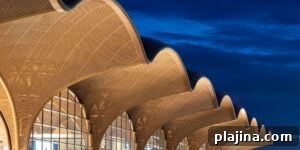
Passenger processing, security, immigration, and retail are all covered by a single, continuous roof canopy that extends from the drop-off area into the terminal interior. The modular roof is supported by structural “trees,” each spanning 118 feet, and it undulates upward to a central crescendo that echoes Cambodia’s iconic palaces and temples.
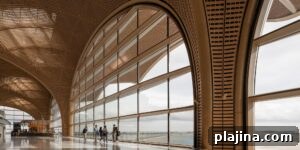
Soffits—drawing inspiration from traditional Cambodian basket weaving—feature throughout the building, and more than 150 skylights are placed around the structural trees to bring natural light deep into the terminal. This generous daylighting strategy, together with landscaping and carefully designed openings, creates a bright, welcoming atmosphere while reducing reliance on artificial lighting.
© Nigel Young / Foster + Partners
Native greenery is woven into the passenger experience, with Romduol trees—Cambodia’s national flower—rising in the terminal’s soaring central volume alongside local palms and flowering plants. The landscaping reinforces a sense of place while contributing to a calmer, more pleasant travel experience.
The project aspires to be among the world’s most environmentally conscious airports by integrating architecture and engineering to minimize carbon footprint. The overhanging roof provides extensive shading at the drop-off and inside the terminal, reducing the need for mechanical cooling. Innovative soffit and roof-lighting solutions help illuminate large public spaces naturally during daytime hours, lowering energy demand for artificial lighting.
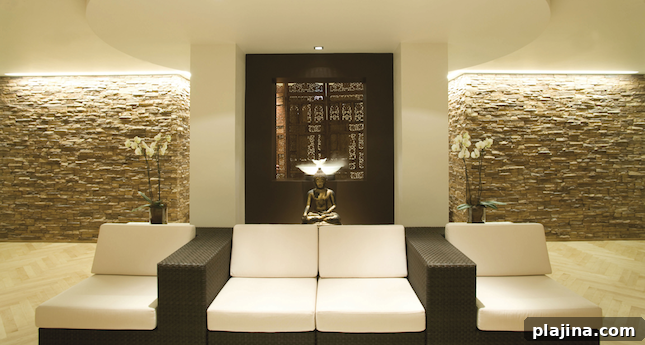
In its first phase the airport can handle 15 million passengers annually, strengthening tourism, expanding trade, and boosting Cambodia’s international connectivity. The combination of abundant natural light, tropical landscaping, and a 29-foot Buddha statue in the Abhayamudra pose creates a distinctive sense of place that honors Cambodian heritage while offering a modern gateway for future generations.
© Nigel Young / Foster + Foster
Future phases include a planned high-speed rail link to encourage public transport use and reduce car traffic, along with a green public park that anchors the master plan. The park will provide a tranquil, healthy environment for travelers and the surrounding community, reinforcing the airport’s role as both a transportation hub and a public amenity.