
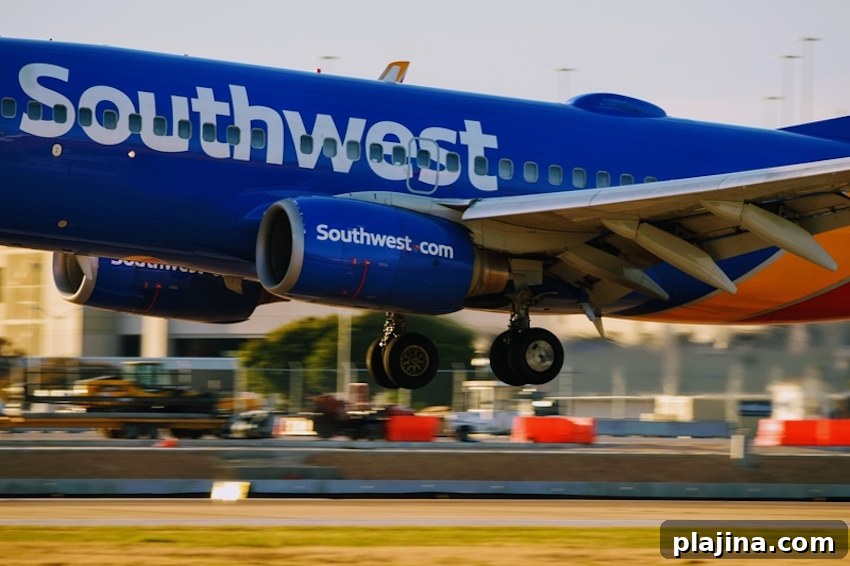
Southwest Airlines has found a lucrative revenue stream by charging passengers for early boarding privileges. After raising these fees last year, the carrier discovered that many travelers are willing to pay to secure an earlier place in the boarding order.
In the most recent reporting period, Southwest generated $642 million from ancillary fees. About two-thirds of that total came from early boarding charges, with the remainder largely comprised of fees for in-flight WiFi, alcoholic beverages, and pet travel. Those revenue categories reflect the airline’s selective approach to add-on charges while keeping base fares competitive.
Southwest’s boarding system differs from traditional seat-assignment models. Instead of assigning specific seats, the airline uses an open boarding process that places passengers into boarding groups. Travelers who want to improve their boarding position can choose EarlyBird Check-In, which performs an automated check-in and assigns a boarding group ahead of general check-in. Alternatively, customers can pay for Upgraded Boarding to secure an even earlier place in the boarding process. Both options are designed to give paying passengers a better chance of selecting preferred seats on the aircraft without changing Southwest’s seatless boarding philosophy.
Despite the success of these ancillary charges, Southwest’s overall fee structure remains relatively restrained compared with many legacy carriers. For example, some major airlines collect substantial sums from checked bag fees and other routine charges that Southwest intentionally avoids. In 2018, American Airlines alone reportedly collected $911 million from checked bag fees—revenue Southwest does not capture because it continues to offer complimentary checked bags under many fare conditions.
Southwest’s CEO, Gary Kelly, has emphasized the airline’s stance on baggage fees in public statements, reiterating that Southwest does not intend to impose charges for checked bags. At the same time, he acknowledged that the airline continually evaluates its pricing and ancillary offerings, leaving open the possibility of introducing or adjusting other optional fees as market conditions evolve.
The focus on monetizing boarding order reflects broader industry trends where airlines seek non-fare revenue to offset operating costs and invest in service enhancements. By offering paid boarding upgrades, Southwest provides a choice: passengers can pay for convenience and a higher likelihood of preferred seating, or they can rely on standard check-in procedures and accept a later boarding position. That optionality aligns with Southwest’s customer-friendly image while enabling the airline to capture additional revenue from travelers who value boarding priority.
Ultimately, the success of these ancillary fees demonstrates how subtle changes to optional services can produce significant financial results. Southwest’s approach balances maintaining core benefits, such as not charging for checked bags in many cases, with introducing optional paid conveniences that appeal to a segment of travelers willing to pay for a better onboard experience.