
If you enjoy cruising, you’re not alone. In 2019 the global cruise industry welcomed nearly 30 million passengers, created jobs for roughly 1.8 million people worldwide, and contributed more than $154 billion to the global economy. Now that cruising has returned to pre-pandemic operations, the outlook is strong: industry analysts expected a full recovery by the end of 2023 and projected further growth beyond 2019 levels.
To meet rising demand, more than a dozen new cruise ships were scheduled to join the global fleet. Major cruise lines launching notable new vessels include Carnival Cruise Line, Celebrity Cruises, Emerald Cruises, Explora Journeys, MSC Cruises, Norwegian Cruise Line, Regent Seven Seas Cruises, Seabourn, Silversea Cruises, Viking and Virgin Voyages.
Cruise ships come in many sizes to suit different travelers, and ports vary just as much. Some terminals host the world’s largest ships while smaller harbors accommodate boutique vessels. That variety of port sizes and itineraries gives travelers a wide range of options for cruising experiences.
Below is a look at five of the world’s busiest cruise ports based on shipping and passenger statistics. It’s perhaps unsurprising that the top three are located in Florida.
The title of “Cruise Capital of the World” goes to PortMiami. The port set a record with more than 6.8 million passengers in a 12-month period ending in 2019 and is a preferred departure point for sailings to the Caribbean, Mexico and beyond. PortMiami serves as the home port for a dozen cruise lines and a port of call for many others. Its convenient location, just minutes from a major international airport, makes it an accessible choice for travelers.
The second-largest cruise port is Port Canaveral, located roughly 45 minutes from Orlando’s main airport. Thirteen cruise lines use Port Canaveral as a home port, offering itineraries ranging from short two-day cruises to 14-day voyages to destinations such as Bermuda, the Bahamas and the Eastern and Southern Caribbean.
Port Everglades ranks among the busiest, with nearly 4 million passengers passing through its eight cruise terminals each year. The port hosts ships from multiple cruise lines and is located just minutes from Fort Lauderdale’s airport. Significant terminal investments have been underway to modernize facilities, including renovations to support ships from premium cruise brands and a refreshed terminal for family-oriented sailings.
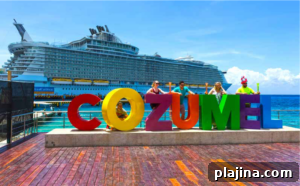
PHOTO:
© SOLARISYS13 | DREAMSTIME.COM
On the other side of the Gulf of Mexico, the Port of Cozumel welcomes more than 2 million cruise passengers each year—many more than the island’s resident population. Cozumel operates multiple terminals that accommodate both large and small ships; vessel size determines which terminal a ship will use. The port is a short drive from the island’s airport, making it a convenient stop for visitors arriving by air or sea.
The Nassau Cruise Port in The Bahamas is another top destination, handling about 3.7 million passengers annually. Several cruise lines operate from this port, which has been undergoing a multi-million-dollar redevelopment to expand berthing capacity, upgrade terminal facilities and enhance visitor amenities. Planned improvements include additional berths to accommodate the largest cruise ships, new terminal buildings, cultural exhibits, event spaces and local retail offerings.
MAKING A SPLASH
Some of the most notable developments in recent years highlight both larger ships and greener terminals. The world’s largest cruise ship now sails from Port Canaveral; this vessel carries nearly 7,000 passengers and has been based on Florida’s east coast for extended deployments. Cruise lines have also invested in sustainable infrastructure, such as a zero-energy cruise terminal that produces its own electricity via on-site solar panels and has earned recognition for its energy performance. Alongside terminal innovation, lines continue to position large ships from ports across the U.S., bringing expanded choices for travelers and encouraging further investments in port facilities.