
Arriving by air with direct flights from Bangkok has been possible since 2018, but the most enjoyable way to explore Chiang Mai province in Thailand is to fly into Chiang Mai city first, then take a minivan to Pai and save the direct Bangkok flights for the return trip.
© Tourism Authority of Thailand
The minivan ride from Chiang Mai International Airport to Pai’s bus station takes about three hours. Arriving in the afternoon gives you time to start exploring Pai with a visit to Pai Canyon. Getting there shortly before sunset is ideal: the eroded ridges and deep crevices of the canyon take on dramatic color as the sun sinks behind the hills, casting warm light across the landscape.
Return to Pai town—just a few miles away—to wander the lively Walking Street market, open every evening from around 6:00 p.m. along Chaisongkran and Rungsiyanon roads. The market features diverse food stalls serving everything from classic pad thai to burgers and pizzas, but be sure to try khao soi, the northern curry noodle dish that’s a regional favorite. The walking street is also a great place to shop for souvenirs, local arts and crafts, ethnic clothing, and popular T-shirts, and to enjoy live dance and cultural performances.
© Tourism Authority of Thailand
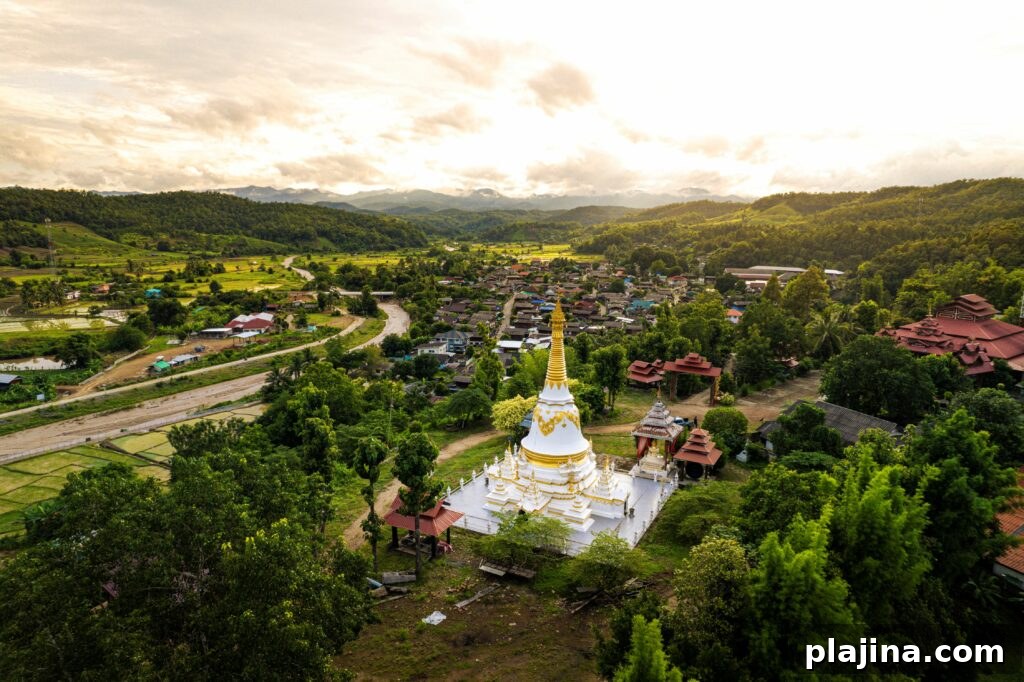
Nearby highlights include the Memorial Bridge, built during World War II, and Wat Phrathat Mae Yen, where a white Big Buddha sits atop a hill with sweeping views of the valley. For a refreshing break, Mo Paeng Waterfall invites swimming, while Ban Santichon, a small Chinese Yunnan village a few miles northwest, offers tea houses and cultural charm. For relaxation, the Tha Pai Hot Springs are perfect for soaking and unwinding.
Pai’s peaceful vibe often encourages visitors to extend their stay. When you continue toward Mae Hong Son, add two worthwhile stops en route. First, Nam Lot Cave offers a guided exploration by oil lamp through the Big Column Cave and the Dolls Cave, followed by a short bamboo-raft ride along an interior river to reach the Coffin Cave chamber.
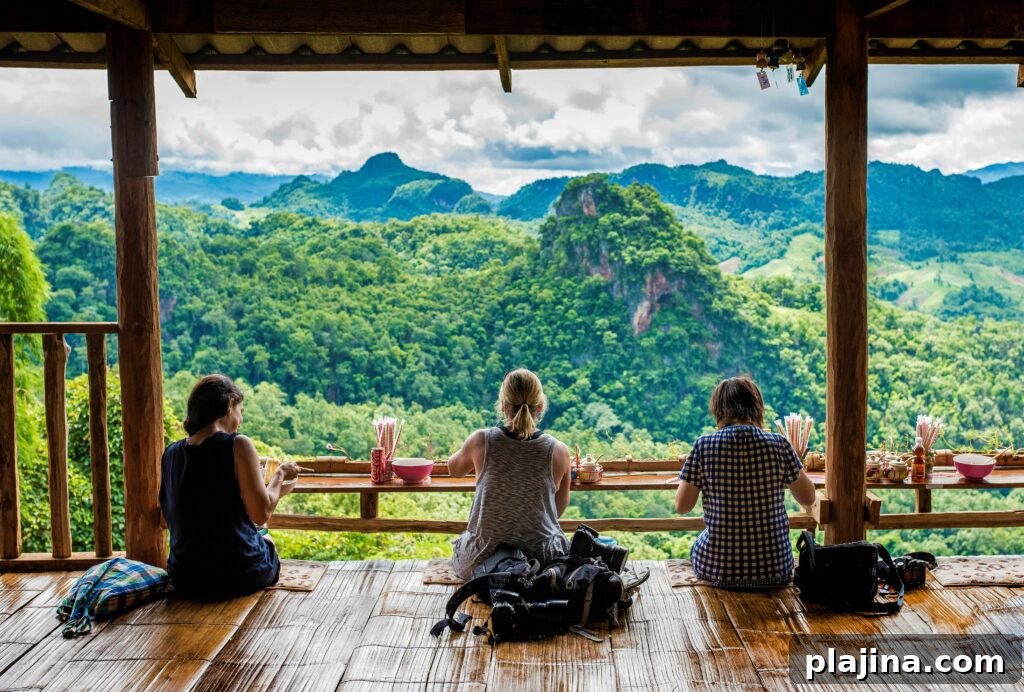
Next, visit Ban Jabo, about a 30-minute drive from Nam Lot, for lunch with an outstanding view. This small Lahu hill-tribe village sits atop a ridge and overlooks impressive scenery, often shrouded in a sea of morning mist. Basic homestays and nearby campgrounds make staying overnight an option for travelers seeking authentic local experiences.
© Tourism Authority of Thailand
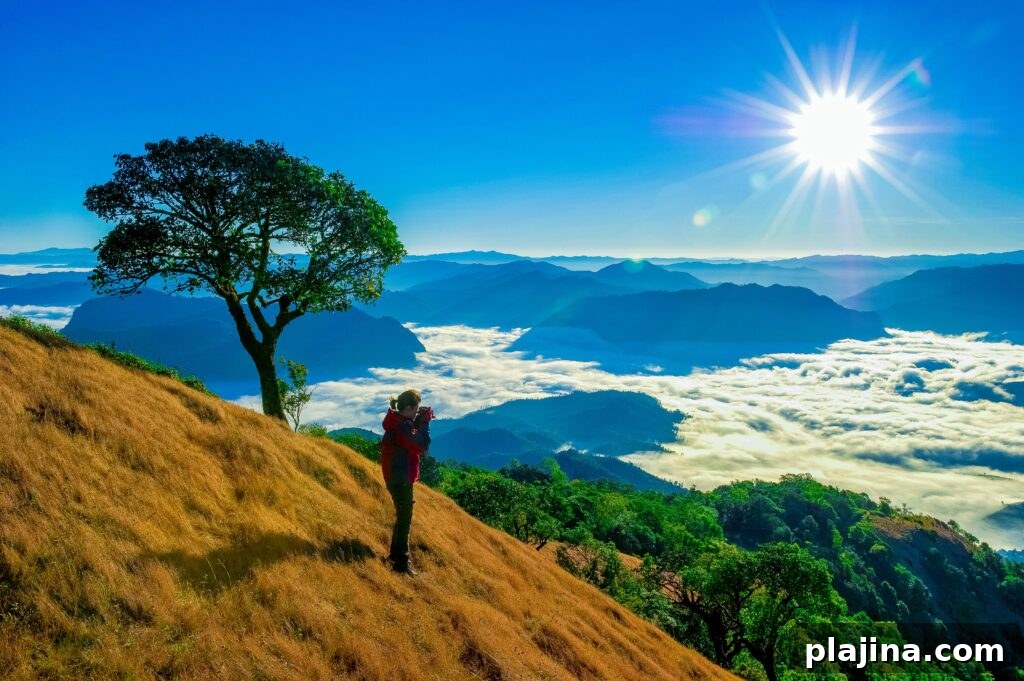
When you reach Mae Hong Son province, climb to Wat Phrathat Doi Kong Mu, perched on a hill that overlooks the town and the airport. The two Burmese-style chedis are the province’s oldest landmark, and a small coffee stall near the parking area is a pleasant spot for sunset views. At dawn, the temple is especially atmospheric as the valley fills with mist. Other notable temples include Wat Phra Non with its reclining Burmese-style Buddha and Wat Hua Wiang, near the Central Market, where monks collect alms each morning. Wat Hua Wiang also houses an impressive bronze Buddha statue modeled after the Phra Mahamuni in Mandalay.
The best way to end an evening in Mae Hong Son town is to stroll along the Walking Street by the small lake. Wat Chong Kham’s chedi is beautifully lit at night, reflecting on the water and creating one of the most enchanting night-market settings in northern Thailand.
© Tourism Authority of Thailand
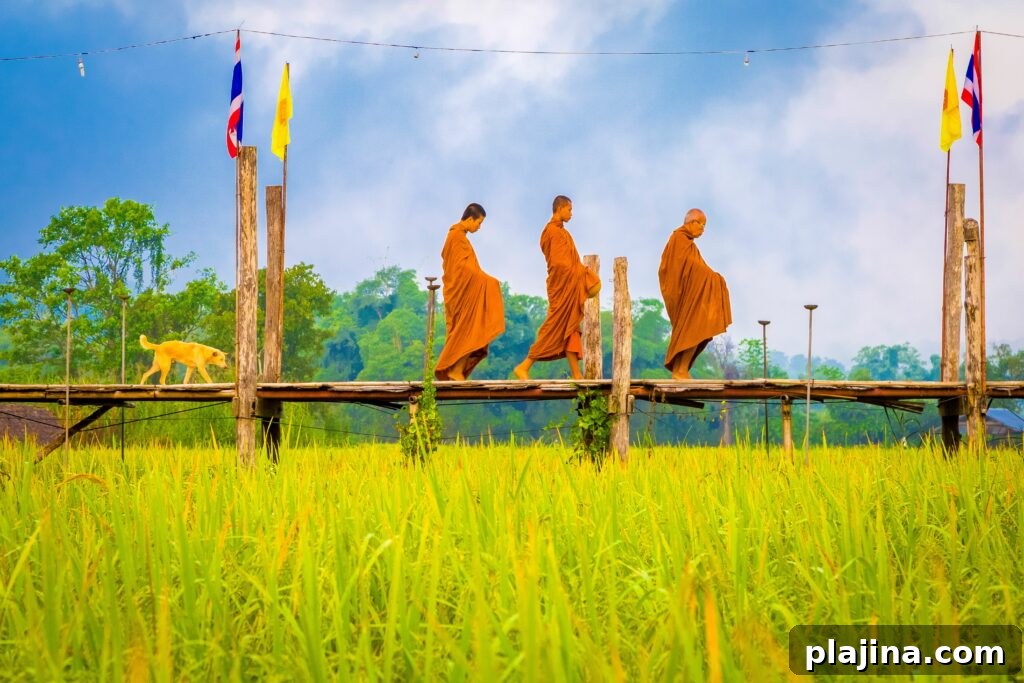
The next morning, drive about 5 miles to the Su Tong Pae bamboo bridge. Stretching roughly 1,640 feet across rice fields and the Mae Sa Nga River, it’s one of the country’s longest bamboo bridges and links Ban Kung May Sak to Wat Tham Pu Sa Ma on a nearby hill. Early each morning, villagers gather on the bridge to offer alms to passing monks.
For relaxation and pampering, stop at Phu Klon Country Club Health Mud Spa for mud facials, full-body masks, and a soak in a mineral-rich hot-water pool set among palm trees. From there, continue along Route 4001 to reach the scenic highland village of Ban Rak Thai. This hidden gem features Yunnan-style houses and oolong tea plantations arranged around a small lake, making it a peaceful two- to three-day retreat.