
If it seems Chicago appears in lifestyle publications everywhere you look, that’s no coincidence. The city consistently earns praise for its dining scene, arts and culture, attractions and overall visitor experience. Recent honors include being named a top culinary destination and ranking among the world’s best travel spots. This year Chicago placed No. 7 on TripAdvisor’s list of the top 25 U.S. travel destinations.
The attention is backed by measurable growth. Last year domestic visitation reached a record 56.09 million, a 4.4 percent year-over-year increase. Chicago also surpassed Denver for the most craft brewpubs and breweries in the country. As one of the fastest-growing U.S. cities for hospitality, Chicago offers thousands of hotel rooms with new properties opening regularly—many independent boutique hotels rather than large international chains.
David Whitaker, president and CEO of Choose Chicago, attributes the city’s momentum to a range of factors.
“Whether it’s dining, art and culture or nightlife, the variety of experiences in Chicago matches the variety of visitors we attract,” he said. “Cities often become known for one thing, but the range of choices here makes Chicago a standout American urban destination.”
Whitaker highlights the city’s many accessible neighborhoods, many of which have seen revitalization that draws both residents and visitors. He points to riverfront redevelopment as a prime example of this transformation.
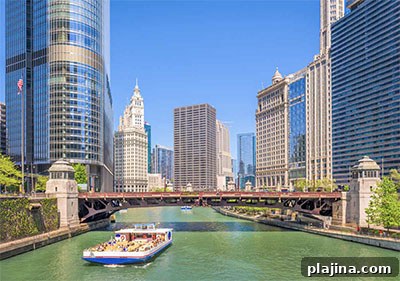
Chicago River sightseeing cruise © SEAN PAVONE – DREAMSTIME.COM
Once an industrial corridor focused on shipping and manufacturing, the Chicago River’s banks have been transformed through major investment into one of the city’s most popular urban spaces. The extended Riverwalk now features blocks of restaurants and bars, public viewing areas, art installations and programmed events. What was once a neglected area has become a vibrant public playground.
Other neighborhoods have also benefited from new development. McCormick Square expanded around a new convention center, adding hotels, event spaces, restaurants and a new blues club to serve business travelers. Logan Square, Chinatown and Ukrainian Village have all experienced revitalization that attracts both locals and visitors.
A younger, growing workforce is part of the reason neighborhoods have become hotspots. “The hottest local spot becomes the hottest tourist spot,” Whitaker said. Major companies such as Google, McDonald’s and Boeing have added or relocated offices to the city, bringing employees who support dining, nightlife and neighborhood businesses. These workers form what he calls a new, 24-hour, flexible urban population that lives and plays where it works.
Young talent is also reshaping Chicago’s restaurant scene. Sam Toia, president and CEO of the Illinois Restaurant Association, notes that chefs and mixologists are drawn to the city because it remains relatively affordable and offers strong community anchors in neighborhood restaurants.
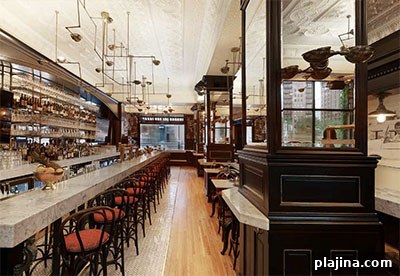
Café Bonhomme © CAFÉ BONHOMME
“Because Chicago is a city of neighborhoods—77 communities in all—young culinary talent continues to arrive, work in restaurants and then open their own spots,” Toia said.
Millennial travelers, in particular, have helped drive culinary tourism. “Since 2011 visitation has grown from 39 million to 57 million,” Toia said. “Conventions, tourism and culinary experiences bring people here. Millennials especially seek experiences—food and drink events like Chicago Gourmet or the James Beard Awards are major draws. They grew up with the Food Network and the Travel Channel and want to be part of that culture.”
Yet Chicago’s appeal spans generations. Older travelers still find plenty to enjoy, and the city’s broad range of offerings is part of what makes it so attractive to so many different types of visitors.
International arrivals also increased last year, rising 3.8 percent. Visitors from Brazil, the United Kingdom and Italy showed notable gains. Improved air access has helped: O’Hare International Airport added nearly 50 new routes in 2018 and briefly surpassed Atlanta in daily flights. In March the airport broke ground on a $1.2 billion Terminal 5 expansion to add amenities and gates, with a planned completion in 2021. Terminal 3 also received new gates in 2018, and a larger multi-billion-dollar expansion for a global terminal and concourse has been planned, with a new global terminal scheduled to break ground in 2023.
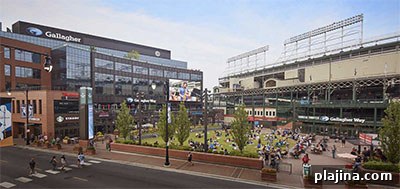
Wrigleyville development © DAVID BURK
CHECKING IN WITH ERIC NORDNESS
Senior Vice President, Hickory Street Capital
What prompted recent changes in Wrigleyville, and how do they fit into Chicago’s evolution as a destination?
The Ricketts family and Hickory Street Capital launched a development plan to create a neighborhood gathering place in Wrigleyville and Lakeview, adding family-friendly entertainment, varied dining, lodging and flexible office and meeting spaces. The goal was to attract tourists, residents and baseball fans while offering programming that engages the whole community. The project has helped draw visitors from downtown and other popular areas to the North Side, reflecting a broader trend of encouraging visitors to experience residential neighborhoods like locals.
How does the Wrigleyville Campus Development meet the needs of travelers and locals?
Wrigleyville historically focused on late-night bars tied to the game-day economy. The new development provides family-friendly and fine-dining options, an open-air plaza with year-round activities—concerts, markets, ice skating and game-day events—and facilities like the American Airlines Conference Center, which offers nearly 10,000 square feet of flexible meeting space and dining for business events. Hotel Zachary, a boutique property across the street, provides lodging with local dining and amenities suited to families, business travelers and visiting fans.
Who benefits most from the development?
The mixed-use campus serves a wide range of visitors: families, business travelers, leisure tourists and Cubs fans. Its programming and amenities create a vibrant neighborhood hub that appeals to locals and out-of-town guests alike.
Things to Do in Chicago
Chicago keeps adding new leisure options while preserving beloved attractions. In summer, Millennium Park provides a green oasis downtown and a chance to photograph the iconic Cloud Gate sculpture—commonly known as “The Bean.” In winter the park becomes a setting for ice skating, hot chocolate and scenic snowy views. Other outdoor destinations for dining, drinks and sightseeing include the Chicago Riverwalk and Navy Pier.
For indoor experiences, Chicago offers observation decks and world-class museums such as The Field Museum, the Art Institute of Chicago and the Museum of Science and Industry.
Chicago Info to Go
Most travelers arrive at O’Hare International Airport, roughly a half-hour drive from downtown without traffic. Ride-hailing services are available but can involve long waits at peak times. A more affordable option is the airport train, accessible from O’Hare’s lower levels, though it generally takes about an hour to reach downtown.
Chicago: Just the Facts
Time zone: GMT -5
Phone code: Country code: 1; city codes: 312, 773, 872
Currency: United States dollar
Key industries: Manufacturing, business and financial services, publishing, food processing
OFFICIAL LANGUAGE
English
COMING AND GOING
U.S. citizens flying domestically to Chicago do not need a passport, though those driving through Canada must carry one. By October 2020, U.S. citizens will need a Real ID to board domestic flights. Non-U.S. citizens should ensure they have a passport and any required entry documents.
Where to Stay in Chicago
HOTEL JULIAN
Located in the historic Atlantic Bank Building, Hotel Julian is a boutique luxury property recognized with AAA Four Diamond honors. It features a gastro-steak bar, About Last Knife. 168 N. Michigan Ave. $$$
THE HOXTON
A European lifestyle brand’s U.S. outpost in Fulton Market, The Hoxton blends distinctive design with neighborhood energy. 200 N. Green St. $$$
MOXY CHICAGO DOWNTOWN
Marriott’s lively Moxy brand offers contemporary amenities within walking distance of major attractions. 560 N. LaSalle Drive $$$$
Restaurants in Chicago
CAFÉ BONHOMME
Evoking grand European cafés with an opulent interior, Café Bonhomme offers Mediterranean-inspired dishes. 180 N. Upper Wacker Drive $$$
KUMIKO
Led by a team with multiple Michelin accolades, Kumiko focuses on craft cocktails and a concise menu rooted in Japanese culinary traditions. 630 W. Lake St. $$$
TAUREAUX TAVERN
A two-story French-inspired restaurant that has earned strong local and national acclaim, Taureaux Tavern offers all-day dining and year-round alfresco options. 155 W. Van Buren St. $$$