
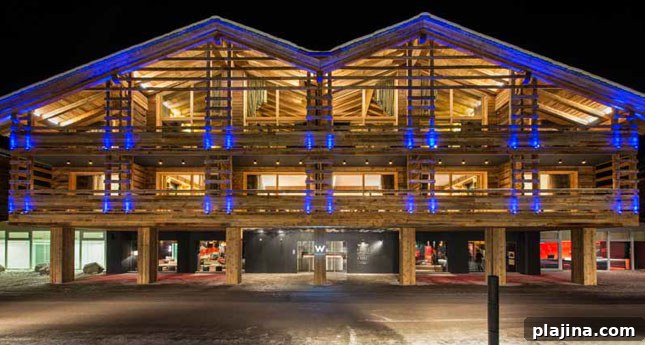
You could practically toss a Fabergé egg from the new Four Seasons Hotel Moscow onto Red Square—that’s how close the hotel sits to the iconic landmark. Starwood Hotels recently unveiled W Verbier in Switzerland and has W Bogotá and a new St. Regis in Kuala Lumpur set to open in the coming year. The ultra-modern Hilton Santa Fe Mexico City opens this month in the city’s financial core. New Langham Place properties are spreading across China, from Guangzhou to Xiamen and Haining. And actor Marlon Brando’s long-held vision of a sustainable resort on his private Tetiaroa atoll in French Polynesia is scheduled to be realized this summer.
With hundreds of hotels debuting in 2014 due to new construction and rebranding, it might seem as simple as hanging a sign and turning on the lights. In reality, creating a new property is the result of years of planning and an evolving design process. Hotel design is organic: it continually adapts before, during and after opening to balance striking aesthetics with practical function.
“The time frame to build a hotel can vary quite a bit depending on the location and where the project is in terms of construction. Typically, I would say that our projects run around four or five years,” says Mike Tiedy, senior vice president of global brand design at Starwood Hotels & Resorts. He notes that conversions require stripping down the previous structure and rebuilding to reflect the brand, with public spaces and lobbies offering one of the most visible opportunities for transformation.
Phillipe Zuber, chief operating officer of Emaar Hospitality Group, echoes that view: “Whether a hotel is new or reflagged, the lobby must always be designed as the heart of the hotel. The lobby sets the tone for the overall guest experience—tone, color, décor and ambience. It forms the first impression guests have when entering a property.” Emaar develops The Address Hotels + Resorts and Vida Hotels and Resorts.
Lobby of Emaar Hospitality Group’s Vida Downtown Dubai © Emaar Hospitality Group
An impressive entrance is only the start of modern hotel design trends. Inside the lobby, business travelers increasingly expect spaces that support both casual and formal conversation and provide convenient access to USB outlets for laptops and smartphones. A welcoming bar or restaurant adjacent to the lobby often fulfills that need.
“We are focused on creating environments where guests want to spend their time at dynamic bars and restaurants, like The SkyLounge on the 100th floor at Four Seasons Hotel Guangzhou, which offers spectacular city views,” says Dana Kalczak, vice president of design at Four Seasons Hotels and Resorts. “Or Nuestro Secreto at Four Seasons Hotel Buenos Aires, a modern take on the Argentinean asado, which quickly became a popular spot for locals and visitors.”
Incorporating local art and craftsmanship has become a key way to lend authenticity to hotels so that a property in Nairobi feels like a part of Nairobi. Indigenous art and sculptures appear in public spaces, from large lobby installations to photographs adorning corridors to guest rooms. Some hotels, such as the Gladstone Hotel in Toronto, go further by inviting local artisans to design and create each guestroom.
“We often choose to open new hotels in historic buildings, which gives them a distinctive sense of place,” says Dr. K.S. Lo, chairman of Langham Hospitality Group. “Many of our hotels also display extensive art collections relevant to local history, such as works by Chinese artists at Langham Place Hong Kong. We collaborate with local curators to develop these collections.”
Sustainability remains central to contemporary hotel design. Green roofs, solar panels, recycled materials, dual-flush toilets, guest recycling bins, biofuel heating, preferred hybrid parking and linen-reuse programs are common features. Urban properties are also allocating space for on-site gardens that supply produce to hotel kitchens. At Turnberry Isle Miami, part of Marriott’s Autograph Collection, the Chef’s Garden produces herbs, vegetables and tropical fruit. The Fairmont Dallas operates a rooftop garden and greenhouse in the heart of the city.
“Living sustainably is a business imperative and a cornerstone of Hilton Worldwide’s Travel with Purpose initiative,” says Larry Traxler, senior vice president of global design at Hilton Worldwide. “For example, Hilton Fort Lauderdale Beach Resort is changing its rooftop landscape by adding six wind turbines to the 25-story, all-suite resort located just feet from the Atlantic Ocean.”
Above all, hotels aim to provide comfortable rooms. The design challenge is merging eye-catching aesthetics with practical function. Power outlets are excellent—until you realize the lighting is insufficient and you’re straining to read an important document late at night.
“The best way to balance design in any hotel is to provide elements that make the guest feel at home,” says Meghann Day, hospitality interior designer at Hirsch Bedner Associates, the firm behind the new Hilton Santa Fe in Mexico City. “Elements such as moveable furniture allow guests to rearrange the room to suit their needs and feel more comfortable.”
“Today’s rooms are multifunctional and versatile,” adds Four Seasons’ Kalczak. “Guests can work from the bed using USB ports at the nightstand, dine in an armchair or on a sofa with ‘up and over’ tables, or groom by the window using strategically placed mirrors.”
Technological advances have driven many recent changes. Flat-screen TVs have largely replaced armoires, and the ubiquity of laptops and smartphones has pushed power outlets to desks and bedside tables. Newer innovations include digital artwork that guests can change or upload to, app-controlled shades, and automatic roller blinds taking the place of drapery for cleaner lines. Bathtubs are increasingly replaced by larger, spa-like showers that feature options such as rainforest showerheads.
“In our urban business properties, there must be an equal balance between grooming, work and relaxation zones. In resorts, that balance may tilt more toward grooming and relaxation. Lighting is crucial in both settings, with natural light being essential to successful resort design,” notes Traxler.
Comfortable beds remain central. Four Seasons now offers guests a choice of customized mattress firmness—firm, classic or plush—while the Westin Heavenly Bed remains Starwood’s signature offering.
The St. Regis New York Dior Suite living room © Starwood
Branded designer collaborations are another trend. Starwood has partnered with designers like Dior, Tiffany and Bentley to create unique suites at The St. Regis New York. Armani Hotel Dubai, launched in the Burj Khalifa through a collaboration between Giorgio Armani and Emaar, set a precedent for designer-led hotels. Other luxury collaborations include Palazzo Versace on Australia’s Gold Coast and Bvlgari resorts in Bali, Milan and London.
The St. Regis New York Tiffany Suite dining room © Starwood
Many hotel groups now take direct input from their guests. Crowdsourced feedback platforms and review sites like TripAdvisor have encouraged greater collaboration between designers and travelers. Marriott’s 10,000-square-foot Innovation Lab in Bethesda, Maryland, brings owners, employees and guests together to test ideas. Marriott’s “Travel Brilliantly” campaign solicited public suggestions for design, technology and food; more than 700 people responded, including a student whose idea for healthier vending options led to hands-on collaboration with hotel chefs.
Designers and hotel executives still spend many nights in rooms before opening to test every piece of furniture and fixture. Increasingly, hotels may invite frequent travelers to preview rooms before the official debut—after all, business travelers are often the best judges of comfort and functionality.