
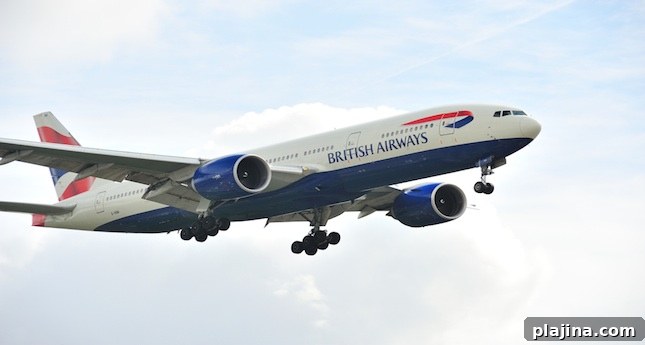
British Airways recently announced changes to its in-flight meal service for certain flight durations. Under the new policy, passengers on flights shorter than 8.5 hours will no longer receive two full meals in economy class. Premium Economy customers will also see an adjustment: on flights under seven hours they will no longer be served two complete meals. These updates include the popular London–New York route, which typically takes about eight hours and therefore falls within the revised guidelines.
According to the airline, affected passengers will continue to receive one full meal plus a later snack during the flight. Alcoholic beverages will still be offered to all passengers of legal drinking age, regardless of cabin class. British Airways implemented these changes in July amid reports that the carrier was shifting how food is provided and charging for certain items. The move prompted some customer complaints after media coverage described reduced food portions on impacted flights.
Reported passenger reactions highlighted dissatisfaction with the smaller snack offering. One traveler told a local paper that after paying for an upgraded World Traveller Plus seat, the inflight service felt inadequate: a reasonable breakfast was followed hours later by what the passenger described as a tiny chocolate bar. Such comments underscore the sensitivity around perceived value on long-haul flights and the expectations of customers who pay for premium seating.
Despite the meal service adjustments, British Airways is investing in other areas of the onboard experience. Earlier this year the airline announced plans to introduce upgraded in-flight WiFi technology, which it described as among the fastest available in the air. The carrier’s focus on connectivity reflects broader industry trends: many airlines are prioritizing entertainment and connectivity improvements as part of overall product enhancements while rebalancing catering offerings to manage costs and logistics.
Operational and commercial reasons typically drive changes like these. Airlines must balance catering costs, weight and fuel considerations, galley space, and the complexities of preparing and loading multiple full meals for each flight. On routes where flight time sits near the threshold for a second service, airlines often weigh whether a single meal plus a smaller later snack better matches passenger demand and operational efficiency. For travelers, the shift may mean planning differently for daytime and overnight flights, bringing their own preferred snacks, or selecting a higher cabin class if two full meals remain important to their travel experience.
Customer expectations for long-haul travel are varied: some passengers prioritize economy and value, while others expect a more complete service when paying for a premium seat. Clear communication about what to expect on each route and flight duration can help reduce confusion and disappointment. British Airways’ announcement clarifies the new thresholds for meal service and allows passengers to make informed choices when booking travel between cities such as London and New York.
In summary, British Airways has refined its catering policy for certain flight lengths. Economy passengers on flights under 8.5 hours and Premium Economy passengers on flights under seven hours will generally receive one full meal and a later snack rather than two full meals. Alcohol service will continue for eligible passengers, and the airline is enhancing onboard connectivity with faster WiFi. Travelers planning transatlantic journeys should review the carrier’s updated service descriptions when booking to ensure the level of inflight catering meets their expectations.