
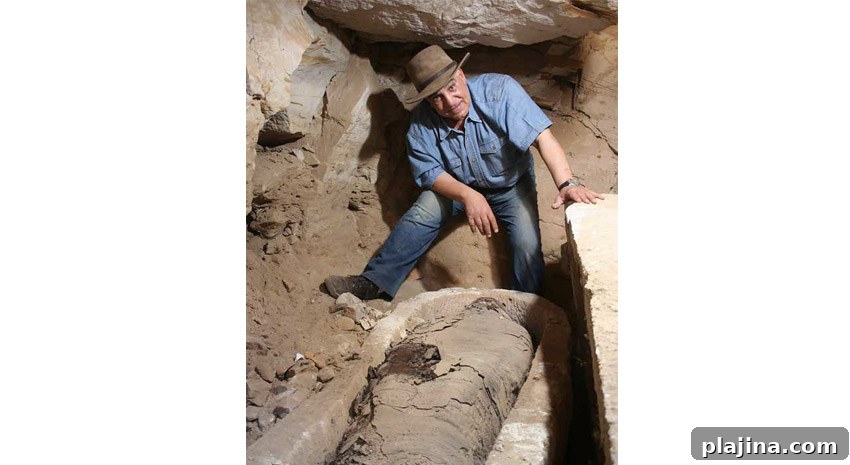
Name: Zahi Hawass
Title: Former Minister of Antiquities
Company, city: Consultant; Cairo, Egypt
Number of employees: Three to four assistants
Recent project: Director of excavation at the Valley of the Kings, a monthly lecture series for American tourists with a tour company, lectures around the world, articles for Egyptian publications, and preparing the second part of my autobiography
First job: Inspector of Antiquities at Tuna El-Gebel in Middle Egypt
Little-known fact about you: I get really nervous and annoyed when I meet any stupid man or woman.
Your Business
What innovations or initiatives do you foresee in the industry over the next few years? Egypt’s archaeological and tourism potential remains enormous. The country is secure and its archaeological sites are well protected. One clear sign is Archaeological Paths, which brought more than 3,000 American visitors to Egypt in the past three years. Still, there is room for much greater promotion. A major traveling exhibition showcasing recent discoveries would attract global attention, and coordinated international advertising could boost interest. The Minister of Tourism should consider a global roadshow with representatives from tourism companies, hotels and Egyptologists; local PR firms in each destination would help tailor promotion and reach wider audiences.
Best career advice you’ve received: Passion is essential. My devotion to archaeology since age 20 has given my words weight and helped me connect with people worldwide. The affection of my followers and the more than 30 awards I’ve received reflect that commitment.
What advice would you give someone starting out in the field? Follow your passion. Curiosity, dedication and love for the past are the foundation of a long and meaningful career in archaeology.
Zahi Hawass as a Traveler
Favorite travel memory or story: I lecture across the globe but rarely get time to explore. In Peru I was able to visit many archaeological sites. At a Lima hotel, a woman recognized me in the elevator and fainted from surprise — a moment that still makes me smile.
One travel tip you cannot live without: Use natural sleeping aids to help pass long flights. I often use the time to catch up on reading or watch programs on my tablet. Also, switch off your phone to rest and recharge.
Best advice for business travelers: Don’t spend every minute on business. Make time to see the local heritage. If you travel to Egypt, you should not miss the pyramids and the Egyptian Museum — they are essential to understanding the country’s history.
About Archaeological Paths
What can premium travelers expect from Archaeological Paths’ Royal Tour to Egypt?
The Royal Tour offers unique, intimate experiences: early mornings alone beside the Sphinx, private visits to the tombs of the pyramid builders, and peaceful nights wandering Luxor Temple. The tour emphasizes exclusive access and memorable moments that bring Egypt’s history to life.
Tell our readers more about your career.
Every discovery advances our understanding of ancient Egyptian civilization. My doctoral research at the University of Pennsylvania proposed locations for the tombs of the pyramid builders beyond Heit El-Ghorabt; returning to Egypt, my team discovered those tombs where I had predicted. Over three years we also uncovered the Valley of the Golden Mummies and identified the cult pyramid at the southeast corner of the Great Pyramid of Khufu. That structure appears to have been a ceremonial room where the king changed into a kilt for the Heb-Sed festival, a ritual demonstrating his renewed strength and eternal kingship. My team contributed to the Egyptian Mummy Project, helping clarify the fate of Hatshepsut’s remains, investigating the murder of Ramses III, and determining details of Tutankhamun’s death and family connections. These findings help piece together the lives and deaths of Egypt’s rulers and enrich our global heritage.
What misconceptions about travel to Egypt would you like to dispel?
Media reports can exaggerate the scale and proximity of security incidents. Attacks can sadly happen anywhere, but they have typically occurred far from major archaeological sites. If travelers avoid Egypt out of fear, extremists achieve their goal of harming the country’s culture and livelihood. Visiting Egypt sends a message of support for preservation and protection of monuments that belong to all humanity. Encouraging responsible tourism helps safeguard these treasures and sustains the communities that care for them.