
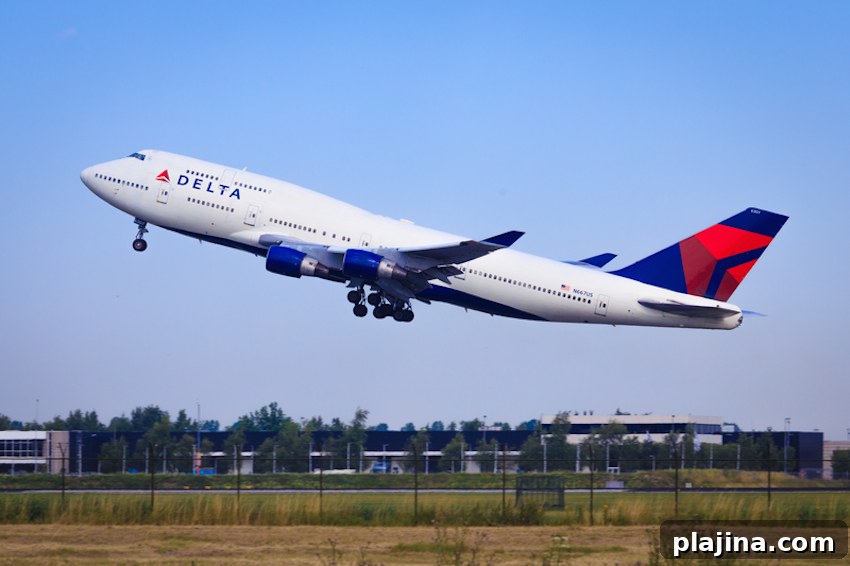
Last month, Delta Air Lines was again prominently featured on the Fortune 500 list, continuing a run of strong recognition for the carrier across multiple industry rankings and awards.
On the 2018 Fortune 500 list Delta placed 75th, a position similar to the prior year. The ranking reflects the airline’s overall scale and continued financial strength. While Fortune noted that profits were pressured in the past year by rising fuel costs, the publication emphasized that Delta outperformed many rivals on operating margins and overall profitability. That gap in performance has helped Delta maintain resilience even as fuel price volatility affected the broader industry.
Business traveler sentiment has also favored Delta. Corporate customers consistently rate the airline highly for reliability, global reach and customer service, and recent strategic moves have strengthened those perceptions. Delta’s growing partnership with Aeromexico, for example, has expanded network connectivity between the United States and Mexico, improving flight options and connections for both business and leisure travelers.
Beyond financial metrics, Delta earned recognition for workplace culture and leadership. Fortune named Delta one of the “Best Companies to Work For” in 2018 for the second year in a row, reflecting employee engagement, benefits, and company policies that support a positive work environment. For the fifth consecutive year Delta was included among Fortune’s “Most Admired” companies, a list that measures a mix of reputation, innovation and managerial quality. These repeated accolades suggest that the airline’s efforts in human resources, operational improvements and brand stewardship have been consistent and noticeable to peers and analysts.
Leadership at the top has been part of the story. Delta’s CEO, Ed Bastian, was included on Fortune’s list of the “World’s 50 Greatest Leaders,” an acknowledgement of his role guiding corporate strategy, overseeing operations and representing the airline across industry and public forums. Such recognition for an individual executive can reinforce investor and employee confidence when it aligns with tangible corporate performance.
Innovation has also played a role in Delta’s recent praise. Fast Company listed Delta among its “Most Innovative Companies,” highlighting the airline’s application of technology to improve customer experience and operational efficiency. One noteworthy example cited is Delta’s use of RFID (Radio Frequency Identification) technology to track baggage in real time. By deploying RFID tags and related systems across flights and handling processes, the airline has improved the accuracy and visibility of baggage tracking, reduced misroutes and shortened resolution times when issues arise. These improvements benefit both customers, who gain more certainty about their luggage, and operational teams, who can manage flows and exceptions more effectively.
When taken together, the Fortune and Fast Company honors reflect several complementary strengths: continued financial discipline, an emphasis on employee experience, high marks for leadership, and a willingness to invest in technology that enhances service. While rising fuel costs and other external factors can erode margins across the industry, Delta’s combination of strategic partnerships, careful cost management and customer-focused innovation has allowed it to remain competitive.
Industry observers often point out that awards and rankings are only part of a broader performance picture. Nonetheless, consistent placement on lists such as the Fortune 500, and repeated recognition from publications that evaluate workplaces and innovation, are useful indicators. They demonstrate that Delta’s initiatives—ranging from international partnerships and customer-centered enhancements to investments in baggage tracking—are gaining traction and recognition beyond the company’s own reporting.
For passengers, the practical results of those initiatives include better connectivity through codeshares and alliances, more reliable operations, and clearer baggage handling. For employees and investors, the honors signal an organizational focus on sustainable performance, culture and forward-looking investments. Taken together, the awards and rankings Delta received last month underscore a multifaceted approach to maintaining and improving its position in a competitive global aviation market.