
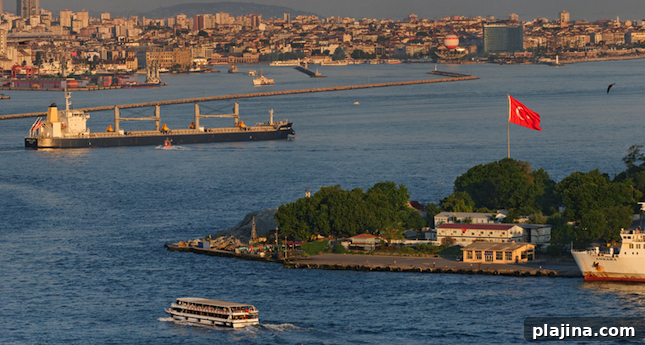
Home to the only city in the world that spans two continents, Turkey continues to strengthen its East-West connections. One of the most notable recent additions is Istanbul’s Marmaray commuter rail, a modern high-speed line that links Asia and Europe through a tunnel beneath the Bosporus Strait.
The Marmaray project is part of a broader push to upgrade Istanbul’s transportation network. Stretching roughly 47 miles, the rail line is complemented by several large-scale infrastructure projects designed to improve traffic flow, reduce maritime congestion, and support growing passenger demand.
Among these projects is the planned Grand Canal, an approximately 30-mile waterway intended to connect the Black Sea with the Sea of Marmara. By providing an alternative route to the busy Bosporus — which currently sees around 50,000 ships per year — the canal aims to ease shipping traffic and enhance safety. When finished, the canal will significantly alter the European shoreline of Istanbul and effectively create a large new island on that side of the city.
Another major development is Istanbul’s new international airport, designed to be one of the world’s largest aviation hubs. With six runways planned and a multi-stage construction schedule, the airport represents a multi-billion-dollar investment intended to accommodate massive passenger volumes. The first phase was planned for opening in 2017, and overall capacity projections have targeted figures on the order of hundreds of millions of passengers annually once all stages are complete.
These initiatives reflect Istanbul’s ongoing transformation into a global transit center, integrating rail, sea, and air routes to serve both local residents and international travelers. The combination of Marmaray, the Grand Canal, and the new airport will reshape the city’s geography and transport patterns while supporting economic growth and increased connectivity between continents.
You may also like:
Istanbul: The Beat Goes On
Turkey: Playground Of The Gods