
EVERYTHING OLD IS NEW AGAIN. That saying fits Warsaw perfectly: by the time Nazi forces retreated, some 80–90 percent of the city lay in ruins. Only fragments of Praga remained intact — one of the few places where Władysław Szpilman, whose story inspired The Pianist, sheltered during the war. The façades of blocky apartment buildings still bear bullet holes, and rusted metal doors guard many entrances. The neighborhood feels suspended in that dark decade, though a few new restaurants and bars, such as Zakład Mięsny—a recent rehabilitation project offering Polish craft beers—are beginning to change the scene.
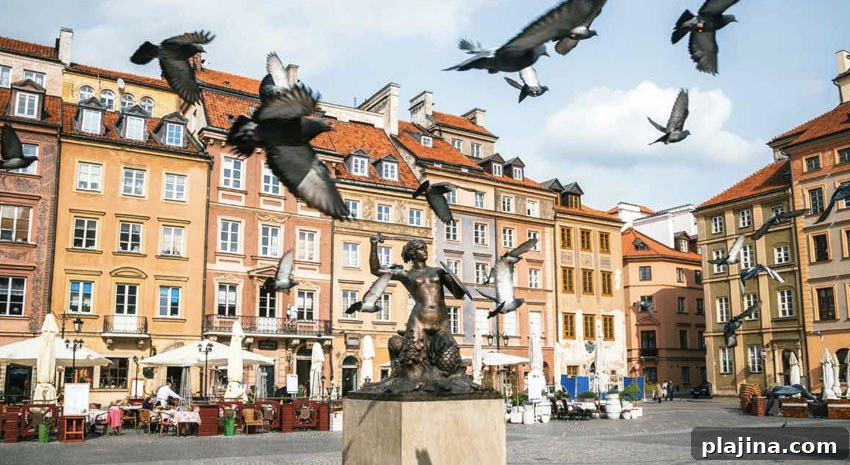
In contrast, Old Town radiates a restored grandeur as you approach the Royal Castle, which anchors the wide, pedestrian-only Castle Square. From there, narrow side streets open into corridors of colorful buildings standing shoulder to shoulder. Lime green, beige, brown, white and orange façades replace the stereotypical image of austere Central Europe; walking here feels like stepping into a living painting.
That painted quality is no accident. The reconstruction of Stare Miasto (Old Town) relied heavily on the work of Italian painter and printmaker Bernardo Bellotto. Celebrated in the 18th century for his meticulous cityscapes of European capitals such as Dresden, Vienna and Warsaw, Bellotto spent his final years in the city. Between 1770 and 1780 he created 26 vedute—large-scale city views—for the Panorama Room at the Royal Castle. Those works became essential references when rebuilding Warsaw, helping restore much of its prewar appearance even if not every detail could be perfectly recreated.
More than a decade into EU membership, Poland attracts growing numbers of tourists and business travelers who flock to Warsaw’s reconstructed center for sightseeing and photos. Locals are less visible in the busiest tourist spots, but the rebirth of Old Town from the ashes of war remains a remarkable achievement worth celebrating.
Accommodation options abound. Consider the Hotel Bellotto, named for the artist. Although the original 16th-century building was destroyed in 1939, the site has a long, turbulent history. The rebuilt five-star hotel now houses 20 well-appointed guestrooms and combines historic character with modern comforts, ideal for leisure or business stays.
For breakfast or a business coffee a short walk from the hotel, try Shabby Chic Coffee & Wine Bar. The menu includes Polish and French breakfast options and a reliable choice for a business lunch. Another longtime favorite is the Viennese-style Café Bristol. With high ceilings and round tables, it’s a pleasant spot to discuss work over a Polish breakfast—free-range scrambled eggs, sausage and local Koryciński cheese—or a Fit Breakfast with homemade granola, seeds, honey, cranberries and goji berries.
Restaurant Literatka, located along Krakowskie Przedmieście with views of the Royal Castle, provides an elegant setting for business lunches or dinners, serving refined Polish dishes with international touches.
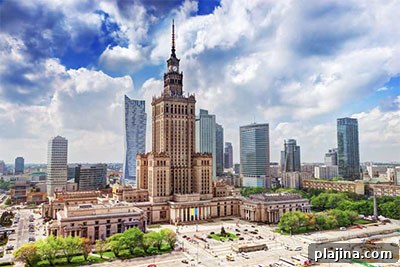
Palace of Culture and Science © MICHAL BEDNAREK | DREAMSTIME.COM
Near the main train station, Warszawa Centralna, you’ll find international hotel brands such as ibis, Radisson and Westin located across from the Palace of Culture and Science — an imposing reminder of the city’s communist-era architecture. These hotels are convenient for accessing convention venues like PGE Narodowy (National Stadium), Expo XXI and MT Polska, where many conferences and trade events take place.
Warsaw is increasingly international, and English is widely spoken as a second language. Business etiquette is generally similar to other European capitals, with a preference for direct communication. At the same time, many Varsovians are familiar with American business practices and adapt smoothly to international norms.
If you arrive at Warsaw Chopin International Airport, the city center is easily reachable by rail via the S2 or S3 lines. Public transport across the city is extensive: trams and buses link neighborhoods efficiently, and the Veturilo bike-share system offers a pleasant way to explore on dedicated bike lanes when weather permits.
For a more local, design-driven stay, consider Autor Rooms. This artist-run property occupies an apartment building in the Śródmieście Południowe neighborhood and sits somewhere between an Airbnb and a boutique hotel. Local artists decorated the rooms, creating a unique atmosphere that many visitors to Warsaw don’t experience. The location also puts you close to some of the city’s most popular eateries.
Nearby dining options include Tel Aviv Food & Wine for a casual lunch, La Sirena: The Mexican Food Cartel for standout Mexican cuisine, and several craft-beer spots such as Kraken Rum Bar and PiwPaw pubs. To experience a piece of Warsaw’s social history, visit a milk bar (bar mleczny). These cafeterias trace their roots to the late 19th century and became especially important after World War II, offering inexpensive, mostly dairy-based meals when meat was scarce. Although many milk bars closed after the fall of communism, they have made a nostalgic comeback. Locals often prefer these home-cooked dishes to fast food—expect simple meals for around €2–3 at places like Bambino, Rusalka or Milk Bar Prasowy.
When choosing cultural attractions, prioritize what is unique to Warsaw. The Warsaw Uprising Museum offers a powerful, well-documented account of the 1944 uprising, life under Nazi occupation, resistance efforts, and the city’s destruction and eventual liberation. For a lighter, musical cap to a business trip, visit The Fryderyk Chopin Museum, celebrating the country’s most famous composer—an apt prelude to a departure from the airport that bears his name.