
LET ME SAY THIS UP FRONT: If you love wildlife, a visit to the Galápagos Islands will surpass your expectations. There is no real way to prepare for the intimacy of watching animals that show little fear or aggression toward humans. They notice you, but most are focused on feeding, resting, raising young, or courting. Some are curious; many simply go about their lives as you observe in amazement.
This is an unforgettable adventure, and photography is the best way to preserve and share the moments. On these journeys you’ll find people with all kinds of gear—from high-end cameras to simple disposable models—so equipment varies widely. More on camera choices later. First, a brief overview of the destination.
© DONNELLE OXLEY
The Galápagos archipelago consists of 19 main islands and many smaller islets, ranging from tiny atolls to Isabela, which spans about 1,771 square miles. Located roughly 600 miles west of mainland South America and straddling the equator, the islands host species that evolved in isolation and are found nowhere else. With the exception of the Galápagos hawk, natural predators are scarce. Human impact, however, has long been a threat: sailors once captured giant tortoises for food and hunted seals for fur.
© DONNELLE OXLEY
Charles Darwin’s 1835 visit to the islands helped shape his thoughts on evolution. Ecuador recognized the archipelago’s global importance and established the Galápagos National Park in 1959. Since then, the government has limited development and visitation, and conservation efforts have focused on removing invasive species such as goats and rats. The Fausto Llerena Tortoise Center at the Charles Darwin Research Station on Santa Cruz raises tortoises to support reintroduction programs. Most visitors explore the islands by boat: passenger vessels generally carry no more than 110 people, and landings are done in small groups on marked trails while maintaining respectful distance from wildlife.
© DONNELLE OXLEY
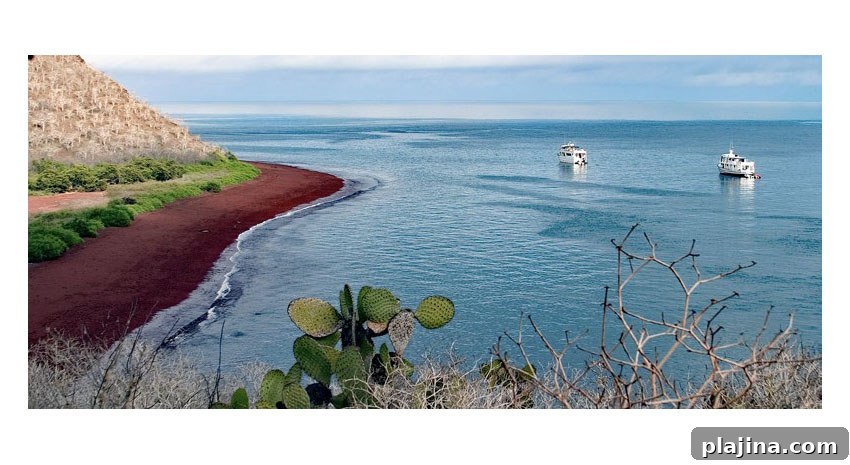
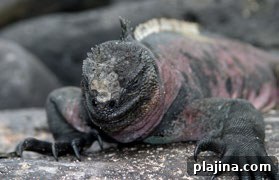
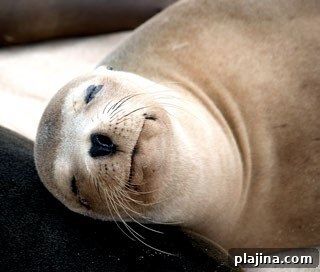
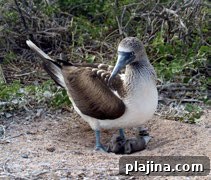
The wildlife is remarkable. Blue-footed, red-footed and Nazca boobies perform elaborate mating dances while magnificent frigatebirds inflate bright red throat pouches during courtship displays. Sea lions nap on beaches and nurse pups, and both marine and land iguanas lounge on exposed rocks. Colorful Sally Lightfoot crabs scuttle along the surf, and a variety of birds—most famously Darwin’s finches—fill the trees with song. In the water, curious young sea lions often swim near snorkelers and divers; you may also encounter sea turtles, reef sharks, and the Galápagos penguin. The islands themselves vary dramatically, from the emerald beaches of Floreana to Bartolomé’s volcanic terrain and Rábida’s red sand and ancient cactus forests.
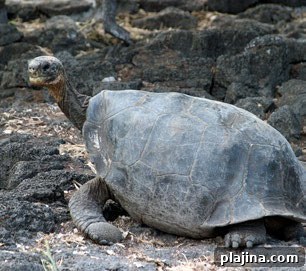
© DONNELLE OXLEY
Packing wisely is essential because there is a 44-pound luggage limit on flights to the islands. Choose quick-drying shirts and shorts you can launder in your cabin, one pair of lightweight long pants, a light rain jacket, a fleece or thin sweatshirt, and comfortable sandals. Bring a swimsuit, a wide-brimmed hat, reef-safe sunscreen, insect repellent, and a money belt for your passport, cards, and cash.
For photography, consider two digital cameras with versatile zoom lenses (for example, an 18–270mm equivalent) that are easy to handhold, plus a compact waterproof camera for snorkeling. Pack chargers, spare batteries, extra memory cards, and manuals. A small laptop or tablet helps download and back up photos during the trip. Use a backpack to carry gear for wet landings from inflatable boats, and keep plastic bags or waterproof covers on hand to protect equipment from rain or spray. Be aware that flash photography is generally prohibited—make sure you can disable flash on your cameras.
Respect park regulations: take only pictures and leave only footprints. Follow the rules, stay on marked paths, and keep a safe distance from wildlife for both your safety and theirs.
Galápagos Info to Go
Carry cash—the U.S. dollar is the official currency in Ecuador and the Galápagos. You’ll need cash for tips and mandatory entry fees. Flights to the islands depart from Guayaquil (GYE) and Quito (UIO) on the mainland; from either city you fly to Baltra or San Cristóbal, a flight of about 90 minutes from Guayaquil. Upon arrival in mainland Ecuador, the Galápagos Biosecurity Agency inspects luggage and issues a tourist transit card (currently $20). Keep this card, your return ticket, and proof of accommodation handy. On arrival in the Galápagos you must pay the Galápagos National Park entrance fee in cash ($100 for adults, $50 for children). For the latest information on park rules, weather, and seasonal animal activity, consult reputable conservation organizations and official park sources before you travel.