
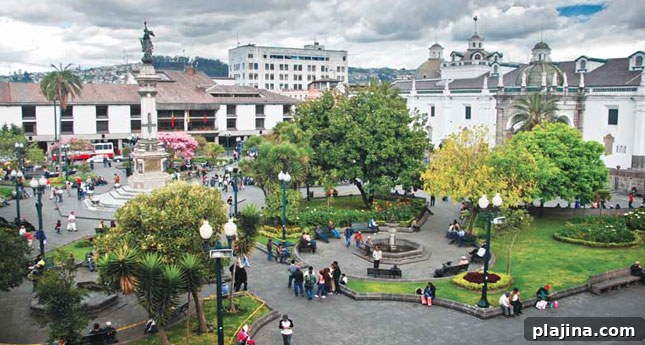
Quito may not be the highest capital in the world — that distinction belongs to La Paz — but Ecuador’s capital boasts a different distinction: its historic colonial center is the largest in the Americas and was the first site designated a UNESCO World Heritage site, in 1978.
To make the most of a day in Quito, timing matters. Avoid Mondays, when many museums and restaurants are closed. Sundays are ideal: much of the historic center is pedestrianized, and the main avenue through the modern Mariscal district is closed to cars and filled with cyclists instead. You can rent a bike from one of the temporary stands and join the flow, but remember you are at about 9,350 feet above sea level, so take it slow.
Most chain hotels and many contemporary restaurants are located in the newer neighborhoods, but for history and striking architecture, head to the historic center and explore on foot. Start at Plaza de la Independencia, the heart of the old city. From here you can see the presidential palace and the Metropolitan Cathedral, both central to Quito’s colonial identity.
Just a short walk away, Plaza San Francisco opens onto a dramatic stone-paved square anchored by the Church of San Francisco, whose construction was completed in 1580. Nearby is Casa del Alabado, Quito’s most compelling museum for Pre-Columbian art. Housed in a 17th-century mansion, its thematic displays of stone carvings and pottery include pieces that go back as far as 4,000 years and are presented with thoughtful curatorial design.
For a memorable lunch, consider the restaurant at Casa Gangotena, a luxury hotel in the historic district where Ecuadorian classics are given a refined interpretation by one of the country’s top chefs.
In the afternoon, visit the nearby Museum of Colonial Art, which offers free admission and a strong collection of religious artwork spanning the 16th to 19th centuries. Then step into La Compañía de Jesús church to see those religious traditions realized in a lavish Spanish colonial interior. The church is one of the grandest in the Americas, its altars, cornices and surfaces covered in intricate carvings and extensive gold leaf.
Stroll a few blocks to the charming, narrow pedestrian La Ronda Street to browse artisan shops and enjoy dinner by candlelight in a historic building. If you prefer a more modern dining scene, take a short taxi ride back to Mariscal, where contemporary restaurants such as Zazu and La Gloria serve well-executed, inventive cuisine.
By the end of the day you’ll have seen a carefully chosen slice of what this highland city near the equator has to offer, but there will still be much left to explore. Quito’s unique blend of colonial history, art and modern dining means it rewards return visits—especially when you want to spend more time nearly two miles up in the sky.