
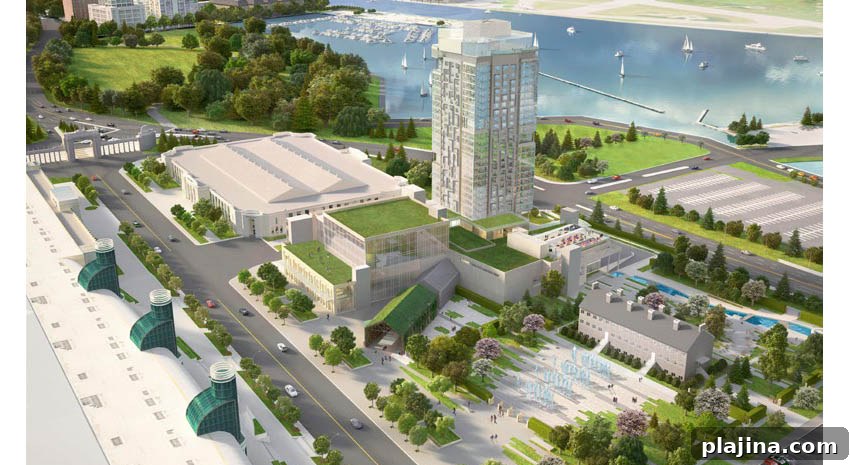
IN MID-JANUARY, as a sharp wind off Lake Ontario swept across the 30th-floor rooftop of the not-yet-completed Hotel X Toronto, Celso Thompson, the property’s director of sales, took in a panoramic view of Toronto’s skyline. From the rooftop he could see gleaming skyscrapers, residential neighborhoods and, on a clear day, the distant plume of Niagara Falls along the lake horizon, about 36 nautical miles away. Nearby, Porter Airlines aircraft looked like toys as they landed and took off from Billy Bishop Airport.
Thompson pointed out the hotel’s three-story Peregrine Skybar and two rooftop swimming pools, as well as the four-story, 90,000-square-foot indoor fitness and wellness center rising at ground level. The hotel will have 404 guestrooms and suites and is slated to open this summer.
Hotel X is one of many projects reshaping Toronto’s cultural, recreational and technological profile. The Greater Toronto Area draws roughly 100,000 new residents a year and attracts businesses and entrepreneurs. Many newcomers settle in fast-growing suburbs such as Brampton, Milton and Bradford West Gwillimbury, while others choose downtown neighborhoods near the lakeshore and along the Yonge subway corridor. High-rise condominiums and mixed-use towers have multiplied as housing prices rise. In the past year more than 29,000 condo units sold across the GTA, a 30 percent increase over earlier years. Tall residential towers completed or under construction include Number One Bloor (75 stories), Harbour Place Residences East (66 stories), Eau de Soleil Sky Tower (66 stories) and Ten York (65 stories). Today Toronto ranks second to New York in the number and scale of major buildings being built in North America.
Commercial development has accelerated as well. Real estate firm Newmark Knight Frank Devencore reported that more than 2.2 million square feet of new office space was expected downtown in 2017, more than double the previous year’s additions. Allan Schaffer, president and broker of record at the firm’s downtown Toronto office, noted that leasing demand is strong among financial services, legal, media, entertainment and high-tech tenants. Newly built towers continue to attract tenants quickly, and many well-located sublease spaces receive multiple offers.
Toronto’s downtown revival is driven in part by cutting-edge firms — some born in the city, others relocating from Montréal, Vancouver and Silicon Valley. Local startups and innovation hubs such as Influitive, Wattpad, EventMobi, QD Solar and the MaRS Discovery District support growth across health, science and technology sectors. MaRS, one of the world’s largest urban innovation centres, houses startups and research organizations in 1.5 million square feet of space.
Toronto hosts the highest concentration of tech companies in Canada and is the third-largest tech hub in North America, after Silicon Valley and New York. Global firms such as Google, Facebook and Microsoft maintain offices downtown alongside nearly 15,000 technology companies that employ roughly 168,000 people and generate about $38 billion in annual revenue.
With 57 percent of Toronto’s workforce under age 45, many companies emphasize wellness and active workplaces. Shopify’s Toronto office, for example, mixes work and play with guitars, foosball and Ping-Pong tables, a Red Bull fridge and gaming systems tucked into low-ceilinged rooms to keep noise contained. Ubisoft Toronto earned recognition for its U.Fit gym space, and popular local wellness options include Hubba Toronto and the recently renovated Elmwood Spa.
Several downtown hotels also promote wellness offerings. The Omni King Edward Hotel reopened its Nouvelle Maria Spa to complement the refurbished property, featuring La Peau anti-aging gel from Switzerland and other premium treatments.
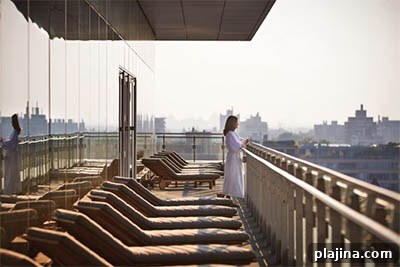
Four Seasons Toronto Hotel Spa Terrace © FOUR SEASONS HOTEL TORONTO
The Spa at the Four Seasons Hotel Toronto remains among the city’s most luxurious. Its 30,000 square feet include 17 oversized treatment rooms, two steam rooms, five deluxe suites for couples, a full salon, and an indoor relaxation pool with a co-ed whirlpool and an outdoor terrace overlooking the city. Locker facilities include steam rooms and grooming amenities, and a 24-hour, 3,500-square-foot fitness center is available to guests and residents. The spa provides a wide range of wellness therapies—from Traditional Chinese Medicine approaches for sleep and fatigue to treatments for pain, anxiety and stress—along with access to a spiritual advisor.
For guests who prefer an in-room wellness option, Canadian Le Germain hotels offer a “Nama Stay” package that supplies four online instruction videos and a Lululemon yoga mat, enabling a private practice in the comfort of the guestroom.
The City of Toronto also runs affordable fitness and swim programs at 40 community facilities, offering $9 day passes, punch-card options and unlimited-visit passports for residents and visitors.
At Hotel X, the Ten X Toronto athletic complex includes four DecoTurf indoor tennis courts with 50-foot ceilings, nine glass-backed squash courts, studios for yoga, Pilates and spinning, a golf simulator, physiotherapy and chiropractic clinics, a 4,500-square-foot full-service spa, and a nutrition and juice bar.
The Bisha Hotel & Residences, another high-profile hotel opening, focuses on nightlife and hospitality rather than an onsite wellness studio. Designed by Wallman Architects and rising 44 stories, Bisha offers 355 suites, a rooftop restaurant and pool, and a lounge-style café and bar aimed at a social, A-list clientele.
Nobu Hospitality plans Canada’s first Nobu-branded condo complex on Mercer Street in the entertainment district. The project envisions two 49-story towers that will include approximately 700 condo units, a hotel component, meeting spaces, a restaurant and an outdoor Zen garden.
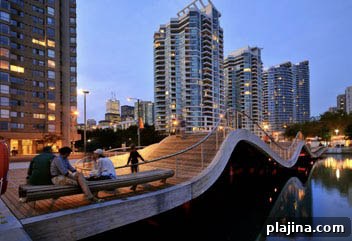
Waterfront Toronto Simcoe WaveDeck © WATERFRONT TORONTO
The largest undertaking is the multibillion-dollar waterfront revitalization covering roughly 2,000 acres, including West Don Lands, East Bayfront, the Port Lands and Queens Quay. What was once a post-industrial shoreline is being transformed into mixed-use neighbourhoods with residential and office towers, parks and recreational trails, and cultural and commercial districts designed around the lakefront.
DIVERSIONS
The Museum of Contemporary Art Toronto Canada recently reopened in the regenerated Lower Junction area. MOCA focuses on exhibiting, researching and promoting contemporary art that engages with pressing themes. The museum occupies the first two and a half floors of the 1919 Tower Automotive Building and is expected to anchor an eight-acre residential, arts and culture community as surrounding projects progress.
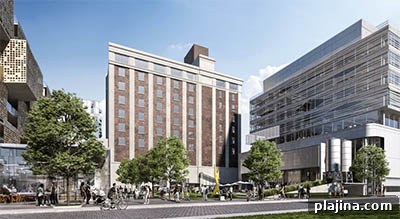
The Museum of Contemporary Art will open this fall in a restored 1919 building © MUSEUM OF CONTEMPORARY ART
The Art Gallery of Ontario hosts a Georgia O’Keeffe exhibition alongside “Every. Now. Then: Reframing Nationhood,” part of Canada’s 150th anniversary programming. At the Royal Ontario Museum, visitors can see “Out of the Depths: The Blue Whale Story.”
The $25 million Bentway project, known as the “Under Gardiner,” will convert a mile of formerly vacant land beneath the Gardiner Expressway into an urban corridor with pedestrian and bike paths, gardens, a skating rink, markets, public art, performance spaces and seasonal festivals.
CHECKING IN WITH GEORGE SPEZZA
Director, Business Growth Services, City of Toronto Economic Development and Culture
Which Toronto neighborhoods have benefited most from revitalization?
Several areas have seen strong regeneration. The Distillery District east of downtown evolved from Victorian industrial buildings into a lively destination for residents and visitors, blending residential, retail, dining and arts venues. Liberty Village, west of downtown, converted former factories and warehouses into lofts, creative offices and cultural spaces while preserving the area’s brick-and-beam character.
Distillery District © TOURISM TORONTO
Will the Waterfront Project benefit the city?
Yes. The waterfront revitalization brings extensive mixed-use development, commercial and residential space and opportunities for creative industries, all within easy reach of downtown. Proximity to Lake Ontario enhances Toronto’s long-term growth potential.
How is Union Station’s restoration progressing?
Restoration efforts have improved retail and dining offerings around Union Station and upgraded portions of the station itself, including concourse renovations. The revived station and the newly opened York concourse have already spurred nearby office development and enlivened Front Street.
Toronto Info to Go
Most international and domestic flights arrive at Pearson International Airport, about 15 miles from downtown (roughly 25–40 minutes). The Union Pearson Express offers a convenient 25-minute connection to Union Station with trains every 15 minutes, onboard Wi-Fi, power outlets and luggage racks.
Billy Bishop Toronto City Airport on Centre Island connects to downtown through a short tunnel and serves as Porter Airlines’ hub, with flights to numerous Canadian and U.S. cities. Billy Bishop has been recognized for efficient check-in and convenient, quick access to the terminal.
COMING AND GOING
U.S. citizens visiting Canada for fewer than 180 days do not need a visa but must present a passport or NEXUS membership. Other travel purposes such as work, study or immigration generally require visas. Children under 16 must have proof of U.S. citizenship.
OFFICIAL LANGUAGE
Canada’s official languages are English and French; English is most commonly used in Toronto.
Toronto: Just the Facts
Time zone: GMT-4
Phone code: Country code: 1; city codes: 416, 647, 437
Currency: Canadian dollar
Key industries: Financial services, health and life sciences, fashion and apparel, education, design, aerospace, food and beverage, technology
Where to Stay in Toronto
FOUR SEASONS HOTEL TORONTO A 5-star, 55-story flagship with private Four Seasons residences on upper floors, an extensive Canadian art collection, Café Boulud, d|bar and a luxurious spa and fitness center. 60 Yorkville Ave. $$$$$
HOTEL X TORONTO Part of the Library Hotel Collection, this 404-room property offers multiple dining venues, rooftop pools and SkyBar, VIP check-in, a multi-level athletic facility and lake views. 111 Princes’ Blvd. $$$–$$$$
SHANGRI-LA HOTEL TORONTO Downtown hotel with spacious guestrooms and suites, Bosk restaurant, a 9,000-square-foot wellness club and yoga studio, an indoor pool and Miraj Hammam Spa. 188 University Ave. $$$$$
Restaurants in Toronto
ALO Chef Patrick Kriss’ acclaimed tasting-menu restaurant features seasonal multicourse menus and is regularly ranked among Canada’s best. Reservations recommended; dinner service Tuesday–Saturday. 163 Spadina Ave. $$$$$
LUCKEE Located in the Metropolitan Hotel, Luckee serves modern Asian dishes such as dim sum, dumplings and Hong Kong-style steamed fish; counter seating at the open kitchen is popular. Metropolitan Hotel, 318 Wellington St. W. $$$–$$$$
STK A stylish steakhouse in Yorkville known for high-quality steaks, inventive cocktails and a lively atmosphere with a DJ. 153 Yorkville Ave. $$$$