
It’s been more than 20 years since the city of Bordeaux shed centuries of neglect, cleaned the soot from its façades, cleared crumbling warehouses from the riverfront and redesigned streets to be more pedestrian friendly.
The transformation is remarkable. Once hidden behind a dilapidated quay, the Garonne now glints beside a sweeping promenade that stretches from the lively Chartrons district — where outdoor cafés give way to elegant antique shops along Rue Notre-Dame — to Pont de Pierre, the graceful 19th-century bridge commissioned by Napoleon. Parks, gardens, sculptures and fountains enrich the riverside, most notably Le Miroir d’Eau, a vast black-granite reflecting pool where splashing around has become a warm-weather ritual.
© ANIBAL TREJO | DREAMSTIME.COM
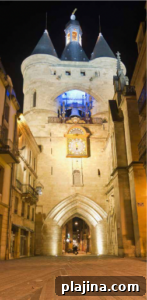
Move inland and you’ll discover centuries-old churches with soaring spires, the stout towers of the medieval Grosse Cloche, and the 18th-century Neoclassical Grand Théâtre, rimmed with a dozen sculptures of Greek and Roman deities. In total, more than 350 buildings within what is now UNESCO’s largest urban heritage site are listed as historic monuments.
And then there is the wine. Bordeaux’s preeminence in wine production stems from centuries of experimentation and refinement — beginning with early growers identifying grape varieties that could withstand cold winters and evolving through generations of improved cultivation, blending, aging and distribution. The result: Bordeaux grapes and wines rank among the world’s most celebrated.
Oenophiles wanting to dive deeper have a landmark new destination: La Cité du Vin, opened in 2016 and the world’s largest museum dedicated to wine. Housed in a striking, carafe-like golden building overlooking the river, the museum’s ten levels of interactive exhibits explore the history, culture and craft of wine. Admission includes a visit to the Belvédère on the eighth floor, a glass-walled viewing space where guests can sample wines from around the world as staff guide them through differences between regions and varietals.
Bordeaux’s wine bars are refreshingly unpretentious. In the Saint-Pierre neighborhood, Vins Urbains offers more than 250 selections, where a fine glass can cost as little as €4. Owners Jan and Christelle Bussiere are enthusiastic about their collection and happy to assemble impromptu flights. At The Wine Bar, tucked into Le Boutique Hôtel, sommelier Mike Germon hosts blind tastings each evening at 5 p.m.; the tasting, which includes cheese and charcuterie, is a popular way to explore local wines. While Bordeaux’s most prestigious “classified growths” are rarely poured by the glass, Bordeaux Wine Gallery uses a secured dispensing system to offer several classified wines for tasting, giving visitors a rare chance to sample legendary bottles.
The Bar à Vin, run by the Bordeaux Wine Council, presents even the most austere Bordeaux wines in a relaxed, art-filled setting. With more than 30 wines available by the glass and patient, English-speaking staff on hand, it’s a great place to ask questions. The venue also offers an on-site wine school for those who want to deepen their knowledge.
When you’ve found bottles you love, stop by L’Intendant, a shop dedicated exclusively to Bordeaux wines that stocks around 15,000 bottles, including second and third wines from esteemed châteaux. The shop’s steep spiral staircase is literal and figurative: as you climb, both prices and prestige rise.
Wineries in regions such as Napa and Sonoma have long welcomed visitors; Bordeaux is following suit. Many historic châteaux now open their doors and cellars to guests. Château Beychevelle, producing Cabernet-based wines in Saint-Julien since 1565, presents an imposing château filled with antiques, formal gardens and a recently renovated contemporary cellar. The estate offers private lunches, custom tastings and 12 guestrooms for overnight stays.
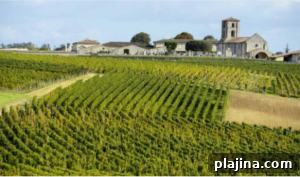
PHOTO: © FREEPROD | DREAMSTIME.COM
Château La Dominique in the Saint-Émilion area offers innovative experiences such as blind tastings and introductory tours designed for families, including children. The 17th-century estate features a restaurant redesigned by Jean Nouvel, whose terrace uses smooth, garnet-colored glass pebbles to create an unexpected visual effect.
About 45 minutes northeast of Bordeaux, the medieval village of Saint-Émilion is worth a dedicated visit. Named for the Breton monk who settled the area in the eighth century, the walled town is a delightful maze of sloping streets lined with wine shops, restaurants and historic buildings. Merlot-based wines from this appellation are particularly notable. Churches of significance include the Collegiate Church, with expansive stained glass and soaring Gothic arches, and the Monolithic Church, carved from limestone and dominated by a massive bell tower. Much of the Monolithic Church lies underground, featuring a quiet hermitage and catacombs. Enjoy a glass in a bustling courtyard café or climb to Hôtel de Pavie, where a pretty patio overlooks tiled rooftops and, beyond them, neat rows of vines stretching across the countryside.
LODGING
Hôtel de Pavie
This former convent has been transformed into an elegant 17-room Relais & Châteaux property with a 2-Michelin-starred restaurant. Guests may choose to stay in the village or at the nearby vineyard inn.
5 Place du Clocher, Saint-Émilion
$$$$
Hôtel le Palais Gallien
Housed in a 19th-century private residence close to an ancient amphitheater, this recently opened hotel features bold interiors and a lovely courtyard with an outdoor pool.
144 Rue Abbé de l’Épée, Bordeaux
$$$$
InterContinental Bordeaux – Le Grand Hôtel
This dramatic 130-room hotel offers a hip rooftop bar, a flower-filled courtyard and a black-granite spa pool framed by two-story red pillars.
2-5 Place de la Comédie, Bordeaux
$$$
DINING
Racines
Chef Daniel Gallacher, largely self-taught but influenced by time spent with Alain Ducasse, serves stylish, well-balanced dishes paired with an extensive selection of wines by the glass.
59 Rue Georges Bonnac, Bordeaux
$$$
INFO TO GO
Bordeaux-Mérignac Airport, located roughly six miles from the city, operates a full schedule of domestic and international flights. Ground transportation includes taxis, city buses and a shuttle that runs directly to the train station. High-speed TGV service from Paris Montparnasse takes just over two hours; conventional trains take around 3.5 hours.