
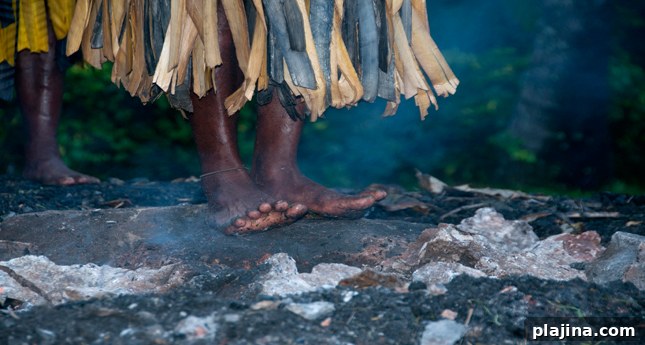
Like runway models preparing for the catwalk, half a dozen Fijian warriors take turns deliberately sauntering barefoot across a bed of scorching stones.
Far from a circus stunt, Fijian firewalking is an ancient ritual rooted on Beqa, a small island off the southern coast of Viti Levu.
According to legend, more than 500 years ago the power to walk on fire was granted to a warrior named Tui‑na‑Iviqalita after he spared the life of a spirit god while eel fishing. That ability became the exclusive right of his people, the Sawau tribe of Beqa, and today the tribe’s descendants continue the ceremony, observing the same strict taboos and customs passed down through generations.
In preparation for the rite, participants enter a period of separation ten days beforehand: they avoid contact with women and abstain from eating coconut. Traditionally the tribe digs a pit, fills it with large river stones, and builds a wood fire on top. The stones are left to heat for six to eight hours before the walk begins.
Visitors who want to witness the ceremony without traveling to Beqa can often see firewalking performances on Viti Levu’s Coral Coast. Resorts such as Outrigger on the Lagoon Fiji have created dedicated viewing spaces—like the Butu Vatu Fire Walking Arena—to accommodate up to 200 guests, providing an accessible opportunity to observe this powerful cultural tradition while respecting its sacred context.