
As the crew lined the gangway, glaciers and rugged peaks filled my view. I snapped a selfie to capture that surreal moment standing on the north bank of the Beagle Channel in Ushuaia, Argentina. I was headed to Antarctica, and the ship before me would carry me to my seventh continent.
That solitary photo proved I had stepped well beyond my comfort zone, and it also underscored a simple truth: I was alone. No friends or family were there to hold my bags or take my photo. I had arrived solo and was about to embark on the first solo cruise of my life.
I expected to be the only single traveler on board the Polar Latitudes ship, but I soon found myself surrounded by six other solo cruisers — people of different ages, backgrounds and life stages — who became our own little cruise family during the 13-day voyage. Together we celebrated the excitement of Antarctica, shared birthdays and life changes, and naturally took photos for one another without being asked.
Solo cruising has grown steadily in popularity over the decades. Historically it tended to be an option for wealthier travelers or those willing to pay the single supplement, which could reach 125–200 percent of the published per-person price. That’s changing as cruise lines become more welcoming to solo travelers, adding amenities and incentives to make solo travel easier and more affordable. Today, nearly half of the people traveling with Intrepid Travel go solo, and luxury specialist Adventure Life has seen a marked increase in single traveler bookings.
“The rise in solo cruising has followed the rise in solo travel in general,” said Monika Sundem, CEO of Adventure Life. “The trend has grown as cruise operators have adopted more solo-friendly policies. By reducing or waiving single supplements, ships are more likely to sail closer to full capacity. Four cabins occupied by solo travelers is far better than four empty cabins.”
Sundem points out many operators Adventure Life works with now offer single-share programs that let solo cruisers avoid the single supplement entirely. These programs pair same-gender travelers to share a cabin for half the cabin price, and some even guarantee the lower rate if a cabin-mate isn’t found.
Several mainstream lines have also adjusted policies and ship designs to accommodate solo travelers. Windstar and Princess Cruises, for example, offer reduced single supplements so solo travelers pay only a portion of the full cabin price. Norwegian Cruise Line pioneered purpose-built staterooms and communal spaces for solo guests when it introduced its studio staterooms in 2010. These compact cabins, roughly 100 square feet, come with access to a singles lounge and a calendar of meetups, happy hours and solo-focused events. Other lines quickly followed, and today Royal Caribbean International, Celebrity Cruises, P&O, MSC, Cunard and Holland America Line all include single cabins on parts of their fleets.
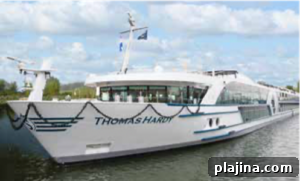
Solo-friendly offerings extend beyond cabins. Shore excursions and onboard programming increasingly cater to single travelers, with curated experiences designed to encourage interaction and exploration. Riviera River Cruises, for instance, tailors programming for solo guests that ranges from guided walking tours with local experts to curated wine tastings in Burgundy.
© RIVIERA RIVER CRUISES
RIVIERA RIVER CRUISES
River cruising has embraced the solo traveler trend as well. Riviera River Cruises currently stands out by offering dedicated solo-traveler departures where every cabin is reserved for singles, with no single supplement or extra fees.
“When we entered the North American market about four years ago, we wanted to differentiate ourselves from other river cruise lines,” explained Marilyn Conroy, executive vice president of sales and marketing for Riviera River Cruises in North America. “Focusing on the growing solo traveler market — which many competitors overlooked — was one way to do that. We ensure at least five cabins on every departure are available with no single supplement, and on our solo cruises we waive single supplements across all cabin grades.”
Conroy notes solo cruisers come from many walks of life; while many are single, others are partnered or married and simply prefer their own cabin or want to travel with friends without sharing accommodations. “People want to travel with friends but maintain their own space, or travel alone while being among other solo travelers,” she said.
“In my view, the solo cruise trend will continue to grow,” Conroy added. “The number of people traveling alone has increased over the past five years, and there’s every reason to expect this demand to keep rising.”