
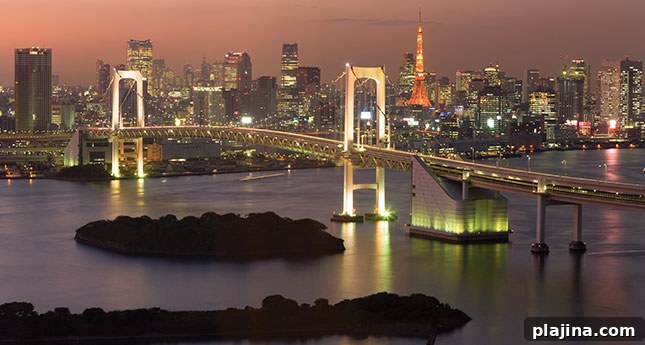
Below Tokyo’s glittering neon surface, the economic outlook can feel as bleak as in any global financial center. Yet Tokyo is taking a deliberate path toward recovery. Japan’s asset bubble burst in the 1990s, and although the economy saw modest growth between 2002 and 2007, the recovery stalled again by 2008 and the country entered recession. Key sectors such as automotive and electronics cut production, domestic spending weakened, and economic output declined. In January 2009, the IMF projected a further contraction in Japan’s GDP before a modest rebound in 2010.
Despite this challenging backdrop, Tokyo—home to more than 12 million people—retains significant strengths. As Japan’s industrial, corporate and financial hub, the city hosts 47 Fortune 500 headquarters, more than London, New York, Beijing or Seoul. Global firms such as IBM, Texas Instruments, Pfizer, BASF and Bosch maintain regional bases here. Even amid slower growth, Tokyo-based companies continue to expand across East Asia, offering partners, including many U.S. firms, opportunities for renewed growth.
Tokyo remains the world’s wealthiest metropolitan government, with an annual budget reaching roughly $73 billion. If Metro Tokyo were a country, its GDP would rank among the top 20 worldwide. According to Monocle’s 2009 Quality of Life Index, Tokyo ranks as one of the world’s most livable cities, praised for its efficient public transit and renewed focus on urban greening. Culinary excellence also enhances livability—Tokyo holds more Michelin stars than any other city, with hundreds of recognized restaurants.
What sets Tokyo apart is a forward-looking vision. “Tokyo 2016” became a rallying slogan as the city pursued an Olympic bid; under Governor Shintaro Ishihara, the Tokyo 2016 committee led an ambitious campaign, backed by Prime Minister Taro Aso’s financial guarantees. But Tokyo’s ambitions extend beyond a single event. The city has launched a decade-long initiative, “Tokyo’s Big Change,” aimed at reshaping Tokyo as a model metropolis for the 21st century.
The centerpiece of this transformation is urban greening. Plans prioritize the redevelopment of Tokyo Bay’s shorelines and reclaimed islands under strict environmental standards. The landfill island Umi no Mori is being cultivated as a “Sea Forest,” the first step in a green corridor that will link the waterfront to the Imperial Palace. The Waterfront District (Rinkai) is envisioned as a major entertainment zone, with new housing and water-transport projects that will benefit tourists and commuters alike.
Over the next decade, city redesign will also expand cultural and culinary hubs: Ueno will become a “Cultural Forest” anchoring parks and temples, while the Toyosu waterfront market will evolve into a culinary center. West of the city center, the Tama District is being positioned as a technology cluster, aided by a new ring road and plans to broaden Yokota Airport’s civilian role. This networked approach aims to decentralize growth and stimulate innovation outside central Tokyo.
The green facelift touches everyday life. Schools will replace dirt and concrete playgrounds with grass, the city plans to double its urban tree count to one million, billboards will be reduced, and utility poles will be removed from central areas. Tokyo aims to minimize its environmental footprint with a long-term target of becoming one of the lowest-impact megacities globally. That carbon-conscious vision is slated to unfold over the coming decade, independent of any Olympic outcome.
Other large-scale but less visible initiatives address demographic and health challenges. Tokyo is developing strategies to model a “superaging society” by engaging the city’s roughly three million seniors in new roles, expanding Alzheimer’s research and reforming medical education to produce more capable physicians. Tourism goals include doubling annual foreign visitor numbers from five million to ten million within ten years.
Business travelers will find practical benefits alongside a greener city. The inventory of central-city hotel rooms is expected to expand significantly, increasing choices and competition. Transit improvements aim to shorten travel times—plans call for a rapid link to Narita International Airport to reduce the transfer to around 30 minutes. Tokyo’s “ubiquitous technology” project, already piloted in places like Ueno Park and the Ginza, embeds electronic tags and sensors into urban infrastructure so handheld devices can deliver real-time navigation, language assistance and local information. Within a decade, visitors may find Tokyo functioning as an open, digital guidebook.
Efforts to reduce business costs are underway through infrastructure upgrades and waterfront renewal, which have already influenced land and office rents in parts of the city. Traffic-management projects seek modest gains in average rush-hour speeds, reflecting incremental rather than radical change.
Even if Tokyo’s Olympic bid does not succeed, the cultural and economic investments driven by the city’s 10-year plan are likely to deliver lasting benefits. For visitors and residents alike, Tokyo’s evolving face promises to be greener, more accessible and more inviting.
Diversions
Tokyo’s neighborhoods each feel like distinct cities and reward repeated exploration. Shinjuku is a vivid mix of contemporary energy and preserved history—you can shop, dine and drink across countless venues, then find serenity in Shinjuku Gyoen, a Meiji-era garden renowned for cherry blossoms. A short walk south leads to the Meiji Shrine and its inner gardens, a peaceful cultural landmark.
Ueno anchors north Tokyo, with Ueno Park and Zoo offering spacious green areas enhanced by digital wayfinding systems. Nearby Akihabara, or Electric Town, is the global epicenter for electronics, gaming and anime culture. Asakusa hosts Sensoji, Tokyo’s oldest temple complex, approached via the traditional Nakamise shopping lane and reflecting centuries of Buddhist and Shinto tradition.
The Tokyo Bay area showcases many of the city’s newer attractions and proposed Olympic venues. Families flock to Tokyo Disney Resort and the popular Tokyo DisneySea, while Odaiba on the waterfront is home to mega-shopping complexes, entertainment centers and the National Museum of Emerging Science and Innovation, which highlights Japan’s robotics and technology culture. At night, Ginza and Roppongi offer upscale dining and nightlife. For convenient access to these diverse districts, consider a one-day unlimited travel pass available from metro station machines.
Info To Go
Narita International Airport (NRT) sits roughly 45 miles from central Tokyo. Airport limousine buses to downtown hotels take about two hours; the Narita Express train reaches Tokyo Station in roughly one hour. The Keisei Skyliner provides service to Nippori and Ueno in about 80 minutes. Taxis from Narita are costly. Inside the city, Tokyo Metro fares typically range from about $1 to $3; taxis start at approximately $7. Tipping is not customary.
Checking In With Wolfgang Krueger
General Manager, Shangri-La Hotel, Tokyo
The Shangri-La, which opened in March 2009, positions itself as a distinct luxury brand rooted in Asian hospitality. Its focus on warm, attentive service—framed by time-honored Asian values and delivered efficiently—has resonated with international business guests.
For business visitors, convenient access to public transport is essential. Proximity to Tokyo Station provides quick connections via Shinkansen and local rail services. The hotel’s location offers easy walks to the Ginza shopping district, the Imperial Gardens, the redeveloped Marunouchi business area and historic Nihonbashi.
On the economic front, the hotel’s leadership views the recession as an opportunity to emphasize quality and service. Tokyo’s mature luxury market tends to sustain demand for high-end hospitality even during downturns, and careful market preparation supports resilience.
Among local recommendations, seasonal attractions stand out: cherry blossoms along the Meguro River in spring, summer fireworks at Sumida River and Tokyo Bay, early-morning sushi at Tsukiji, and New Year celebrations at Meiji Jingu Shrine are memorable experiences year-round visitors appreciate.
Just the Facts
Time Zone: GMT +9
Phone Code: +81 (Japan); 3 (Tokyo)
Currency: Japanese yen
Entry/Exit: U.S. passports should be valid for at least six months; business visits under 90 days typically do not require a visa for U.S. citizens.
Official Language: Japanese. English is widely used in international business, but interpreters are recommended for important meetings.
Key Industries: Automotive manufacturing, electronics, banking and finance, medical equipment, biotechnology, IT systems, pharmaceuticals, printing and environmental technologies.
Lodging
Conrad Tokyo
With 290 spacious rooms, a business center, views of Rainbow Bridge and notable dining options, the Conrad is a prominent luxury choice. Tokyo Shiodome Building, 1-9-1 Higashi-Shinbashi, Minato-ku, tel 81 3 6388 8000. $$$$
Hotel Okura Tokyo
A member of Leading Hotels of the World, this 830-room property remains a top pick for business travelers. 2-10-4 Toranomon, Minato-ku, tel 81 3 3582 0111. $$$$
Park Hyatt Tokyo
A modern landmark favored by international executives and celebrities, located in Nishi Shinjuku. 3-7-1-2 Nishi Shinjuku, Shinjuku-ku, tel 81 3 5322 1234. $$$$
Dining
Bon
A Buddhist-inspired restaurant offering refined vegetarian cuisine in tatami-matted rooms. 1-2-11 Ryusen, Taito-ku, tel 81 3 3872 0375. $$$–$$$$
Gonpachi Kushi Soba
Set in a festive warehouse setting with an open kitchen and courtyard atmosphere, known for soba and sushi. 1-13-11 Nishi-Azabu, Minato-ku, tel 81 3 5771 0170. $$–$$$
Inakaya
A lively robatayaki spot where guests select ingredients that are grilled to order in front of them. 4-10-11 Roppongi, tel 81 3 5775 1012. $$$–$$$$