
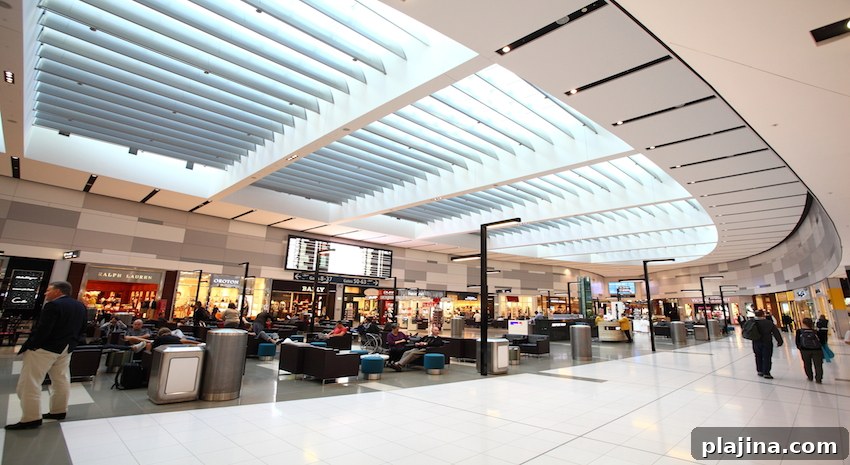
Last month, Air New Zealand trialed a new social robot to assist passengers with check-in and boarding at Sydney Airport.
The five-day pilot, conducted in collaboration with Commonwealth Bank, featured the Chip Candroid social humanoid robot. Commbank introduced the robot at its Sydney Innovation Lab last year, and the device was deployed at selected Air New Zealand check-in desks and departure gates for the trial.
Tiziana Bianco, general manager of Innovation Labs at Commonwealth Bank, said the experiment demonstrated the value of investing in social robotics. She noted the collaboration with Air New Zealand and the involvement of researchers from UTS’s Centre for Artificial Intelligence offered a valuable opportunity to explore what social robotics could enable in the future.
The robot’s test at Sydney Airport continues a pattern of Air New Zealand exploring advanced technology to improve the passenger experience.
Avi Golan, chief digital officer at Air New Zealand, said the partnership with Commbank and the Chip trial is another way the airline is pushing boundaries to stay at the forefront of technology. He added that the airline is also testing other future enhancements, including the potential for cabin crew to use Microsoft’s HoloLens augmented reality headsets onboard aircraft.
The pilot aimed to evaluate how a social humanoid could perform practical tasks in a busy airport setting, such as guiding passengers through check-in, providing boarding information and answering basic queries. Feedback from staff and travellers during the five-day period will help determine whether similar technology could be scaled for longer-term use.
Using a social robot in an airport environment raises questions about reliability, passenger acceptance and operational fit. Trials like this allow airlines and partners to identify strengths and limitations in real-world conditions before committing to wider rollouts. They also provide insights into how robots might complement human staff, handling repetitive or information-focused interactions while people focus on more complex customer needs.
Airlines and banks experimenting with robotics and augmented reality reflect a broader trend across industries to blend automation with human service. When deployed thoughtfully, these technologies can streamline routine processes, reduce wait times and free employees to deliver higher-value customer service.
As pilots conclude and evaluations are completed, stakeholders will review data on performance, passenger satisfaction and operational impact. If results are positive, future iterations could see more extensive trials or targeted deployments at busy airport terminals to enhance efficiency and improve traveller experience.