
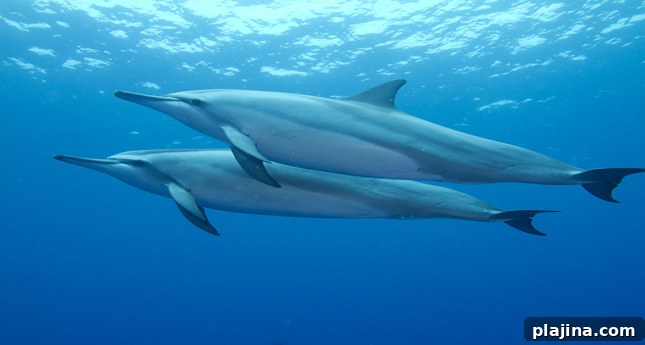
The National Marine Fisheries Service has proposed a new rule to prohibit swimming with and approaching Hawaiʻi’s spinner dolphins. This activity, popular with visitors, has raised concerns among scientists and conservation groups that frequent human contact can disrupt the dolphins’ natural behaviors, including feeding and resting cycles.
The proposal would expand protections under the Marine Mammal Protection Act by establishing a clear approach and interaction limit to prevent harassment and reduce disturbances. Unlike the existing statute, which already forbids harassment, the new regulation aims to create enforceable distance rules to better protect dolphins from repeated or close encounters that may disturb their daily routines.
“We welcome the proposal from the National Marine Fisheries Service to introduce new regulations under the Marine Mammal Protection Act that would ban swimming with and approaching Hawaiʻian spinner dolphins within 50 yards,” said Elizabeth Hogan, U.S. oceans and wildlife campaign manager for World Animal Protection. “Close interaction with marine mammals, in the wild as well as in captivity, can cause great harm and stress for them, disturbing their natural resting behaviors and distressing their wild pods, including potentially separating mother and baby animals. Researchers have found that spinner dolphins off Hawaiʻi’s Big Island are exposed to human interaction as much as 80 percent of the time during the day, indicating that these proposed new measures are sorely needed.”
The proposed 50-yard buffer is intended to protect vulnerable behaviors such as resting and nursing by reducing the frequency and proximity of human encounters. Conservationists argue that consistent disturbances can force dolphins to alter their behavior patterns, expend extra energy, and experience increased stress—factors that can affect individual health and long-term population resilience.
The public is invited to comment on the proposal. Comments must be submitted through the Federal Register docket for this rulemaking by Oct. 23. The National Oceanic and Atmospheric Administration will review all submissions as part of its rulemaking process before any final regulation is adopted.
This measure reflects broader efforts to balance wildlife protection with responsible wildlife viewing. Advocates encourage visitors and local operators to observe dolphins from a respectful distance, follow any new regulations that become law, and support practices that minimize disturbance to marine life so that future generations can enjoy healthy, thriving dolphin populations.