
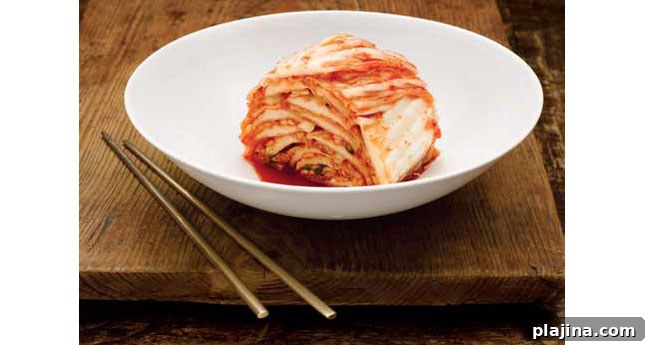
I remember clearly my first taste of kimchi. I was at my desk in the old Global Traveler offices when a package arrived from a colleague returning from South Korea. The box held an assortment of treats and chocolates, and I eagerly began sampling them. I unwrapped a delicate candy square, popped it into my mouth, and was surprised to find a cube of chocolate-covered kimchi. The unexpected tang of fermented cabbage contrasted sharply with the creamy sweetness of chocolate.
Since that first bite, I’ve enjoyed South Korea’s national dish many times, and the experience is entirely different when kimchi is paired with traditional foods. In Korea it’s so ubiquitous that it appears at every meal. Typically made from napa cabbage or radish, kimchi is fermented with a blend of garlic, salt, vinegar, chili peppers and seasonings. It can be served on its own or alongside rice and noodles, and it also finds its way into soups, fried rice, pancakes, pizza — and even chocolates. Some estimates put the number of kimchi variations, past and present, at well over 180.
Kimchi’s origins are rooted in Korea’s mountainous terrain and harsh winters, conditions that made food preservation essential. Before red pepper reached Korea, early versions relied on radishes preserved in brine or coated in paste. From the Koryeo period onward, cooks began experimenting with other vegetables, introducing garlic and a broader range of spices. Over centuries these adaptations evolved into the many kimchi styles enjoyed today.
Beyond its cultural importance, kimchi is valued for its health benefits. It is rich in vitamins A and B and contains beneficial bacteria, notably Lactobacilli, which support digestion, help regulate blood sugar and protect against certain infections. Kimchi is also a source of iron, calcium and selenium, nutrients that contribute to muscle maintenance, immune function and circulation. Studies suggest regular consumption of kimchi can help lower cholesterol, and the antioxidants and flavonoids in cabbage have been associated with reduced cancer risk. That said, people monitoring their sodium intake should be mindful: some kimchi preparations can be high in salt.
Today kimchi is often described as a superfood with deep historical and cultural roots. Whether you encounter it in its traditional form, as an inventive pizza topping, or even coated in chocolate, I hope your first taste of kimchi is as vivid and memorable as mine.