
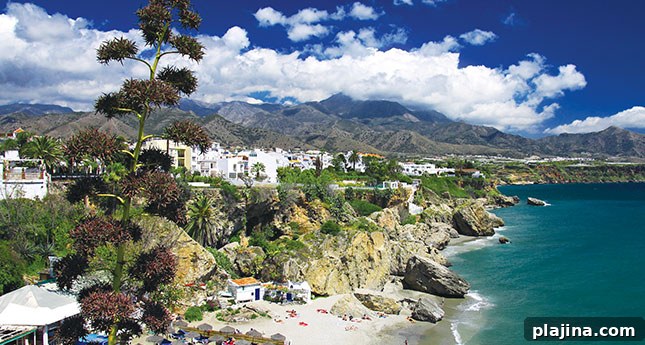
Costa del Sol, Costa Brava, Costa Blanca — Spain boasts more celebrated coasts than most countries. Their names evoke long stretches of golden sand lapped by the blue Mediterranean and a variety of seaside experiences, from tranquil fishing villages to lively resort towns.
Some names — Costa del Sol, in particular — still conjure images of overdevelopment: rows of generic hotels punctuated by English pubs and souvenir shops, places that can feel more like a themed resort than authentic Spain. But the coastal scene is diverse, and many stretches have preserved local character, culture and scenic beauty.
To help you choose the right coast, here’s a concise tour of Spain’s famous costas, spanning more than a thousand miles from the French border northeast of Barcelona to the Portuguese boundary west of Seville.
Costa Brava, Spain’s “wild coast,” earned its name in 1909 and has long attracted artists and writers. The region north of Barcelona marked its centenary in 2009–2010 with exhibitions, concerts and cultural routes celebrating figures such as Pablo Picasso, Salvador Dalí and Marc Chagall. Figueres hosts the Dalí Theatre-Museum, and Cadaqués remains a magnet for artists, with summer painting and music festivals.
Tossa de Mar is one of the prettiest Costa Brava towns, its white houses clustered inside 12th-century walls and towers. Nearby shorelines alternate between secluded coves and long sandy beaches. Pals is another medieval gem, with panoramic views from the nearby ruins of the Sant Pere de Rodes monastery.
Southwest of Barcelona, the Costa Daurada offers broader beaches rather than dramatic scenery. Sitges stands out for its vibrant arts and festival scene, a long-standing enclave for Modernista artists. The Costa del Azahar, closer to Valencia, is dotted with orange groves and good beaches around Castellón de la Plana. Peñíscola features a striking medieval fortress and castle rising almost directly from the sea.
Further south, the Costa Blanca centers on Alicante and stretches between two capes. Cliffs and caves around Jávea and its government-run parador offer dramatic coastal scenery. Benidorm is the busiest nightlife hub on this coast, popular with international tourists and known for its many bars, pubs and clubs.
Despite bustling beaches nearby, Alicante retains a genuinely Spanish atmosphere with an atmospheric old quarter. Family-friendly beaches such as Elche attract many Spanish visitors, maintaining a local feel even in high season.
The Costa del Sol, perhaps Spain’s best-known coast, runs from Málaga to Gibraltar. It may not be the most dramatic coastline, but it offers a reliably sunny climate that draws northern Europeans seeking winter warmth. The area mixes international elements with distinctly Spanish culture: tapas bars, historic neighborhoods and Moorish influences are all present amid lively beach life.
Marbella’s old town rewards visitors who climb its winding streets with authentic tapas bars and charming plazas, while the nearby marina area of Puerto Banús caters to a wealthier crowd, with designer boutiques and luxury yachts. Torremolinos and other resorts serve a diverse international clientele and lively nightlife.
Málaga has reinvented itself as a cultural city in recent years. The city improved its central shopping boulevard, added public art and cafés, and developed museums that highlight its artistic heritage, including a museum dedicated to Picasso.
West of Gibraltar, the Andalusian coastline meets the Atlantic. Near the Cape of Trafalgar the land rises steeply from the sea; Tarifa at the cape’s tip is famous for windsurfing and offers long, uncrowded beaches. Inland hills shelter whitewashed “pueblos blancos,” with Vejer de la Frontera the most accessible from the coast.
The Costa de la Luz, stretching from the rocky promontory to the Portuguese border, is known for fine white sand and roughly 300 days of sunshine each year. Developed later than other coasts, the region favored low-rise, higher-quality development that preserves beaches and natural scenery. Rota and Matalascañas show more foreign influence, but elsewhere the towns remain authentically Spanish.
Mazagón, south of Huelva, is a tranquil resort with pine-backed beaches. In Cádiz the sands reach the city center, and one beach sits between two historic forts, Santa Catalina and San Sebastián. Cádiz itself feels like a provincial town with Moorish-influenced white houses and wooden balconies rather than a vast commercial port.
Sanlúcar de Barrameda and Jerez de la Frontera are renowned for sherry production. Sanlúcar is prized for excellent seafood, while Jerez is famous for flamenco and the Royal Andalusian School of Equestrian Art, where Andalusian horses perform classical dressage.
INFO TO GO
Flights from Madrid-Barajas Airport (MAD) connect to Seville (SVQ) for the Costa de la Luz, Málaga (AGP), Valencia (VLC) and Barcelona (BCN). Rent a car at the airport or arrange private transfers to nearby coasts. Official tourist information for Spain provides regional resources and travel guidance.
LODGING
HOSTAL DE LA GAVINA
The only five-star resort hotel in Catalonia sits on a small peninsula between two beaches. $$$$
HOSTAL DE LA GAVINA
Plaza de la Rosaleda, Castell-Platja d’Aro, Girona
tel 34 972 321 100
www.lagavina.com
HOTEL MONASTERIO SAN MIGUEL
A converted convent that preserves historic architecture while offering contemporary comfort and fine dining. $$$
HOTEL MONASTERIO SAN MIGUEL
Calle Virgen de los Milagros 27, El Puerto de Santa María, Cádiz
tel 34 956 540 440
THE RITZ-CARLTON HOTEL VILLA PADIERNA
An elegant Costa del Sol palazzo with luxurious amenities, spa facilities and refined décor. $$$$
THE RITZ-CARLTON HOTEL VILLA PADIERNA
Carretera de Cádiz Km. 166, Marbella
tel 34 952 889 152
DINING
ELBULLI
On the Costa Brava, chef Ferran Adrià’s former restaurant earned global acclaim for tasting menus of inventive courses. $$$$
ELBULLI
Cala Montjoi, Roses, Girona
tel 34 972 150 457
RESTAURANTE EL FARO
A local favorite in Cádiz known for fresh seafood and thin slices of Iberian ham hung from the rafters. $$–$$$
RESTAURANTE EL FARO
Calle San Félix 15, Cádiz
tel 34 956 211 068
RESTAURANTE SANTIAGO
In Puerto Banús, this restaurant serves excellent Iberian cured meats and traditional roasts in addition to seafood. $$$
RESTAURANTE SANTIAGO
Paseo Marítimo 5, Puerto Banús, Marbella
tel 34 952 770 078
DIVERSIONS
For striking views of Costa Brava beaches and pine-crowned rock formations, take the Lancha Litoral “sea bus” that links towns and coves not easily reached by road. Golfers will find many courses, including the Pals Golf Club and the acclaimed 36-hole PGA Golf Catalunya at Caldes de Malavella.
Diving is excellent around the Medes Islands nature reserve off L’Estartit, where clear water and varied underwater terrain support abundant marine life. Organized diving centers run trips to this protected area.
On the Costa Blanca, family-friendly beaches such as those at Cullera and attractions like Safari Park Vergel near Dénia appeal to visitors with children. Jávea offers a small golf course and impressive coastal cliffs. Alicante’s Santa Cruz quarter and museums display works by Picasso, Braque and Miró.
Architecture lovers should schedule day trips to Barcelona and Valencia. Barcelona highlights Antonio Gaudí’s Modernista masterpieces, including Sagrada Família, La Pedrera and Palau Güell. In Valencia, the City of Arts and Sciences showcases Santiago Calatrava’s futuristic designs.
The Costa del Sol features more than 50 golf courses, many clustered in the Golf Valley between San Pedro de Alcántara and Marbella. Villa Padierna’s well-landscaped course offers sea views and, on clear days, distant views of the Atlas Mountains of North Africa.
Cruises run between Torremolinos and Puerto Banús, and visitors can take hot-air balloon flights along the coast followed by Champagne breakfasts. Inland, the white village of Casares perches under a ruined castle and provides a scenic contrast to the beaches.
Family attractions include Selwo, a nature park with semi-wild animal enclosures; Aquapark, a large water park; and Tivoli World, an amusement park with rides suitable for young children.
In Málaga, walk the marble-paved pedestrian street and explore the Picasso Trail, which highlights the artist’s birthplace and the Picasso Museum Málaga. Bullfighting still takes place seasonally in some locations, and visitors can check local schedules if they wish to attend a corrida.
For a quieter experience, Nerja offers clifftop views and tucked-away beaches; the Balcón de Europa provides panoramic vistas and nearby Cueva de Nerja features prehistoric cave paintings. East of Almería, Cabo de Gata National Park leads to unspoiled beaches and clear waters ideal for diving, while Mojácar inland is a picturesque Moorish-style village of whitewashed houses.
In Cádiz, art lovers can follow a walking tour of churches with works by Goya, El Greco and Murillo. Jerez is synonymous with sherry; many bodegas welcome visitors for tastings and tours, and the Royal Andalusian School of Equestrian Art stages demonstrations of classical riding. The flamenco tradition is strong here, and authentic peñas offer powerful live performances. Golfers can enjoy championship courses such as the Jack Nicklaus-designed Montecastillo near Jerez.