
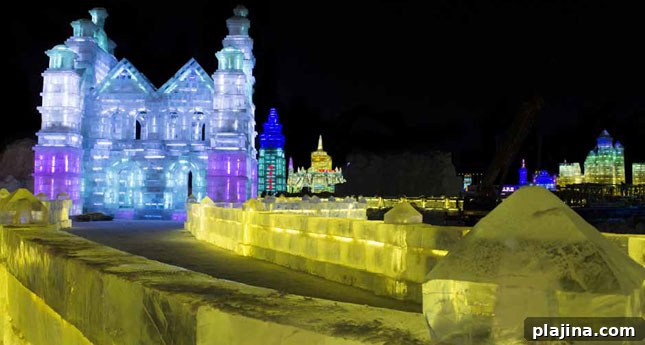
“Winter Wonderland” barely captures it. The Harbin International Ice and Snow Sculpture Festival is an annual showcase of imagination and craftsmanship, inviting sculptors from around the globe to turn ice into luminous works of art.
Set in Heilongjiang province in northeastern China, near the Siberian border, Harbin is famous for its dramatic winter scenery and frigid temperatures that make large-scale ice art possible.
What began as a practical practice in the 17th and 18th centuries—fishermen freezing water into lanterns with hollow centers to hold candles—grew into an admired visual tradition. The warm, iridescent glow of those early ice lanterns transformed frozen streets and rivers into enchanting nocturnal landscapes.
By the mid-20th century, the craft evolved from simple utility into competitive artistry. Locals began designing increasingly intricate ice lanterns and sculptures, and in 1963 Harbin staged its first organized Ice Festival. Since then, the event has expanded dramatically and now covers nearly 150 acres of sculpted ice, drawing visitors and artists worldwide.
Artists harvest water and natural ice from the Songhua River to carve monumental installations that span themes and cultures: classical Chinese scenes, European folktales, fantastical ice gardens and painstaking replicas of famous architectural landmarks. The sculptures are striking in daylight for their scale and detail, but after sunset the installations are transformed by vibrant lighting, creating an otherworldly glow.
At the festival’s core, Zhaolin Park honors the tradition of ice lanterns with rows of sparkling, handcrafted lanterns that echo the event’s origins. Around the city, larger showcases such as Sun Island and Ice and Snow World feature elaborate constructions—past seasons have included ice renditions of the Colosseum and the Empire State Building—each site offering a different atmosphere and scale of spectacle. The festival typically runs through the winter months, drawing photographers, families and art lovers to experience a rare fusion of nature and human creativity in frozen form.