
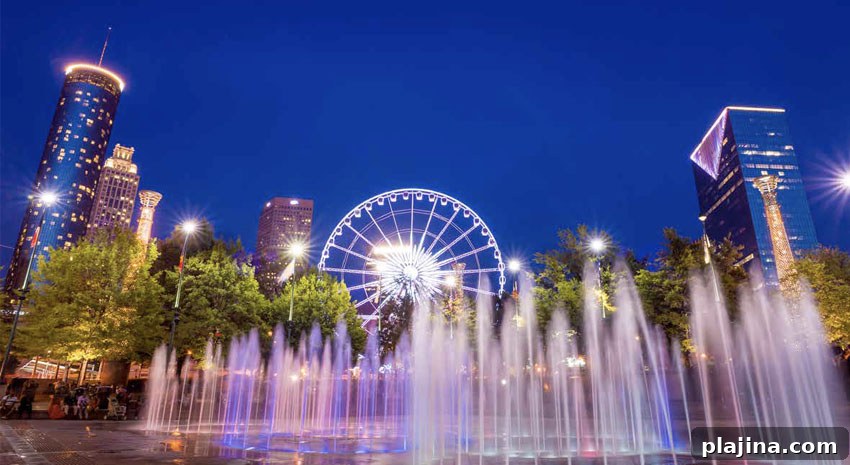
“ATLANTA IS THE BEST IN THE U.S. … a renowned business climate with an unrivaled quality of living.” City champions do not hedge their praise, and the accolades are numerous: the state ranks No. 1 for business in the United States; Atlanta appears in Lonely Planet’s Top 10 travel destinations; and Travel + Leisure singles it out among America’s most charming, friendly and cultured cities. Technically a sprawling region of 8,376 square miles that includes 29 counties and 242 neighborhoods, metropolitan Atlanta is an alpha global city with a $270 billion GDP and a top-ten national ranking for influence in commerce, research, finance, technology, media, art and entertainment.
More Fortune 500 companies operate in Atlanta’s pro-business environment than in Dallas and Nashville combined. Major employers include Delta Air Lines, The Home Depot, AT&T, UPS, Marriott and Publix. In recent years, firms such as Honeywell, Adidas, NCR and GE have established significant operations here, generating thousands of new jobs. Atlanta is one of the fastest-growing high-tech urban centers in the country, building a reputation as a hub for technology design, implementation and innovation.
Supporting business travel and connectivity is the Hartsfield-Jackson Atlanta International Airport, which serves roughly 110 million passengers a year and connects more destinations than almost any other airport, placing 80 percent of the U.S. population within a two-hour flight.
The Atlanta Convention and Visitors Bureau works with businesses across the city’s $15 billion hospitality sector to deliver smooth experiences for roughly 51 million annual visitors to the Georgia World Congress Center. Already one of the nation’s largest convention facilities, it is expanding to offer nearly a million square feet of contiguous meeting space in walkable Downtown Atlanta, surrounded by thriving music venues and restaurants.
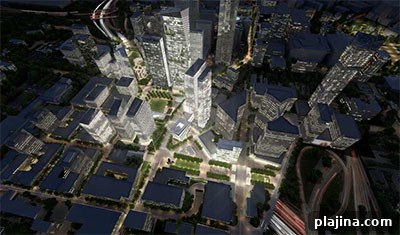
The Stitch © JACOBS
While some parts of the country struggle with aging infrastructure and limited long-range planning, Atlanta has pursued bold projects and focused revitalization. After much of the city was destroyed during the Civil War, leaders adopted a cooperative approach to rebuild, a collaborative ethos that persists today. Chamber of Commerce officials highlight close coordination among state and city agencies, business leaders and civic groups to advance regional priorities.
The 1996 Olympic Games accelerated investment in parks, sports venues and transit, reshaping areas like Atlantic Station and transforming the former Atlantic Steel Mill into mixed-use neighborhoods with housing, retail and entertainment. More recent projects include the $2.8 billion Atlanta BeltLine, a 22-mile loop of parks, trails and transit designed to spur development across 45 neighborhoods. Another proposed venture, the $300 million “Stitch,” would bridge a section of interstate with concrete decking to heal the divide between Downtown and Midtown and create roughly 14 acres for hotels, dining and green space.
To promote economic growth, the Chamber supports programs that attract new businesses, assist startups and foster business-to-business partnerships. Workforce development initiatives aim to retain local talent: ChooseATL, a site aimed at young professionals, highlights job openings, cultural events and neighborhood guides to help millennials find both career opportunities and community. Local colleges and universities supply interns and graduates who increasingly stay and contribute to a region that adds tens of thousands of residents each year.
SCENIC DRIVES
Nearby drives offer a mix of sports, automotive experiences and natural beauty. North of the city, the Atlanta Braves’ new SunTrust Park complex combines a modern ballpark with shops, cafés and entertainment, including an indoor skydiving wind tunnel at iFLY Atlanta. South of the city, the Porsche Driving Experience at the manufacturer’s regional headquarters lets visitors sample high-performance driving on controlled courses.
Beyond the suburbs, the 60-mile Allegheny Foothills Parkway skirts the southern ridge of the Appalachians and passes through the Chattahoochee National Forest, where scenic vistas, abundant wildlife and outdoor recreation await. The route also reaches Amicalola Falls, the Southeast’s tallest cascade, and Brasstown Bald, Georgia’s highest summit.
For literary and cinematic history, the Gone with the Wind Trail connects sites linked to Margaret Mitchell’s novel and the classic film. The Atlanta Public Library houses an extensive collection of memorabilia, while museums in Marietta and Jonesboro—the Gone with the Wind Museum: Scarlett on the Square and the Road to Tara Museum—display costumes, scripts and historic clippings. The driving tour also passes antebellum Stately Oaks Plantation and Kennesaw Mountain National Battlefield Park, locations that recall the Civil War era and the region’s complex past.