
Earlier this year, when Amazon revealed its top 20 finalists from 238 U.S. candidate cities hoping to host the company’s second North American headquarters, Raleigh earned a place in the final group. Around the same time, Apple announced plans to build another U.S. corporate campus and listed Raleigh among several cities under consideration.
North Carolina Commerce Secretary Tony Copeland called the region a “natural fit” for both projects, citing the presence of technology leaders such as IBM, Cisco, Red Hat and SAS Institute as evidence the area can support and sustain large corporate operations.
Raleigh, the state capital, has quietly established itself as one of the country’s most dynamic business centers. “Last year Forbes named the Raleigh metro region as the nation’s No. 2 Best Place for Business and Careers in 2017,” said Michael Haley, executive director of Wake County Economic Development, which manages business development across Raleigh and the surrounding communities.
Known as the City of Oaks, Raleigh’s tree-lined streets and relaxed Southern charm belie a diverse economic base. Major employers include WakeMed Health & Hospitals and Duke Energy alongside tech companies. Financial, insurance and foodservice headquarters such as BB&T Insurance Services, Carquest, First Citizens Bank and Golden Corral also call the area home.
The city and its suburbs are fast-growing hubs for information technology, life sciences, clean technology and advanced manufacturing. In 2017 several companies expanded or relocated here: Credit Suisse, INC Research, Citrix and MetLife announced major expansions, while tech firms like Trilliant Networks moved their global headquarters from Silicon Valley to the Raleigh suburb of Cary. Infosys committed to opening a North Carolina Technology and Innovation Hub in Raleigh’s Brier Creek.
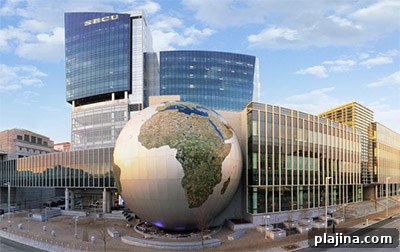
North Carolina Museum of Natural Science © VISITRALEIGH
Raleigh is one of the three anchors of Research Triangle Park (RTP), the nation’s largest and most prominent research park. Situated between Raleigh, Durham and Chapel Hill, RTP spans about 7,000 acres, hosts more than 200 companies and employs over 50,000 people across industries ranging from biotechnology to information technology.
The city offers a high quality of life, with more than 160 miles of greenways, multiple museums, a growing bike-share program and roughly 85 live music venues. Ongoing mixed-use development has created attractive live-work environments near the city center, especially within the revitalized Warehouse District. One major project, The Dillon, is a $150 million, 227,000-square-foot mixed-use development slated for completion this year. Its 18-story office tower includes street-level retail and restaurants, while two six-story residential buildings and a parking deck occupy the same city block across from the new Union Station. The Dillon preserves a brick wall from the original 1912 Dillon Supply Co. warehouse as part of its design.
The $90 million Union Station, a steel-and-glass multimodal rail terminal, will open soon and offer long-distance Amtrak and regional train service later this year. Replacing a 1950s-era Amtrak terminal, the 43,000-square-foot facility will include office, retail and restaurant space.
Raleigh’s culinary scene has gained national attention. Southern Living has called the city a “culinary mecca,” and new restaurant openings continue to attract diners. When local chef Coleen Speaks opened Hummingbird in late 2017—an intimate spot with sea-green tile, marble-top bar and New Orleans–inspired cocktails—it capped a strong year for dining in the city. Hummingbird serves ricotta fritters, seafood po’ boys and creative small plates as part of Lynwood Brewing Concern’s diverse complex that includes dining, retail and gallery spaces in a converted mid-century A&P distribution center near downtown.
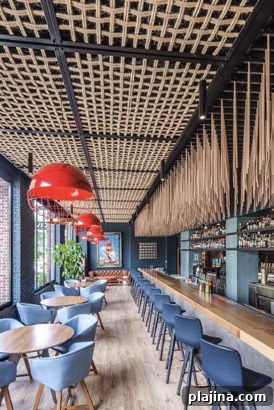
Vidrio restaurant © LM RESTAURANTS INV
Downtown Raleigh Alliance reported food and beverage sales reached $223 million in 2017, surpassing the previous year by $21 million. Notable openings that year included Vidrio, a Mediterranean-influenced restaurant emphasizing imported specialties and local ingredients, and Brewery Bhavana, a hybrid brewery, dim sum restaurant, library and flower shop that earned a spot on Bon Appétit’s list of the Hot 10 Best New Restaurants in America.
The Morgan Street Food Hall and Market opened this spring in the Warehouse District as downtown’s first food hall. This 22,000-square-foot venue accommodates more than 60 culinary vendors, from full kitchens offering cooked-to-order meals to specialty shops selling gourmet items. The space also hosts art, music and large culinary events that draw both locals and visitors.
Hotel development across Raleigh and Wake County has accelerated, with new properties and renovations catering to business and leisure travelers. The Raleigh Marriott Crabtree Valley completed a $37 million renovation and expansion of guestrooms, meeting and dining space. The Raleigh Marriott City Center, adjacent to the Raleigh Convention Center, is the city’s largest hotel. Newer properties near downtown and university campuses include the AC Hotel by Marriott North Hills and The StateView, a Marriott Autograph Collection property located on the North Carolina State University campus.
Raleigh-Durham International Airport serves more than 11 million passengers a year and offers around 400 daily flights to over 50 nonstop destinations, including international service to Toronto, Cancún, London and Paris. Terminal 2 received a design award from the American Institute of Architects and handles a significant share of the airport’s traffic.
SCENIC DRIVES
About 48 miles (roughly a 55-minute drive) south of Raleigh lies rural North Carolina and the Bentonville Battlefield, the site of the last full-scale Civil War engagement in March 1865. The Harper House remains on the grounds, with downstairs rooms recreated as a functioning Civil War field hospital and upstairs rooms furnished in period style. Nearby Four Oaks, founded in 1885, preserves a relaxed small-town atmosphere and is known for eastern North Carolina–style barbecue and a welcoming historic downtown. From Bentonville, follow the Blue Gray Scenic Byway—the route Gen. Sherman took from Bentonville to Goldsboro—starting at I-95, Exit 90 on US 701 South and turning left on Devils Racetrack Road.
The Uwharrie National Forest lies about 88 miles (approximately 1.5 hours) west of Raleigh. The 50,645-acre forest occupies ancient mountain terrain and is bordered by the Yadkin River to the west and the Great Pee Dee River to the north. Scenic Route 24/27 runs through the forest and the small town of Troy, which features a six-mile hiking trail and a historic Main Street marketplace, offering outdoor recreation and a peaceful escape from city life.